
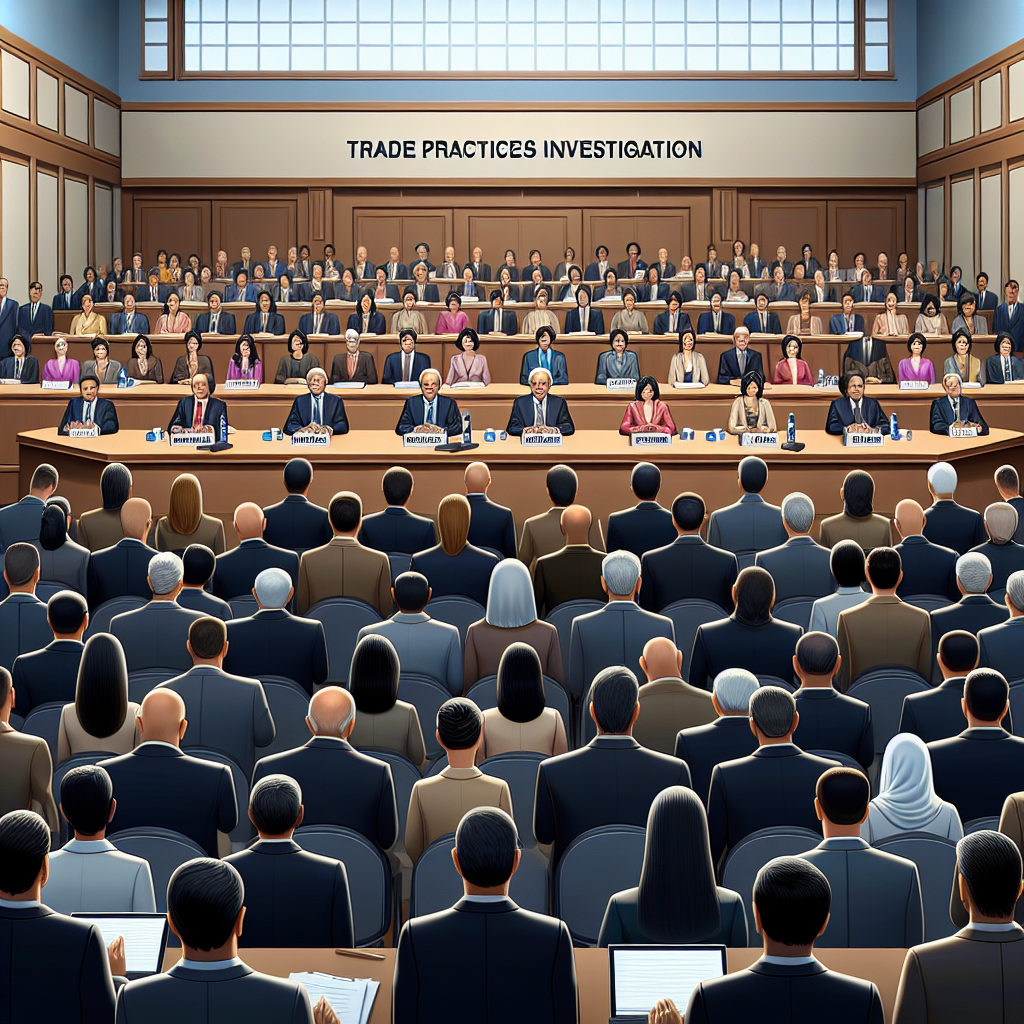
The U.S. Trade Representative’s Office (USTR) announced on Friday (April 24) that it will hold a public hearing next week regarding the investigation into unfair trade practices under Section 301, involving dozens of countries suspected of not taking action to prevent the import of goods produced through forced labor.
According to the USTR statement, the public hearing will take place next Tuesday (April 28) and Wednesday (April 29). The 301 investigations aim to examine the “behavior, policies, and practices” of 60 economies to determine if they have failed to effectively enforce the prohibition on importing goods made with forced labor.
The hearing will be held at the main hearing room of the U.S. International Trade Commission in Washington, D.C. The sessions are scheduled for 10 a.m. Eastern Time next Tuesday and Wednesday.
As per the schedule released by the USTR, the two-day hearing will be divided into 12 panels, with approximately 60 witnesses attending, including representatives from advocacy groups, human rights organizations, U.S. industry groups, and foreign government representatives.
On March 12, the USTR initiated investigations on 60 countries, alleging that they have not prohibited the importation of goods manufactured with forced labor.
The list includes some of the United States’ major trading partners and allies, such as Australia, Canada, the European Union, the United Kingdom, Israel, India, Qatar, and Saudi Arabia. China and Russia are also among the countries listed.
On February 20, the U.S. Supreme Court ruled that the global tariffs imposed by Trump under the 1977 International Emergency Economic Powers Act (IEEPA) on imported goods were unlawful. That same day, Trump invoked Section 122 of the Trade Act of 1974 to announce a 10% temporary tariff increase globally, set to expire in July.
Additionally, Trump directed the USTR to utilize its Section 301 authority to investigate certain unreasonable and discriminatory behaviors, policies, and practices that impose burdens or restrictions on U.S. commerce.
The Trump administration aims to reintroduce tariffs on countries based on the results of the 301 investigation. U.S. Trade Representative Jamieson Greer expressed his hope to conclude the 301 investigation before the temporary tariffs expire.
(This article contains references to Reuters’ reporting.)