
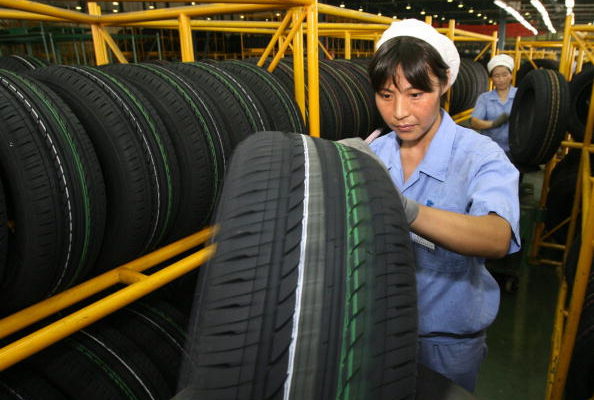
A global wave of tire price hikes is sweeping through the market, fueled by the continuous rise in prices of raw materials such as natural rubber and the increasing costs of global transportation. Chinese manufacturers are also adjusting their prices in response. According to statistics from a tire industry website, over 70 domestic and international tire companies have announced price increases, covering all categories including passenger and truck tires, with some experiencing hikes of up to 5%. The industry does not rule out the possibility of further price adjustments later this year.
Leading international tire giants were the first to take action. Bridgestone announced a 3% to 5% price increase on passenger car tires starting from May 1st, while Michelin also simultaneously announced price hikes of 15 to 30 Chinese Yuan per tire on passenger and light truck tires from the same date.
Major Chinese manufacturers have also followed suit. According to reports by The Paper, Zhongce Rubber took the lead on April 16th to increase prices by 1% to 3% on some all-steel tires and by 2% to 5% on inner tube compounds. Sailun Tire is set to raise prices by 3% to 5% on truck and bus radial tires (TBR) starting from May 1st, while Wanli Tire plans to increase TBR product prices by 3% to 4% from May 10th, and has hinted at potential further adjustments.
Industry insiders attribute the fundamental driving force behind this round of price hikes to the overall increase in upstream raw material costs. Prices of key materials such as natural rubber, synthetic rubber, and carbon black have risen significantly, combined with the simultaneous increase in energy and logistics costs, putting substantial pressure on manufacturers’ costs.
Data in the industry indicates that raw materials account for over 70% of total tire production costs, with natural rubber, synthetic rubber, and carbon black collectively exceeding 60%. It is worth noting that the tire industry is closely linked to the oil industry chain, as crude oil prices not only directly impact energy expenses but also influence the production costs of core materials such as synthetic rubber, carbon black, and adhesives.
Rising transportation costs are another critical factor. Some industry distributors have pointed out that ongoing geopolitical conflicts are severely affecting global shipping orders, leading to longer shipping distances, reduced efficiency, and overall increased logistics costs. The shipping cycle for natural rubber exports from Southeast Asia has significantly lengthened, resulting in higher landed costs, not only adding to the procurement burden of tire manufacturers but also increasing the risk of raw material supply shortages.
Among various user groups, commercial vehicle operators are most directly impacted. For example, in the case of common economy-class truck tires, with a retail price ranging from 1,500 to 2,500 Chinese Yuan per tire, the price hike would mean an increase of 45 to 125 Chinese Yuan per tire. Calculated based on a truck equipped with ten driving wheels, the additional cost of a complete set would amount to an extra 450 to 1,250 Chinese Yuan, putting significant pressure on the daily operational costs of logistics companies.
It is worth noting that the current round of price hikes has not yet been fully passed on to end consumers. Platforms such as Tuhu Car Care and other automotive maintenance and aftermarket services have stated that retail prices have not seen significant adjustments, with most stores choosing to reduce discount offers to absorb cost pressures, creating a pattern of “wholesale prices rise first, while retail prices lag behind.”
However, if upstream raw material prices continue to remain high, some retailers have indicated plans to follow suit in adjusting prices, with a magnitude comparable to the recent manufacturers’ price increases.