
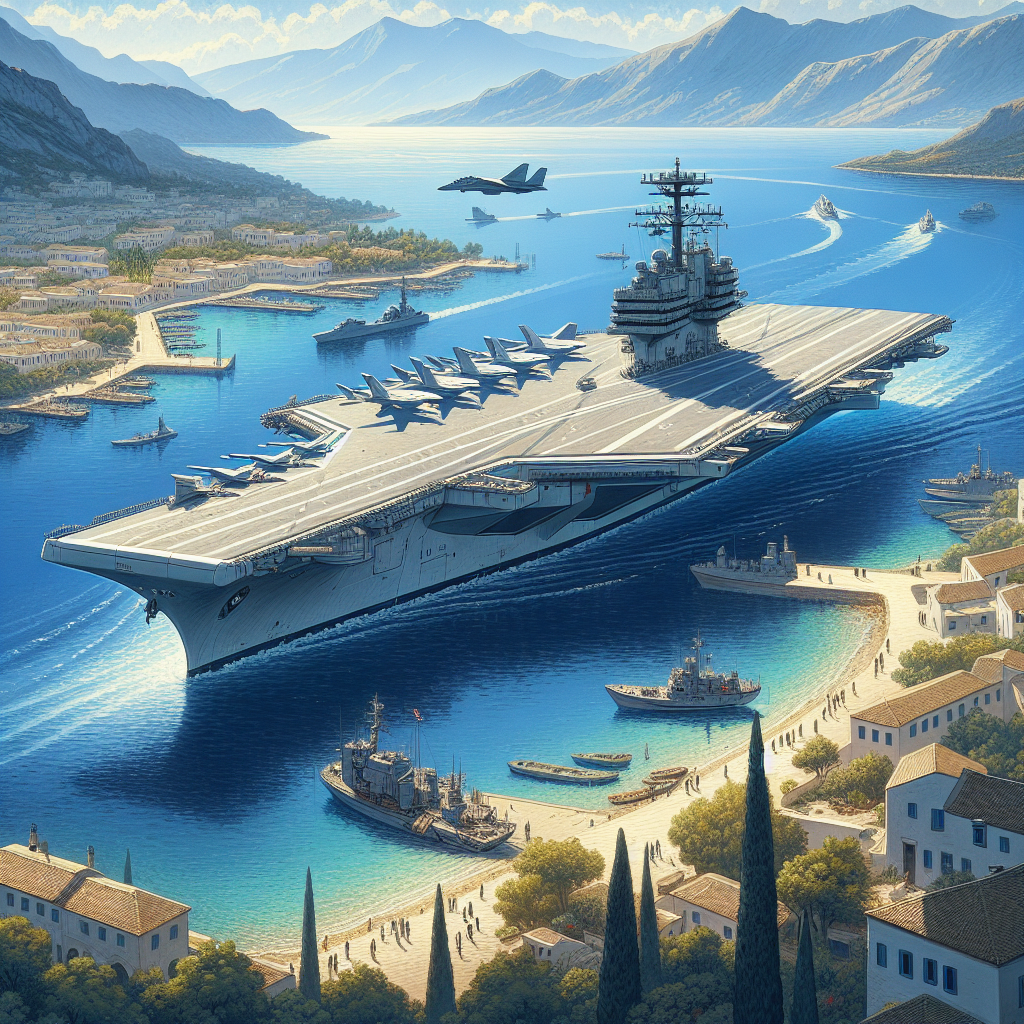
The USS Gerald R. Ford aircraft carrier of the US Navy, which is participating in military operations against Iran in the Middle East, arrived at the Souda Bay naval base in Crete, Greece on Monday (March 23).
The world’s largest aircraft carrier returned to the base this time due to a non-combat fire onboard, requiring emergency repairs expected to last for over a week.
According to Reuters, the fire broke out while the ship was on a mission in the Red Sea. The fire originated in the ship’s main laundry area and took several hours to be brought under control. Nearly 200 sailors were injured due to smoke inhalation and received medical treatment, with one crew member being urgently evacuated by helicopter for more serious injuries. The fire also severely affected around 100 sleeping quarters.
The USS Gerald R. Ford and the USS Abraham Lincoln together form the core of the US-Israeli aerial attack against Iran. Despite official statements from the US military emphasizing that the fire did not damage the propulsion system and the aircraft carrier still retains full combat capability, this accident has forced the nuclear-powered carrier to temporarily withdraw from the frontlines.
As the USS Gerald R. Ford returned to Crete, a turning point occurred in the US-Israeli “Operation Wrath of God” against Iran. US President Trump announced on Monday that significant consensus had been reached in negotiations between the US and Iran, leading to a postponement of strikes against Iranian power plants and energy infrastructure. Discussions between the two parties will continue on the same day.
“We had very detailed discussions. We’ll see what happens. We reached a major consensus, I mean, a consensus on almost every point,” he said, noting that the talks were initiated by Iran. “We have a five-day observation period first. If things go well, we’ll eventually solve this problem. Otherwise, we’ll continue with the crazed bombings.”
The USS Gerald R. Ford has now been deployed for nearly nine months. Prior to arriving in the Middle East, the ship conducted operations in the Caribbean targeting Venezuela, including combating smuggling boats and intercepting sanctioned oil tankers.
In addition to the fire, media reports have also highlighted serious plumbing issues onboard the ship, including frequent toilet system blockages. Currently, the US military has dispatched 8 investigators to Souda Bay to investigate the cause of the fire.
Unlike the February resupply stop, during this stop at Souda Bay, over 5,000 sailors will be prohibited from engaging in large-scale recreational activities in the nearby city center of Hania. The $13 billion warship is expected to remain in Souda Bay until early April, awaiting completion of damage assessment and repairs before determining future actions based on regional developments.