
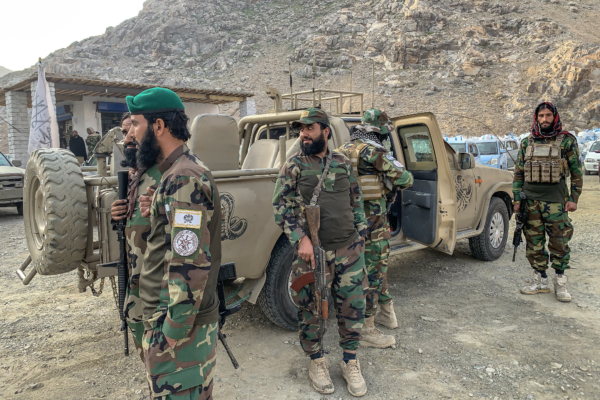
Pakistan’s Defence Minister Khawaja Muhammad Asif officially announced on Friday (February 27) that Pakistan and its neighbor Afghanistan have entered a state of “open warfare.”
Prior to this announcement, violent armed clashes erupted between the two sides late at night, with Pakistan launching airstrikes on multiple locations including the Afghan capital Kabul. Both countries reported significant casualties among their personnel.
Asif posted a strong statement on the social media platform X, declaring, “Our patience has reached its limit. We are now in open warfare with you (Afghanistan).”
According to Pakistani officials and Afghan government spokesperson Zabihullah Mujahid, Pakistani airstrikes targeted Kabul, the southern city of Kandahar, and Paktia province in the southeast.
Pakistan stated that the operation was in retaliation for cross-border attacks by Afghanistan and that its armed forces were responding decisively to “unprovoked aggression,” destroying several key Taliban positions along the border.
There is currently a significant discrepancy between the two sides regarding the number of casualties, and independent verification is not available.
The Afghan Ministry of Defense claimed to have killed 55 Pakistani soldiers, with some captured alive, and destroyed 19 Pakistani military outposts. On the other hand, Afghanistan reported only 8 soldiers killed and 11 wounded.
Pakistan’s Prime Minister Shehbaz Sharif’s media spokesperson Mosharraf Ali Zaidi denied that any Pakistani soldiers were captured, counter-accusing that the conflict resulted in at least 133 Afghan combatants killed, over 200 injured, 27 Afghan outposts destroyed, and 9 captured fighters.
Pakistan’s Information Minister Attaullah Tarar stated that two Pakistani soldiers were killed and three were injured.
Asif further levied harsh accusations against the Taliban regime, claiming that the Taliban did not contribute to regional stability but instead turned Afghanistan into “India’s colony” and harbored global armed militants to “export terrorism.”
Additionally, Pakistan criticized the Taliban government for depriving Afghan people of basic human rights, especially the rights that women should enjoy according to Islamic teachings.
Authorities in Pakistan stated that dozens of Afghan refugees waiting to return home at the Torkham border in the northwest had been evacuated to a safe area due to the conflict.
In October 2023, Pakistan launched a large-scale crackdown on undocumented immigrants, urging those within its borders to voluntarily leave to avoid arrest and deportation. Iran also began a similar crackdown on immigrants around the same period.
Since then, millions of people have crossed back into Afghanistan, including those who were born in Pakistan decades ago, established families and businesses there.
The UN Refugee Agency reported that just last year, 2.9 million people returned to Afghanistan, and nearly 80,000 have returned so far this year.
This conflict marks the most serious deterioration in relations between the two countries since the mediation efforts by Qatar and Turkey failed several months ago.
The Afghan government has not yet issued a formal diplomatic response to Asif’s declaration of “total war.”