
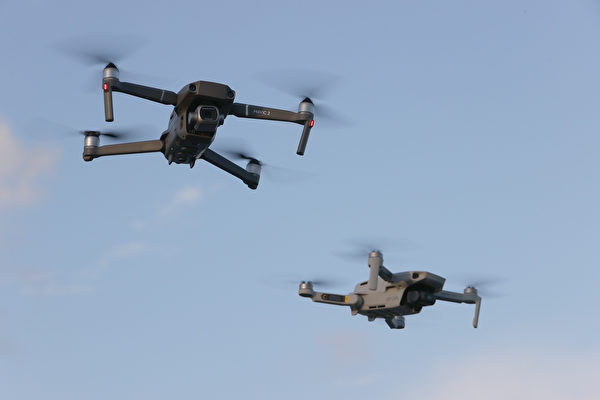
In early 2026, the consumer-grade drone market in China is undergoing a significant asset price reassessment. With flight restrictions tightening, compliance costs rising, and the increasing speed of new product iterations, a noticeable wave of second-hand drone sales has emerged in a short period of time. The buyback price of a popular model from DJI has dropped by more than 20%.
Since January 1, 2026, the newly revised public security management and penalty regulations clearly include the punishment of flying drones illegally. At the same time, the Civil Aviation Administration of China has introduced the UOM unified management system, requiring all flight airspace to be declared through the system. The “black flight” behavior of some pilots who used to engage in illegal flights by disabling location signals is now facing the risk of penalties.
Starting from May 2026, drone registration and remote identification standards will be officially implemented, requiring devices to not have flight capabilities until activation or deregistration is completed.
The tightening of regulations has quickly transmitted to the market. According to a report by Red Star News, data from recent second-hand trading platforms shows that in January 2026 alone, the number of drones listed for sale has exceeded 60,000 units, a year-on-year increase of about 200%. The surge in market supply directly led to a rapid decline in buyback prices. For example, the DJI Air 3S produced in 2025 has seen its buyback price drop from about 6000 yuan to around 4900 yuan in just a few months, a decrease of over 20%. Some entry-level models are even discounted by more than half of the official selling price.
Several buyback merchants have indicated that drones used to be relatively “value-preserving” digital products in the past, but in the current environment, price fluctuations have significantly intensified. “The buyback price now changes almost every week,” a buyback merchant from southern China stated, mentioning that there have been cases where no one is willing to take over certain models in the short term.
Market insiders believe that this round of sell-offs is not simply a technical upgrade cycle but the result of multiple factors overlapping. On one hand, the uncertainty of the flying environment has led to a significant decrease in the frequency of use by ordinary users; on the other hand, the increase in the complexity of regulatory rules has also added to the psychological cost of use for ordinary consumers. For many non-professional players, drones are gradually shifting from entertainment devices to “high-threshold equipment.”
A veteran drone player mentioned that the focus of discussions within the flying community has shifted significantly in the past two months, from “where is suitable for shooting” to “where can still legally fly.” In this environment, some users choose to exit the market early to avoid further depreciation of their equipment.
Simultaneously, internal competition within the industry is accelerating the depreciation of equipment value. With the faster pace of new product releases, the continuous shortening of the lifespan of old models, coupled with unstable market demand, has further intensified the downward pressure on second-hand prices. Similar to the “pre-release sell-off frenzy” in the smartphone market, a similar trend is becoming more pronounced in the drone sector.
Notably, amid the rapid price decline, there is also a significant wait-and-see sentiment in the second-hand market. Some potential buyers are concerned about the future policy environment and further tightening of usage scenarios, choosing to delay their purchases, leading to a cycle of “more sell-offs, more price drops.”
Industry analysts believe that this wave of drone sell-offs fundamentally reflects the pains of consumer-grade drones transitioning from “consumer electronic toy attributes” to “quasi-professional equipment attributes.” If the proportion of ordinary users exiting the market is too high, the future consumer-grade market demand structure may undergo contraction, and industry growth will rely more on industrial applications and the professional market.
In the long term, there is still technological and application space in the drone market, but in the short term, the biggest challenge facing the consumer-grade market is no longer just technological competition but a comprehensive game involving usage environment, compliance costs, and user confidence.