
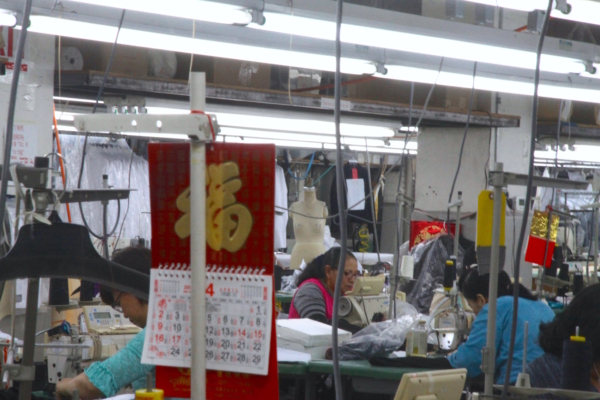
Cash payment of salaries is one of the main methods used by some businesses to evade taxes in the long term. Ai Zhen Xu (phonetically translated), a senior executive at a garment factory in New York, was recently sentenced to 2 years of probation, with the first year to be served under home confinement, for violating federal tax laws. She was found guilty of concealing company income over the years and evading taxes by paying wages in cash. Additionally, she was ordered to compensate the IRS for approximately $1.3 million in tax losses.
At the age of 72, Ai Zhen Xu resides in Port Washington, Long Island, New York. She served as the Vice President and Secretary of the garment company Winner Fashions, Inc. from 2016 to 2021, overseeing the company’s daily operations and financial accounting tasks. The company provided manufacturing services for several high-end fashion brands.
According to sentencing documents submitted by federal prosecutors, during her tenure, Ai Zhen Xu collaborated with a check-cashing service to convert checks received from company clients into cash. This cash was then used to pay a portion of employees’ salaries in order to circumvent wage records and the legally required payroll taxes. It was revealed that from 2016 to at least 2021, she cashed approximately $3.84 million in company checks through this method.
Prosecutors further alleged that Ai Zhen Xu deliberately concealed the aforementioned cash income and expenditures from external accountants during the company’s tax filing process. She personally reviewed and submitted the company’s tax returns despite knowing that the tax information was incomplete, resulting in Winner Fashions failing to accurately report revenue and wage expenses to the IRS. The federal government estimated the total tax loss caused by these actions to be $1,308,969.82. Ai Zhen Xu pleaded guilty in 2025.
When presenting her defense to the court for her long-standing practice of paying salaries in cash and concealing income, Ai Zhen Xu cited two reasons: she aimed to help her and her husband’s garment business survive in a fiercely competitive industry, and as a Chinese immigrant, she was accustomed to a cash transaction culture. However, federal prosecutors argued that these explanations were insufficient.
Prosecutors emphasized that Ai Zhen Xu was well aware of the U.S. tax laws regarding business and wage reporting and deliberately denied the existence of cash transactions when asked by accountants multiple times. Even after being informed of a government investigation and claiming to have ceased cashing checks to law enforcement, records showed that she continued the practice. Prosecutors asserted that Ai Zhen Xu’s proposed compensation plan – paying $1,500 at sentencing and $500 monthly thereafter – was not a sufficient commitment to remedying the losses.
The judge ultimately ruled that the $1.3 million in compensation would be solely borne by Ai Zhen Xu, without joint responsibility with other defendants or individuals not listed in the compensation order. Her compensation obligation will last for 20 years from the effective date of the sentence or until her release from prison, whichever is later. In the event of her death, her estate would still be held responsible for any outstanding balance of compensation, and related liens would remain in effect until formal written proof of exoneration of responsibility was received by the estate.