
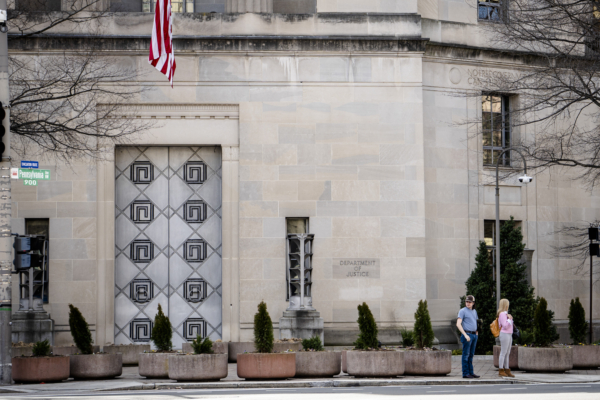
The US Department of Justice announced on Tuesday (January 27) that a Chinese citizen has been sentenced to 46 months in prison for participating in fraudulent activities involving cryptocurrency targeting Americans. The case involved 174 American victims and the amount involved reached tens of millions of dollars.
According to a press release on the official website of the Department of Justice, Chinese citizen Jingliang Su was sentenced to 46 months in federal prison on the same day. He was charged with aiding a fraudulent center in Cambodia in perpetrating digital asset investment scams, laundering over $36.9 million. The court also ordered Su to pay over $26.8 million in restitution.
Su, 45, has been in federal custody since December 2024 and pleaded guilty to “conspiring to operate an illegal money transmitting business” in June 2025. US District Judge R. Gary Klausner pronounced the sentence on January 27.
A. Tysen Duva, Assistant Attorney General of the Department of Justice’s Criminal Division, stated, “The defendant and his co-conspirators defrauded 174 hard-working Americans of their money. In the digital age, criminals have found new ways to engage in fraud using the internet. The Criminal Division and law enforcement partners continue to track down and apprehend criminals conducting large-scale fraud schemes who deceive victims through mobile phones, social media, and fake websites, transferring stolen funds overseas using cryptocurrencies and wire transfers.”
Bill Essayli, First Assistant US Attorney for the Central District of California, said, “New investment opportunities may sound appealing, but they have a dark side: they are highly attractive to criminals. In this case, they ransacked victims, stealing tens of millions of dollars. I commend our law enforcement partners for their efforts in bringing this defendant to justice and I encourage the investing public to remain vigilant and prevent such crimes from happening again!”
According to court documents, the fraudulent process started with overseas co-conspirators contacting victims through unsolicited social media interactions, phone calls, text messages, and online dating services to gain their trust before recommending fraudulent digital asset investments. The conspirators would create fake websites mimicking real cryptocurrency trading platforms to persuade victims to transfer funds for investment.
Subsequently, the fraudsters would inform victims of their investment’s appreciation, while in reality, they had stolen the funds. In this case, over $36.9 million of victims’ funds were transferred from US bank accounts controlled by co-conspirators to an account at Deltec Bank in the Bahamas.
Su and other co-conspirators instructed the bank to convert the funds into the stablecoin Tether (USDT) and transfer it to a digital asset wallet controlled by an accomplice in Cambodia. Then, the Cambodian accomplice transferred the stablecoin Tether to the mastermind of the fraudulent center.
To date, eight co-conspirators have pleaded guilty, including Jose Somarriba and He Shengsheng. He Shengsheng was sentenced to 51 months in prison in September, while Somarriba was sentenced to 36 months; both pleaded guilty to conspiring to operate an unlicensed money transmitting business.
The case was investigated by the Global Investigative Operations Center of the US Secret Service. Assistance was provided by the Homeland Security Investigations El Camino Real Financial Crimes Task Force, Customs and Border Protection National Targeting Center, Department of State Diplomatic Security Service, Dominican National Police, and the US Marshal’s Service.
According to the blockchain analysis company Chainalysis, in 2025 alone, losses from cryptocurrency-related scams exceeded $17 billion. The rise of artificial intelligence (AI) has driven a 1400% growth in identity theft-related scams.