
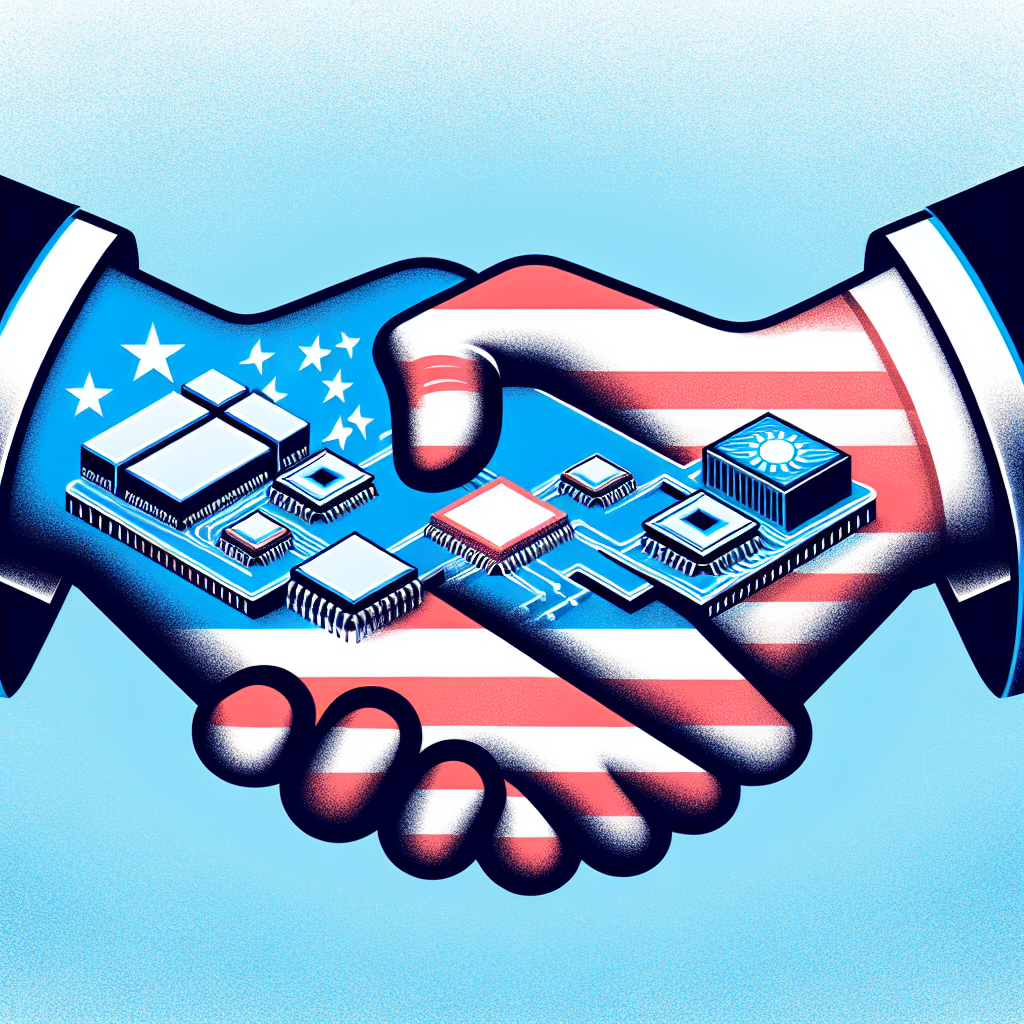
The United States Department of Commerce announced on Thursday, January 15th, that the US and Taiwan have reached a trade agreement. This agreement is set to drive a “large-scale reshoring of the US semiconductor industry” and establishes a strategic economic partnership between the US and Taiwan, with the US capping equivalent tariffs on Taiwan at 15%.
According to a press release from the US Department of Commerce, the American Institute in Taiwan (AIT) and the Taipei Economic and Cultural Representative Office in the US have signed a historic trade agreement. This agreement aims to enhance the resilience of the US economy, create high-paying employment opportunities, and strengthen national security. It is designed to significantly strengthen the US domestic semiconductor supply chain and ensure the US maintains a leading position in technology and industry sectors.
The press release outlined the cooperation between the US and Taiwan in the semiconductor field as per the agreement.
Direct Investment:
Taiwanese semiconductor and technology companies will make at least $250 billion in new direct investments in the US to build and expand advanced semiconductor, energy, and artificial intelligence production and innovation capabilities.
Additional Investment:
Taiwan will provide at least $250 billion in credit guarantees to promote additional investments by Taiwanese companies in the US, supporting the establishment and expansion of a comprehensive semiconductor supply chain and ecosystem in the US.
Industry Clusters:
The US and Taiwan will establish world-class industrial parks in the US to enhance US industrial infrastructure and position the US as a global hub for next-generation technology, advanced manufacturing, and innovation.
The press release also mentioned adjustments to tariffs on Taiwan. The total equivalent tariff rate imposed by the US on Taiwanese goods will not exceed 15%. The US will cap tariffs imposed on Taiwanese automotive parts, lumber, timber, and wood products under Section 232 at 15%. The US will not impose equivalent tariffs on generic drugs, drug ingredients, aircraft components, and scarce natural resources.
The Department of Commerce stated that future Section 232 tariffs on Taiwanese semiconductor products would benefit Taiwanese semiconductor producers investing in the US. During the approved construction period, Taiwanese companies establishing new semiconductor production capacity in the US can import products up to 2.5 times the planned capacity without paying Section 232 tariffs. Imported products exceeding the quota will be subject to a lower preferential tariff rate under Section 232.
Furthermore, Taiwanese companies that have completed chip production projects in the US can still import products up to 1.5 times the newly added US capacity without paying Section 232 tariffs.
The US Department of Commerce emphasized the critical importance of semiconductors to the US industrial, technological, and military capabilities. Semiconductors are a foundational component of modern technology, powering diverse products ranging from smartphones and automobiles to telecommunications equipment and military weapons systems.
The Department of Commerce noted that over the years, this strategic industry has shifted overseas, leading to the US relying on foreign manufacturers and vulnerable global supply chains. The Trump administration has been committed to reversing this trend.
Data shows that the US share in global wafer manufacturing dropped from 37% in 1990 to less than 10% in 2024.