
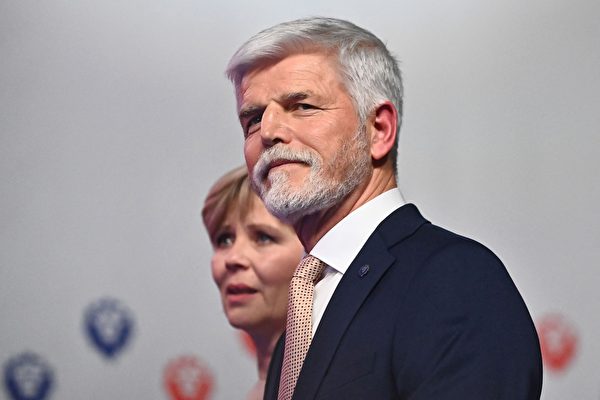
Czech Republic President Petr Pavel, in an exclusive interview with Nikkei Asia News, expressed his concerns that a crisis involving the Taiwan Strait could have a domino effect reaching Europe. Pavel emphasized that any conflict in the region would severely disrupt global trade, impacting Europe’s economy almost immediately.
During his visit to Tokyo last Friday, Pavel mentioned that conflicts in the Taiwan Strait would have far-reaching consequences, affecting the economic landscape of Europe. He highlighted the importance of maintaining stability in the region to safeguard international trade routes.
Pavel’s visit to Japan included participation in the Czech National Day celebrations at the Osaka Expo. He also held meetings with Japanese Prime Minister Shizo Abe to discuss various bilateral issues.
As a member of both the European Union and NATO, Pavel’s background includes serving as Czech Armed Forces Chief of Staff and Chairman of the NATO Military Committee. He emphasized that the Czech Republic respects the ‘One China’ policy while also valuing Taiwan as a significant investor and partner for cooperation.
Pavel touched upon potential military actions from Beijing towards Taiwan, cautioning that such actions should not be dismissed lightly. Drawing parallels with Russia’s invasion of Ukraine, he stressed the importance of considering all possible threats that could directly impact global security.
With North Korea’s involvement in Russia’s conflict with Ukraine and China allegedly exporting dual-use military technology to Moscow, Pavel highlighted the complexities of the conflict that have regional and global implications.
He described the Ukraine conflict as a direct threat to Asian countries’ security, categorizing the involvement of China, North Korea, and Russia as authoritarian powers in conflict with democratic nations.
Pavel expressed concerns about China’s covert observation of conflicts and its strategic analysis of Western responses to such situations. He warned that North Korea’s public engagement in combat operations is a troubling development, indicating a possible buildup of military experience that could pose future threats to regional stability.
In conclusion, Pavel’s remarks underscore the interconnected nature of global security challenges, urging vigilance and proactive efforts in managing potential crises that could have far-reaching consequences across continents.