
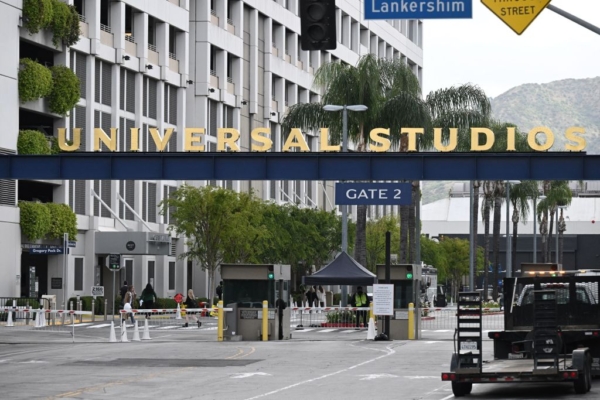
According to a report released by Film LA on April 3, the occupancy rate of sound stages in the Los Angeles metropolitan area dropped to 63% in 2024, a 6% decrease from 2023. This trend has raised concerns among officials, as the film industry is working hard to recover from the impact of the COVID-19 pandemic and dual union strikes.
After a challenging few years, the occupancy rate of sound stages in the Los Angeles area has sharply declined. Between 2016 and 2022, the occupancy rate remained above 90%. However, it dropped to 69% in 2023 and further decreased to 63% in 2024.
Film LA, a cooperative film office of the City and County of Los Angeles and other local governments, indicated in the report that global film production is slowing down.
The “Sound Stage Production Report” summarized data from 17 participating studios in the Los Angeles area, including shooting locations (such as sound stages or studios) and on-location shooting data for 2023, as well as occupancy rate data for 2024. The report also provides a comparison of available shooting locations in the Los Angeles area and major competing markets for the past five years, including 2025.
In 2023, there were 1,225 projects shooting at 447 filming locations analyzed by Film LA. These projects generated 8,671 shoot days – a number lower than any studied period except for 2020 when all productions were halted during the pandemic.
The data also shows a 10% decline in television production. The latest figures indicate that television projects accounted for only 20% of certified filming locations and on-location shoots in Los Angeles, whereas in previous years, television production represented 30% of all location shoots.
Philip Sokoloski, a spokesperson for Film LA, emphasized the difference between sound stage occupancy rates and utilization rates. In a statement, he said, “Stages only create jobs when they are constructed or in use. While TV program budgets have increased, the number of episodes per season has decreased, and there may be long delays between seasons. To truly see job losses in these numbers, one must look at shoot days on the stages.”
The report points out that other regions are also concerned about below-average sound stage occupancy rates. Over the past five years, regions such as the UK, New York, Georgia, and Ontario, Canada have doubled their production capacity based on filming locations. However, the lack of projects has made it increasingly challenging to fill studio vacancies.
Los Angeles is estimated to have 8 million square feet of production space, with 13 planned and proposed studio projects. Film LA notes that such infrastructure does provide a certain advantage.
Sokoloski predicts that areas performing well in the future will be those that can maintain high sound stage occupancy rates and create job opportunities, further attracting film projects. The statement also mentions support for state leaders’ interest in expanding the California Film & TV Tax Credit program, and ongoing discussions with partners in the City and County of Los Angeles to improve the local filming environment.