
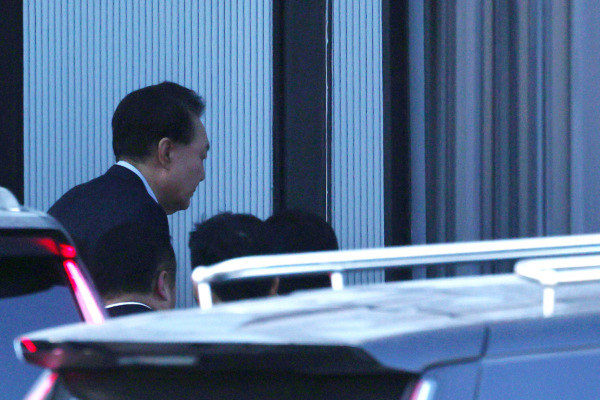
Seoul, South Korea – The main opposition party in South Korea and the impeached president, Yoon Suk-yeol’s lawyers, have stated that the South Korean prosecutors have charged Yoon Suk-yeol on Sunday (January 26th) accusing him of briefly imposing martial law on December 3rd last year, leading a rebellion.
According to reports by Reuters, Yoon Suk-yeol’s lawyers criticized the prosecution as the “worst choice” made by the prosecution, while the main opposition party welcomed this decision.
These charges are unprecedented for a South Korean president. If convicted, Yoon Suk-yeol could face several years of imprisonment due to his shocking imposition of martial law that aimed to ban political activities, parliamentary sessions, and control the media.
Yoon Suk-yeol’s actions have caused political tumult in this fourth largest economy in Asia and a major ally of the United States. The South Korean Prime Minister has been impeached and suspended, while some senior military officials have been indicted on charges of participating in the rebellion.
In a statement, Yoon Suk-yeol’s lawyer stated: “(Yoon Suk-yeol) declared a state of emergency as a desperate plea to the public, due to a national crisis caused by the opposition’s out-of-control behavior.”
The prosecutor’s office did not immediately respond to Reuters’ request for comment.
Anti-corruption investigators last week recommended the indictment of Yoon Suk-yeol who is currently in custody. The parliament initiated his impeachment and suspended him on December 14th.
Yoon Suk-yeol himself, a former South Korean chief prosecutor, became the first sitting president to be arrested on January 15th. He has been held in solitary confinement, with reported confrontations and armed standoffs between his security personnel and the officials who arrested him.
Media reports suggest that the court had previously rejected the prosecutor’s requests to extend Yoon Suk-yeol’s detention during further investigations twice. However, with the filing of charges, the prosecutor has again requested to continue detaining the president.
The South Korean president does not enjoy immunity against a few criminal charges, and rebellion is one of them. This charge could lead to life imprisonment or the death penalty, although South Korea has not executed anyone in decades.
Han Min-soo, the spokesperson for South Korea’s largest opposition party, the Common Democratic Party, stated in a press conference, “The prosecution has decided to charge Yoon Suk-yeol, who faces charges of being the leader of a rebellion.”
Yoon Suk-yeol and his lawyers argued in a hearing at the Constitutional Court last week that he had never intended to fully implement martial law, but used these measures as a warning to break the political deadlock.
While the criminal proceedings are ongoing, the Supreme Court will decide whether to remove Yoon Suk-yeol from office or restore his presidential powers. The court has 180 days to make this decision.
The South Korean parliament led by the opposition party impeached Yoon Suk-yeol on December 14th, making him the second conservative president in South Korea to be impeached.
After the parliamentarians voted against the martial law order, Yoon Suk-yeol revoked the order. The martial law lasted for only about six hours.
If Yoon Suk-yeol is dismissed, South Korea will hold a presidential election within 60 days.