
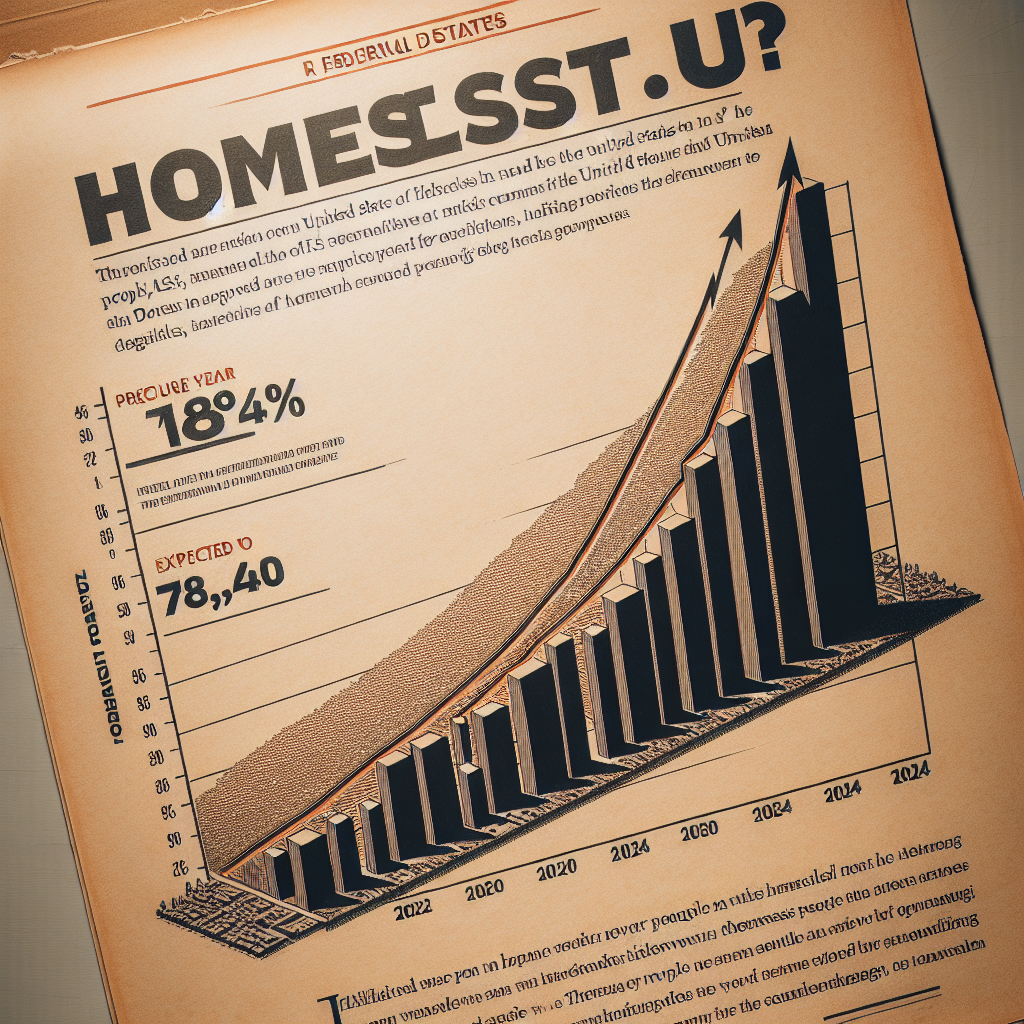
The U.S. Department of Housing and Urban Development (HUD) report shows that the number of homeless people in the United States is expected to reach a record-breaking 771,480 in 2024, an 18% increase from last year.
This is the highest record since the U.S. began releasing relevant statistical data in 2007. The surge is attributed to factors such as influx of immigrant families, a shortage of affordable housing, and the impact of natural disasters.
These statistics are derived from real-time counts conducted nationally in January each year to estimate how many people are living in shelters or on the streets.
The number of homeless individuals in 2024 has once again surpassed the record set in 2023. HUD data shows that in 2023, there were over 653,000 homeless people, a historic high at the time. HUD notes that the exceptionally high numbers in 2023 were primarily due to a shortage of affordable housing, opioid abuse, and the expiration of aid policies during the pandemic.
However, it is widely believed that official figures may be underestimated. Data collection efforts are often constrained by inclement weather or a shortage of volunteers. Additionally, these figures do not include potential beneficiaries who are temporarily staying with friends or family.
HUD also states that the January statistics may not fully reflect the current situation, as illegal border crossings have significantly decreased since then.
The report points out that part of the increase in homelessness reflects the high cost of housing. The eviction moratorium during the pandemic has ended, yet rents in many communities continue to rise.
A mental health crisis is also one of the reasons for the increase in homelessness. The number of individuals suffering from mental illness or other disabilities, experiencing homelessness multiple times or for extended periods, has increased by 6.6%.
The growth in the number of homeless individuals mainly stems from an increase in the population of temporary shelters. Data indicates that the number of homeless individuals in shelters has grown by 25%, reaching over 497,000; while the number of unsheltered homeless individuals has increased by 6.9%, reaching over 274,000.
Many reports indicate that the spike in shelter populations is due to immigration and natural disasters. For example:
– New York City: 88% of new shelter applicants are immigrants seeking political asylum. As immigration numbers decline, the city is currently closing more than twenty shelters.
– Chicago and Denver have announced plans to end their immigration shelter systems.
– Hawaii: In August 2023, over 5,000 people were displaced to disaster emergency shelters due to the devastating wildfires on Maui.
The states with the highest number of homeless individuals are California (over 187,000 people) and New York (over 158,000 people).