
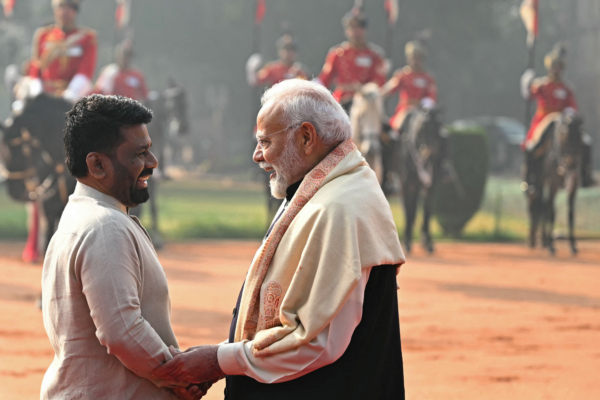
Sri Lanka’s newly-elected President, Anura Kumara Dissanayake, who won the election in September, chose India for his first overseas visit. According to reports from the Associated Press, on Monday, December 16, Indian Prime Minister Modi warmly received Dissanayake and held discussions focusing on strengthening bilateral relations, aiming to jointly curb China’s ambitions to expand its influence in Sri Lanka.
At the joint press briefing attended by the two leaders, Dissanayake stated that he would not allow Sri Lanka to be used by China to “harm India’s interests”. He emphasized, “Cooperation with India will flourish, and I reiterate our continued support for India.”
Modi mentioned that India and Sri Lanka would establish grid connectivity and a multi-product petroleum pipeline to further promote investment and commercial ties between the two countries.
President Dissanayake arrived in New Delhi on Sunday, December 15, marking his first overseas trip since taking office as president in September. He also held discussions with Indian Foreign Minister Subrahmanyam Jaishankar and National Security Adviser Ajit Doval.
Sri Lanka is facing its most severe economic crisis in decades, and India has extended a helping hand by expanding its economic and defense ties with Sri Lanka.
Modi revealed that India has provided Sri Lanka with $5 billion in credit limits and grants. He added that besides housing, renewable energy, and infrastructure, India would also cooperate with Sri Lanka in agriculture, dairy, and fisheries development.
Modi emphasized, “We both believe that our security interests are interconnected.” He further stated that the two leaders have decided to sign a defense cooperation agreement soon.
In a joint statement, “the two leaders agreed to jointly commit to enhancing regional maritime security through bilateral and existing regional frameworks,” confirming their shared maritime security interests in the Indian Ocean region.
Sri Lanka, an island nation near the southern coast of India, has long been a strategic battleground between India and China.
In particular, China’s Belt and Road Initiative-funded Hambantota Port project, known for its high-interest loans, has been openly criticized as part of China’s “debt trap diplomacy.” The Sri Lankan government, facing difficulties in repaying the project investment, was forced to formally lease the port and the surrounding 15,000 acres of land to a Chinese company in 2017 for a period of 99 years. There have been international concerns that the Hambantota Port could become a military base for China.