
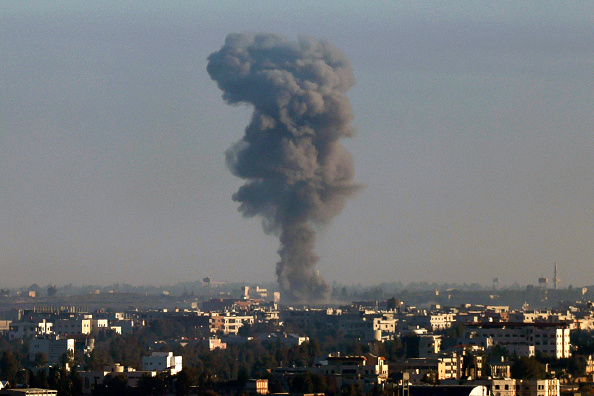
Israel’s Defense Minister Israel Katz announced on Monday (December 9) that Israel will intensify airstrikes on advanced weapons storage sites in Syria and maintain a “limited” ground presence to guard against any potential threats that may arise after the overthrow of the Assad regime.
According to Katz, the Israeli military will “destroy heavy strategic weapons inside Syria, including surface-to-air missiles, anti-aircraft systems, surface-to-surface missiles, cruise missiles, long-range rockets, and coastal missiles.”
Israel is both hopeful and concerned about the turmoil in Syria, as it weighs the consequences of one of the most significant strategic shifts in the Middle East over the past year.
Assad has been supported by Israel’s archenemy Iran, so his downfall is seen as positive news for Israel. However, the rapid rise of Syrian anti-government forces, which were once a branch of a terrorist organization, also brings risks.
Israeli Foreign Minister Gideon Saar stated that Israel has no interest in intervening in Syria’s internal affairs and is only concerned with protecting its citizens.
He said, “That’s why we attack strategic weapon systems, such as remaining chemical weapons or long-range missiles and rockets, to prevent them from falling into the hands of extremists.”
In October of this year, the Israeli army cleared mines in the demilitarized zone bordering Israel-occupied Golan Heights and Syria and established new barriers.
Earlier on Sunday (8th), the military announced that ground forces had been deployed to the demilitarized zone. This 400-square-kilometer (155-square-mile) buffer zone was created under the 1974 Disengagement Agreement and is supervised by the United Nations Disengagement Observer Force (UNDOF).
On Monday, the military released photos of Israeli special forces in the Hermon mountain region in Syria.
Saar emphasized that the number of troops stationed there is strictly limited. He said, “Basically, it is near our borders, sometimes a few hundred meters, sometimes a mile or two. This is a very limited and temporary measure we have taken for security reasons.”
(This article is based on reports from Reuters and The Associated Press)