
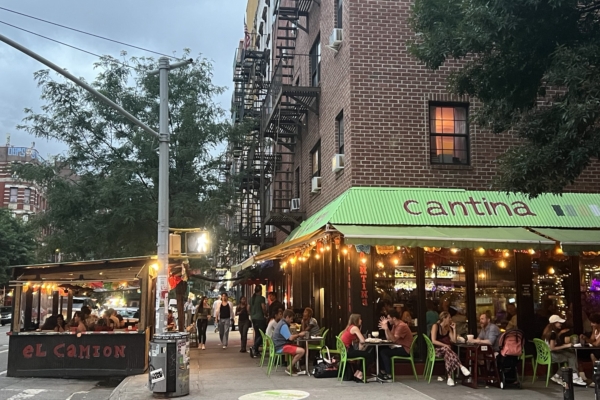
According to the latest regulations in New York City, this Friday, November 29th, is the final deadline for restaurant owners to remove temporary outdoor dining sheds. Unless restaurants have obtained permission under the new “Dining Out NYC” program, they are not allowed to continue setting up outdoor dining areas.
The new regulations were passed by the New York City Council in August 2024 and signed into law by the mayor. The regulations stipulate that restaurants can apply for two types of outdoor dining areas: “Sidewalk Cafes,” which can operate year-round and are set up on sidewalks, and “Roadway Cafes,” which are only allowed to operate between April 1st and November 29th each year and must be closed during other times.
Restaurants found in violation by setting up outdoor dining areas without proper permission will face a fine of $500 for the first offense, and repeat offenders will be fined $1,000.
The new regulations also impose higher requirements for the design and construction of outdoor dining areas. These include compliance with the Americans with Disabilities Act (ADA) and related standards for design. If flooring is used, the material must be durable, mold-resistant, lightweight, easy to dismantle, and have good drainage capabilities. Indoor facilities are limited to lightweight, movable tables, chairs, and decorations.
For many restaurant owners, these regulations also bring significant financial burdens. This is particularly true for “Roadway Cafes” that can only operate during limited times, as they must bear the extra costs of dismantling, storing, and rebuilding outdoor structures each year. Additionally, the need for storage space has increased operational challenges.
This year, the New York City Department of Transportation received a total of 3,655 applications for outdoor dining permits. These included 1,569 applications for sidewalk dining only, 738 applications for roadway dining only, and 674 applications for operating on both sidewalks and roadways simultaneously.