
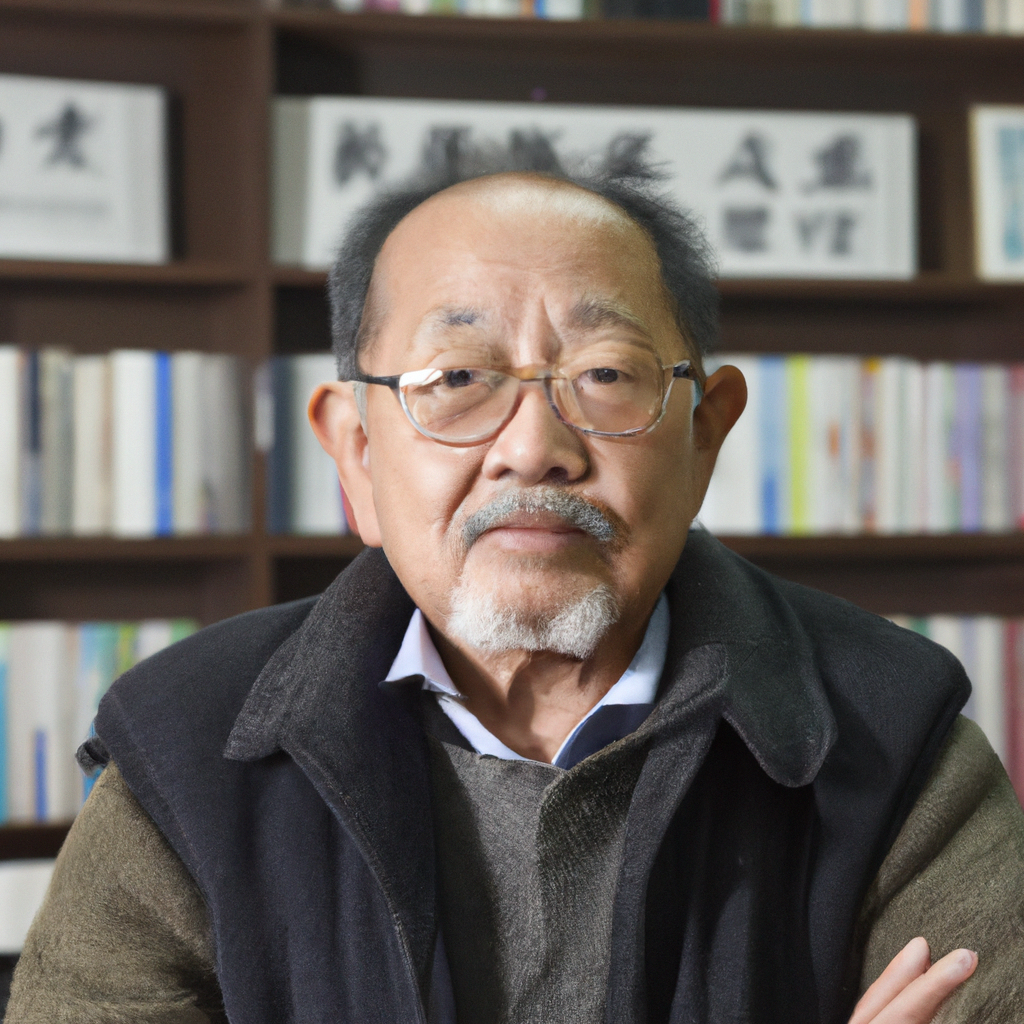
The field of linguistics, as explored by Professor Yanhui Li of the University of Southern California (USC), has long been a subject of curiosity for many. Is linguistics a discipline within the arts or the sciences? These are questions that Professor Li often receives. Her achievements in the field of formal theoretical linguistics have led to her being elected as the 34th Academician of the Taiwan Academia Sinica, receiving recognition in the field of humanities.
Growing up in Taiwan in the 1970s, Yanhui Li initially pursued a practical education at National Taiwan Normal University, considering her family’s financial situation. Little did she know that her studies would ignite a deep interest in linguistics. Her foundational education at NTNU laid the groundwork for her future research. After receiving a scholarship from USC, she pursued a Ph.D. in linguistics in the United States, dedicating nearly 40 years to the study of language.
Yanhui Li’s research on Chinese syntactic structures has opened up new perspectives in the field of Chinese linguistics. Her groundbreaking articles and publications in international journals have set the foundation for Chinese formal syntax studies, showcasing both academic foresight and influence. Her election as an academician at Academia Sinica not only validates her personal achievements but also underscores the indispensable importance of linguistic research in modern technological development.
Linguistics, as a scientific endeavor, delves into the structures, functions, and evolution of languages. Its core purpose lies in understanding how humans utilize language for communication and uncovering the inherent rules governing language itself. Yanhui Li’s primary research focus centers on explaining how the human brain enables children to instinctively grasp their mother tongue without explicit teaching. She posits that language operates as a systematic rule within the brain, facilitating seamless communication.
Taking Chinese as an example, certain phrases can yield multiple interpretations in specific contexts, showcasing the complexity of language that current artificial intelligence struggles to fully comprehend and process. While advancements have been made in neurolinguistics in recent years, Li believes that a detailed description of language systems still requires the efforts of theoretical linguists.
Despite belonging to the humanities, linguistics mirrors the scientific method employed by STEM students to gradually unveil answers through observation, hypothesis, testing, and refinement. Yanhui Li encourages students to engage more with linguistic research, emphasizing its role not only in academic development but also in honing problem-solving skills that can be applied in various real-life scenarios requiring solutions to complex issues.
Li advises students to “understand” and “persist” in their interests. She suggests that once individuals identify their true passions, they should persevere, without overly worrying about job titles or salaries. People are often most skilled and interested in areas where they are passionate; developing in fields they love and excel in can unlock their true potential, resulting in greater success.
Upon her arrival at USC, friends suggested that Yanhui Li switch to the then-trending field of computer science. However, she remained steadfast in her pursuit of linguistics. Today, graduates from linguistics departments are highly sought after by high-tech companies, as linguistics plays a crucial role in understanding human language abilities and learning, serving as a foundational component for the development of artificial intelligence, a fact that brings Li immense satisfaction.
Even in retirement, Yanhui Li plans to continue her research in linguistics, aiming to bring forth more discoveries to the academic community and unravel the remaining mysteries surrounding the human language system.
Yanhui Li expresses her profound gratitude to her influential mentor, Professor Zhengde Huang. Her doctoral dissertation and subsequent research have been inspired by the theories and questions posed by Huang. She acknowledges that it is the guidance and support of her predecessors that have propelled her forward on her academic journey.