
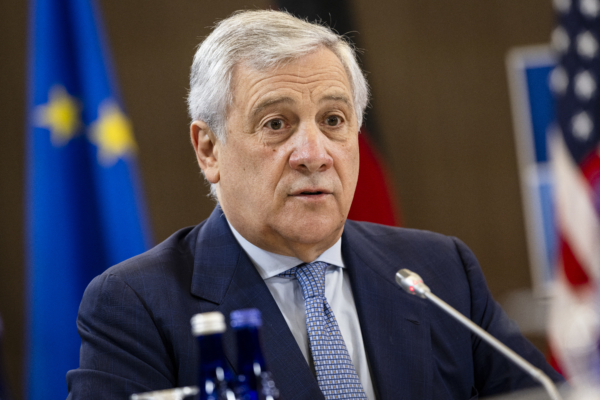
Italy’s Foreign Minister, Antonio Tajani, voiced his support for the European Commission’s proposed tariffs on the export of Chinese electric vehicles (EV) during an interview on Monday (September 16). Later that day, he held talks with visiting Chinese Minister of Commerce.
In early July, the EU began imposing temporary tariffs of up to 37.6% on electric cars imported from China. Last October, the EU initiated an anti-subsidy investigation into low-cost electric cars from China, which is set to continue until November 2 of this year. The final tariff, typically lasting for five years, will be determined through a vote at the end of the investigation.
Chinese Minister of Commerce, Wang Wentao, is currently visiting Europe, attempting to persuade the EU to abandon the anti-subsidy measures as the EU prepares to vote on imposing additional tariffs.
Tajani stated in an interview with Italian media, Corriere della Sera, “We support the tariffs proposed by the European Commission to protect the competitiveness of our companies.”
According to the EU’s procedures, unless an alternative solution is found or a majority of EU member states oppose it during the final vote, the temporary tariffs will officially take effect in early November, becoming permanent.
Tajani and Wang held talks in Rome on Monday. In a statement, Tajani mentioned that they discussed issues such as intellectual property protection, trade and investment in the agricultural sector.
They also discussed the Ukraine conflict as well as the crises in Gaza and the Red Sea. Italy urged Beijing to help resolve issues related to arms supplies to Russia and ensure the safety of shipping routes in the Red Sea.
German broadcaster, Deutsche Welle, previously reported on July 15 that Italy had submitted a favorable opinion on imposing tariffs on Chinese electric vehicles. However, Italian Minister of Industry, Adolfo Urso, told Reuters last week that he expects a negotiated solution to be reached.
In his interview with Corriere della Sera, Tajani emphasized, “We want to establish trade plans on an equal basis, demanding that our products can equally penetrate their market. Our companies must compete on equal terms.” He reiterated this stance during the meeting.
As one of the leading automobile manufacturing countries globally, Italy boasts brands like Fiat, which is part of the Stellantis group.
At the end of July, Italian Prime Minister, Giorgia Meloni, visited China in efforts to reset Italy-China trade relations. Prior to this, Italy had withdrawn from the Belt and Road infrastructure investment plan.
On Thursday (September 19), Wang will meet with Valdis Dombrovskis, Executive Vice President of the European Commission and Trade Commissioner.
The European Commission is also negotiating with Beijing on subsidies for the electric vehicle industry. The EU hopes that any solution will be based on WTO rules and address the subsidies detrimental to EU industries identified during the investigation.
However, according to Bloomberg, Beijing aims to neutralize the EU’s investigation into Chinese electric vehicles through negotiations and attempts to divide EU member states through pressure tactics.
Beijing has threatened retaliation if the EU proceeds with levying tariffs on Chinese electric vehicles. This retaliation could include potential countermeasures against European agricultural products, the aviation industry, and high-displacement cars, as well as challenging the EU’s investigation at the WTO.
Bloomberg reported on July 16 that EU member states expressed support for imposing temporary tariffs on Chinese electric cars in a non-binding vote that week. While specific details of each country’s position in the consultative vote were unclear, the results indicated multi-country support for the decision to impose temporary tariffs above the EU’s standard 10% car import tariff.