
Recently, several international airlines have announced cutbacks or suspensions of flights to China. In contrast, Chinese airlines continue to expand on international routes, despite suffering severe losses. Experts attribute this trend to weakened travel demand in China, reductions in economic and trade exchanges, and political behaviors aimed at expanding influence rather than cost considerations on the part of the Chinese government.
Many international airlines have announced reductions or cancellations of flights to China in recent times. Following the outbreak of the pandemic, foreign airlines, led by Western airlines such as British Airways and Qantas Airways, have either canceled or chosen not to resume flights to China.
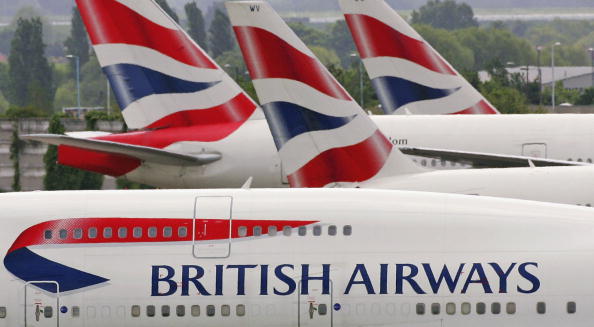
British Airways announced last Thursday (August 9) that it would suspend flights from London to Beijing for a year starting at the end of October due to commercial reasons. Last month, it also suspended one of its twice-daily flights from London to Hong Kong.
Virgin Atlantic announced last month that it would indefinitely cancel its London-Shanghai route starting from the end of October due to the longer flight duration.
Qantas Airways suspended its Sydney to Shanghai flights in July, citing a seat occupancy rate of only half and low travel demand to China.
Royal Brunei Airlines in Asia will suspend its Beijing flights twice a week from October due to “market conditions.”
As the world’s second-largest economy, China engages in frequent trade with many countries around the world. Why are Western airlines abandoning the vast Chinese market?
David Huang, a financial expert in the United States, analyzed that fewer Chinese people are traveling abroad, especially to Europe and the United States, due to two main reasons. Firstly, after the pandemic, people have less money in their wallets, leading to decreased economic activity and reduced ability for businesses to make profits, resulting in fewer Chinese people traveling abroad.
Secondly, many individuals, such as employees of state-owned enterprises, government officials, and teachers who used to have significant purchasing power and were able to travel abroad easily, now face stricter passport controls and approval processes, which has contributed to a decline in the number of people traveling abroad with substantial purchasing power.
Furthermore, worsening investment environment in China also leads to a decrease in the number of people from Europe and the United States coming to China for business trips, visits, exchanges, and tourism, due to market factors.
Additionally, after the Russia-Ukraine conflict, Russian airspace is closed to the majority of Western airlines, resulting in rapidly increasing costs for these airlines flying to China.
Meanwhile, as Chinese airlines continue to increase international flights through routes passing through Russia and the Arctic, they engage in price competition which intensifies competition with Western airlines that are expanding in a cost-ignorant manner.
According to flight tracking website Flightradar24, British Airways’ Beijing-London flights for four days a week are around 2.5 hours longer than the daily flights introduced by China Southern Airlines on the same route last year.
Furthermore, due to political factors, some Western airlines face resistance when trying to open international routes; for example, some may want to open routes to China, but due to political reasons, the Chinese government may not approve them. In the context of unequal competition, Western countries also sometimes cancel some flights between the West and China.
Analyzing the massive reduction in travel to China, Taiwan’s financial expert Huang Shicong stated that stringent visa reviews and efforts to prevent capital outflows might contribute to the significant decrease in travel to and from China.
From the perspective of Europe and America, trade wars, technological conflicts, China’s national security laws, or measures related to espionage prevention have caused American and European countries to be more cautious in investing or have reduced investments in China.
This decrease in personnel exchanges has led to a more isolated position for China in the global economic landscape, affecting interactions with international individuals as well.
In conclusion, while short-term benefits may be seen in China’s airline market share, in the mid to long term, this situation may not be favorable for China’s economic development and future diplomatic policies.