
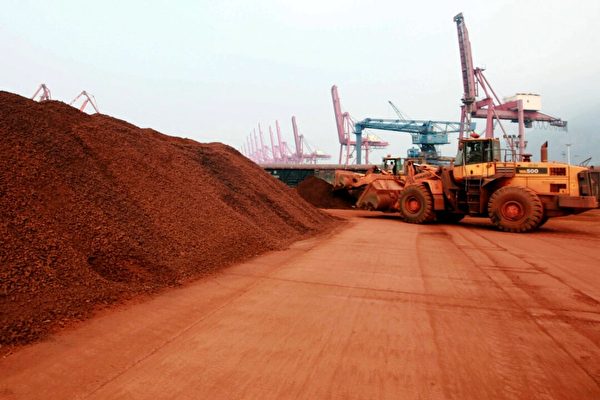
Japan and Australia announced on Friday (May 1st) that they will elevate their bilateral cooperation in key mineral sectors to become a core pillar of economic security, prioritizing the advancement of six critical mineral development projects within Australia. These projects will cover areas such as rare earths, nickel, gallium, and mineral sands rare earth extraction. This collaboration between Japan and Australia demonstrates that Western countries are joining forces to safeguard their supply chains and reduce reliance on China.
According to a report by Nikkei on Friday, Japanese Prime Minister Sanae Takai is expected to hold talks with Australian Prime Minister Anthony Albanese on Monday (May 4th) to officially sign the cooperation plan, which will designate key minerals as the core pillar of the economic security partnership between the two countries, followed by the issuance of a joint statement.
Among the six priority projects is the flagship rare earth production project, led by a joint venture between the Japanese trading company Sojitz and the official independent administrative agency Japan Organization for Metals and Energy Security (JOGMEC). This joint venture commenced production of heavy rare earths in 2025.
Other projects include a nickel mining project led by Sumitomo Metal Mining and Mitsubishi Corporation, gallium recycling project supported by Sojitz, and a mineral sands rare earth extraction project jointly led by JX Advanced Metals and Marubeni.
This collaboration comes at a time when the Australian government is undergoing regulatory reforms. Albanese announced on Wednesday (April 29) that environmental regulations will be reformed, with state governments taking over responsibility for environmental assessments and approvals from the federal government to eliminate delays in resource development caused by the dual-track review system.
The Australian government also began establishing a strategic reserve system for critical minerals in 2025, committing $1.2 billion Australian dollars (approximately $860 million USD) to ensure the stable supply of strategic minerals and support long-term mineral development projects.
Data released by the Japanese Ministry of Economy, Trade and Industry recently showed that Japan’s rare earth imports rely on China for 60% to 70%. With China using export controls as a geopolitical tool and the risk of disruptions in maritime routes, this situation poses a significant security threat.
Meanwhile, the United States is also actively focusing on securing critical minerals. In February 2026, the U.S. State Department hosted the 2026 Ministerial Meeting on Critical Minerals in Washington, bringing together representatives from 54 countries and the European Commission to coordinate policy in this area within the Western camp.