
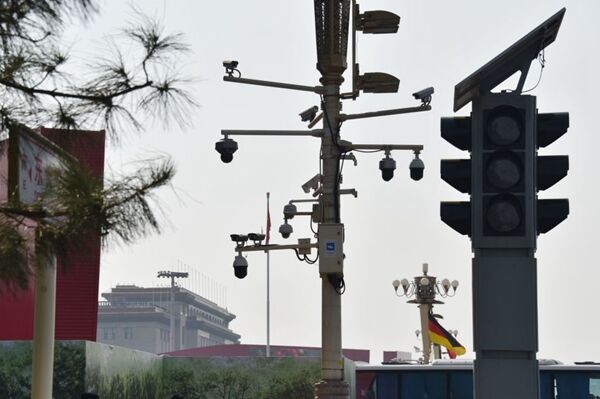
In Shanghai, a blogger released a video on April 28 claiming that the online trend of “catching spies nationwide” is evolving into a movement of mutual surveillance. In the comment section, many netizens view foreigners, international students, and foreign company employees as potential targets, sparking concern.
Chinese scholar Wu Ming (pseudonym) told The Epoch Times that since April 15, the so-called anti-spy propaganda led by the Chinese Communist Party (CCP) has flooded official media and social media platforms, creating a frenzy that seems to be inciting a mass movement. Scholars and retirees who have experienced the Cultural Revolution are surprised by the recent surge in anti-spy measures, especially online, as it has shifted from simply raising awareness of security to fueling a public panic and suspicion network.
Wu Ming continued, “In our community, there are many university professors and young teachers who find it strange why there is such a massive anti-spy campaign at this time. Was there no spy before? Although there are fewer foreigners now and foreign teachers have returned, anti-spy fervor has emerged. I see this as a reactionary trend, aiming to close off the country once again.”
In recent weeks, the Chinese national security departments have successively publicized several so-called spy cases, which frequently appear on media platforms but often lack clear details of the location and time of the incidents. The plots are bizarre, including a ride-hailing driver capturing “suspicious individuals” and a farmer using a hoe to stop “cross-border spies.” The authenticity of such information is difficult to discern, leading to confusion and skepticism once spread on the internet.
In response, Chinese sociologist Wang Tao (pseudonym) criticized that after incidents like these spread on various platforms, they have significantly influenced public judgment. “Many netizens share screenshots and cases, directly linking everyday behaviors such as taking photos or engaging in foreign exchanges to ‘spy activities.’ Some foreign tourists and outdoor photographers are treated as suspects and publicly questioned, creating an atmosphere that has already sparked anxiety among the public.”
In a video released on April 28, a video blogger in Shanghai expressed that in many people’s perception, there is no gray area in the world, only black and white. Any association with foreign countries is equated with risks or even espionage, without presenting evidence or following legal standards.
He further stated that some bloggers produce video content focusing on “catching spies,” deliberately intensifying the tense atmosphere to attract traffic. After the content spreads on platforms, it triggers discussions among netizens. Some comments in the discussion section indicate that “people are now afraid to take photos casually” and “seeing a foreigner makes people suspicious,” reflecting that the emotions of some individuals have been affected.
Over the years, the CCP has continuously strengthened the narrative of national security, with related propaganda widely disseminated on online platforms. Meanwhile, the dissemination mechanisms of short videos and social media make emotional content easier to spread, creating an amplifying effect on public opinion.
This recent situation has now spread to universities. A teacher responsible for recruitment at a university in Shandong province stated in an interview that the school is also conducting anti-spy measures and prohibiting the use of VPNs. “The authorities say they want to catch spies. Now there are fewer foreign students than last year, and mostly African students are left, who are the targets of the authorities’ united front work and won’t be suspected as spies. The main focus is on American and German students as they might teach Chinese students how to bypass internet controls.”
A notice circulating on social media revealed that some students from universities were identified for engaging in “violation of network access behavior (e.g., using VPN)” and had their accounts blacklisted and disabled. The notice mentioned that these measures were carried out in accordance with the requirements of the provincial cyberspace department.
One student received a notice from the campus security department stating: “We received a notice from the provincial cyberspace office that detected unsafe network behaviors and possible violations (such as VPN usage) on your account, breaching the national cybersecurity regulations. Your account will be disabled as per the cyberspace office’s request.”
The notice indicated that the accounts involved must undergo a network security risk assessment by their respective colleges, submit stamped materials, and only after approval from the network information center can the restrictions be lifted. The process requires students to actively cooperate with the investigation and contact the college secretary or relevant personnel. The notice requested students to first check their devices for any unauthorized network access and get in touch with the college secretary or vice secretary.
A legal scholar in Beijing commented that safeguarding national security should be based on clear legal frameworks and professional judgment standards, rather than relying on vague administrative directives or “collective responsibilities” of units. He stated, “By using administrative means to restrict the behavior of university students, the CCP has blurred legal boundaries, undermining the institutional foundation that universities should have as academic spaces.”