
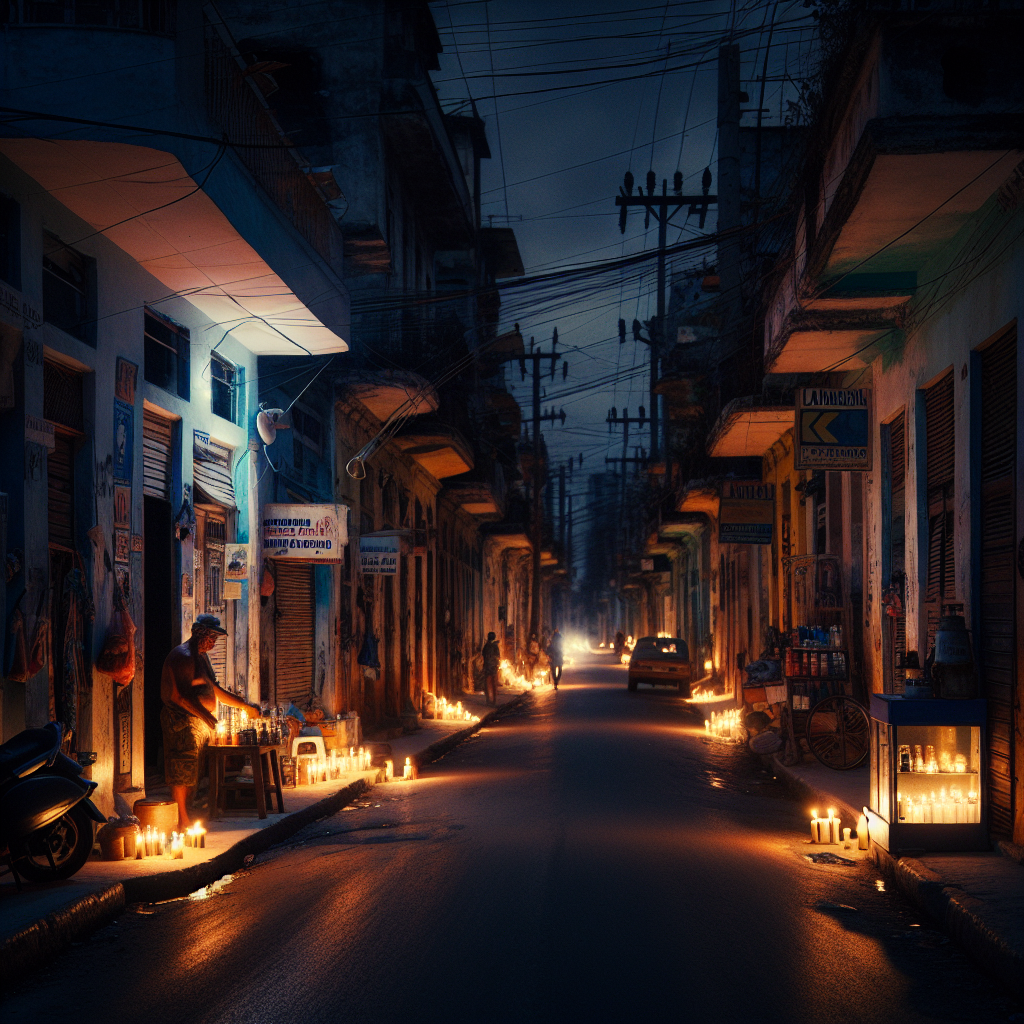
In communist Cuba, power outages are frequent, shortages of supplies are rampant, fuel is rationed, and the streets lay empty. These scenes have become the daily reality for the people of Cuba.
Although similar conditions have been ongoing in this American island nation for decades, the most severe energy and economic crisis since the disintegration of the Soviet Union have led to a catastrophic level of deterioration in the lives of the people in Cuba.
Under the US oil blockade that began in January 2025, Cuba’s crude oil supply from its communist allies has been dwindling. By March 2026, only 730,000 barrels of foreign crude oil had been imported into Cuba.
– In April 2025, Venezuela supplied crude oil to Cuba as part of a bilateral agreement, based on barter exchange of products and services rather than cash payment.
– By July 2025, Venezuela and Mexico, as Cuba’s major crude oil suppliers, faced challenges in maintaining automobile fuel production, leading to minimal remaining capacity left for Cuba.
– In December 2025, Venezuela sent its final shipment of crude oil to Cuba.
– Following the arrest of Venezuelan leader Nicolás Maduro on January 3, 2026, oil supply from Venezuela was immediately cut off. The last batch of oil from Mexico arrived in Cuba on January 9, totaling 86,000 barrels.
– On January 29, 2026, oil shipments from Mexico to Cuba were halted after the US President Donald Trump’s intensified pressure actions.
– In late March 2026, the US allowed a Russian-flagged tanker to deliver 730,000 barrels of oil to Cuba, marking the first significant import of crude oil in three months.
With Cuba’s oil imports restricted from its main ally, Venezuela, and US military actions further disrupting Venezuelan oil production and transportation, Cuba’s energy infrastructure is gradually collapsing.
Due to failures in the main electricity provider in Cuba, Havana lacks the energy needed to maintain a stable power grid, resulting in frequent blackouts and widespread shortages of medicines, food, and various supplies.
After the arrest of Venezuelan President Maduro, the Havana authorities may be compelled to return to the negotiating table to restore Cuba’s energy lifeline.
The White House aims to force this communist-led country to make concessions in negotiations. The US has raised tariffs on Cuba’s oil suppliers, indirectly pressuring Cuba. Additionally, the US Coast Guard has been involved in direct intervention in the region. Through these actions, the US has effectively blockaded Cuba.
In February of this year, the US made a significant departure by directly selling fuel to private businesses in Cuba. However, the quantity exported has been minimal, totaling only about 30,000 barrels so far this year.
Recent actions from the Trump administration suggest some relaxation in pressure. On March 31, the US allowed a Russian-flagged tanker to deliver 730,000 barrels of crude oil to Cuba, marking the first major oil import to Cuba in three months. With Cuba’s daily oil demand in 2025 reaching nearly 80,000 barrels, this batch of oil will only cover Cuba’s supply for less than 10 days.
Oil imports are the lifeline of Cuba’s energy infrastructure; according to the International Energy Agency (IEA) data until 2023, net crude oil imports accounted for nearly 60% of the country’s total supply.
Based on a barter agreement for products and services, these oil imports from Venezuela have been the main source for Cuba over the past 25 years.
According to S&P Global Commodities at Sea data, other oil suppliers for Cuba include Mexico (25%), Russia (10%), and Algeria (4%).
Due to Venezuela and Mexico’s struggles in maintaining fuel production, even before the current blockade, Cuba’s oil imports from these two countries were under threat.
Venezuela’s oil industry once flourished but has been severely damaged due to years of mismanagement and international sanctions. The US is now cooperating with Venezuela’s interim government to help rebuild the country’s faltering energy infrastructure.
Mexico’s oil industry faces numerous restrictions in operations and finances, with the production of Mexico’s state oil company Pemex hitting the lowest level in 46 years in 2025.
Today, US diplomatic policies are making it even more challenging for Cuba to stand in the global energy market.
After the arrest of Venezuelan leader Nicolás Maduro on January 3, President Trump convinced Venezuela’s interim leader Delcy Rodríguez to cease exporting oil and natural gas to Cuba.
On January 9, a small batch of oil from Mexico arrived in Cuba, totaling 86,000 barrels.
Despite Cuba’s dependence on oil, energy revolution plans were initiated in Cuba in 2005 by Fidel Castro’s administration. However, fundamental issues such as aging infrastructure from the Soviet era, lack of investment, reliance on state-subsidized oil, insufficient funding for new technologies, and lack of long-term planning and maintenance were not adequately addressed.
Reuters analysis shows that as of 2024, 87% of Cuba’s energy still depends on oil, surpassing the 54% average in Central and South America.
Cuba must move away from its failed Soviet-style central planned economic model, where the state controls all means of production and industries. Cuba should embrace a market economy system, where investment and production decisions are guided by market supply and demand forces.
Since 2021, over a million people have fled Cuba. Analysts compare this current population outflow to the exodus during the 1994 Special Period when Cuba faced food shortages, energy crisis, and agricultural decline following the collapse of the Soviet Union.
Cuba’s President Miguel Díaz-Canel announced on March 13 that dialogue had begun between Cuba and the US. On April 20, American diplomats set foot on Cuban soil for the first time since 2016.
Alejandro García del Toro, Deputy Chief of US Affairs at the Cuban Foreign Ministry, stated that the primary task of the talks is to lift the energy blockade on Cuba.
Meanwhile, the Democratic Party proposed legislation to halt the energy blockade on Cuba without congressional approval. On April 28, Republican senators rejected this bill.
Several human rights defenders, who were arrested for protesting against the government’s policies in dealing with the energy crisis, were released on April 30.
It is undeniable that Cuba is facing a severe energy crisis, and its future relies on diplomatic dialogue, economic reforms, and international cooperation to stabilize its energy infrastructure and ensure the well-being of its citizens.