
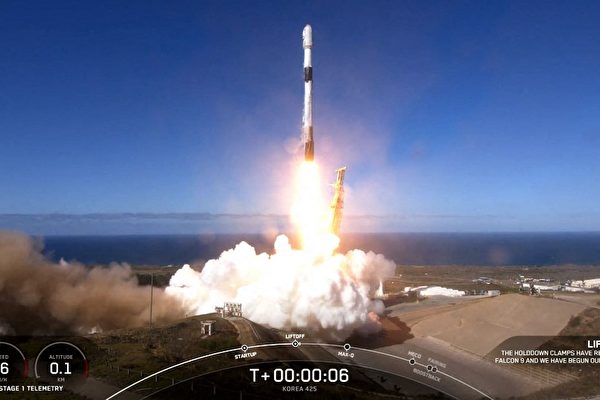
The California Coastal Commission (CCC) has issued an apology to Elon Musk’s SpaceX and agreed to no longer require the company to apply for coastal development permits for rocket launch plans at the Vandenberg Space Force Base. This concludes the federal lawsuit brought by SpaceX alleging political bias on the part of the CCC.
“The Commission acknowledges that its responsibility is to protect and enhance California’s coastal areas within the authorization of the Coastal Act and the Coastal Zone Management Act,” the settlement document stated. “The Commission agrees not to consider irrelevant factors in fulfilling its duties, and specifically agrees that SpaceX or its executives’ political positions, political speech, or employment policies will not be taken into account when taking any regulatory actions against SpaceX.”
SpaceX filed a lawsuit against the CCC and its commissioners in October 2024, accusing the agency of overstepping its authority during a hearing that month and displaying inappropriate political animosity towards SpaceX and its CEO.
According to the settlement agreement unsealed in a U.S. court in Los Angeles on Tuesday, the Commission acknowledged that the remarks of some commissioners during the October 10, 2024 hearing “demonstrated political bias against SpaceX and its CEO, constituting inappropriate comments.” CCC has formally apologized for this, as outlined in a signed letter attached to the settlement document.
Furthermore, the Commission reassured SpaceX that for the company’s future launch operations at Vandenberg Base’s Launch Complex 4 and 6 (SLC-4, SLC-6) or within federal exclusive areas, as long as it falls within the scope covered by federal consistency determination under the Coastal Zone Management Act, there will no longer be a requirement to apply for coastal development permits.
On October 12, 2024, CCC rejected SpaceX’s plan to increase rocket launch frequencies, voting against allowing SpaceX to conduct up to 50 rocket launches annually at Vandenberg Base. Nine days later, Musk vowed to sue, and SpaceX subsequently filed a lawsuit, alleging that CCC’s actions violated the U.S. Constitution, the Coastal Zone Management Act, and the California Coastal Act.
The lawsuit argued that as a federal asset, Vandenberg Base is generally not subject to state agency permitting requirements for launch activities and related infrastructure. SpaceX contended that CCC attempted to impose restrictions that contravened federal permits already approved by the U.S. Air Force and Space Force.
As per the terms of the settlement, SpaceX will submit a mutually agreed voluntary dismissal agreement. The company has agreed to provide CCC with a copy of monitoring data regarding sonic booms’ impact on the Channel Islands that it has already shared with the U.S. Air Force.
The agreement does not attribute responsibility to either party and states that the settlement was reached “solely in the desire to promptly resolve legal and factual disputes.”
CCC’s position is that certain off-base activities, such as beach closures or the disposal of solid materials into the ocean, may still require permitting in the future, and SpaceX retains the right to object to this. ◇