
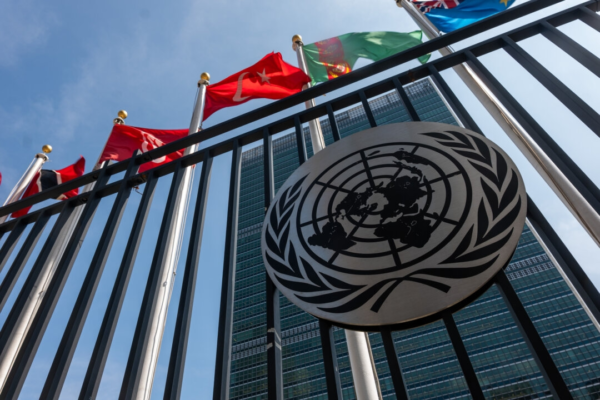
According to a report by independent media outlet Devex on Tuesday, the United States has presented several conditions to the United Nations (UN) regarding the payment of dues, demanding further reductions in unnecessary expenditures and the containment of China’s influence within the UN, or else it will cease funding the organization.
Currently, the United States has not paid billions of dollars in dues to the United Nations, including regular budget contributions and peacekeeping operation expenses. In January of this year, UN Secretary-General António Guterres warned that unless member states fully and timely pay their dues, multiple UN agencies will face an “imminent financial collapse.”
The reasons given by the United States for refusing to pay its UN dues include the organization’s failure to fulfill its original purpose, bureaucratic inefficiencies, wasteful spending, and the significant influence exerted by Chinese officials in key positions, often resulting in constraints placed on the United States. The US stated that for it to fulfill its obligation to fully pay its dues, the UN must take more concrete remedial actions.
In recent times, the US has issued two diplomatic briefing documents, one titled “US 2026 Priorities for UN Leadership Reform,” which highlighted the reductions made to the UN’s regular budget by $570 million in 2025, leading to the elimination of thousands of positions in bloated bureaucratic structures. Consequently, the UN is expected to maintain this momentum and build upon the foundation laid in 2025.
The second document submitted to diplomats in New York imposes additional conditions for continued funding. It specifies that the US plans to contribute to the UN’s regular budget for 2026, provided that the Secretary-General implements “quick win” reforms as outlined in the document.
The documents explicitly call for reforms to the UN’s pension system, the cessation of business-class travel for personnel below the rank of Deputy Secretary-General, a 15% reduction in staff benefits, and further cuts to senior UN official positions.
Additionally, the memoranda promise to provide “a substantial extra amount” to the UN peacekeeping budget, but contingent on the UN reducing long-standing ineffective peacekeeping missions by 10%.
Apart from financial reforms, the US’s two lists specifically target China. The US demands that UN Secretary-General Guterres cease accepting funds from the “Single Donor Trust Fund” managed by his executive office and relocate the existing fund outside his purview.
According to Devex’s report, several diplomatic sources bluntly stated that this policy is aimed directly at the “UN Peace and Development Trust Fund.” This fund was promised in 2016 by the Chinese Communist Party leader with an initial investment of $200 million, later extended until 2030 in 2020.
Initially, China claimed the fund would be used for training peacekeeping personnel and carrying out “mediation work” in regions like Liberia and Nigeria. Since its establishment, the fund has supported over 200 projects globally and helped establish a “strong partnership” between the UN and China, according to UN documents.
The fund’s top governing committee is mainly controlled by the Chinese Communist Party, including the permanent representative of China to the UN, the Deputy Secretary-General of the UN’s Department of Economic and Social Affairs, and senior officials from China’s Ministry of Finance and Ministry of Foreign Affairs. The fund’s influence has expanded continually, largely due to China inserting numerous personnel into UN leadership positions.
The latest report released by the US House Select Committee on the CCP in March revealed that China is leveraging funding pressures, personnel placements, false peacekeeping deployments, and manipulation through fake non-governmental organizations to reshape and infiltrate the UN system, aiming to turn it into a tool to advance Chinese ambitions.
The report detailed how China’s contribution to the UN regular budget has increased from around 2% to over 20% in the past two decades, making it the second-largest donor after the US (22%). China has transformed “payments and donations” into political leverage, taking advantage of the UN’s long-standing financial shortages.
The committee’s report also mentioned China strategically placing personnel in high-level decision-making positions, focusing deliberately on areas closely linked to the Belt and Road Initiative, including the UN Department of Economic and Social Affairs (DESA), International Court of Justice (ICJ), United Nations Development Programme (UNDP), Food and Agriculture Organization (FAO), International Civil Aviation Organization (ICAO), and more.
Devex’s report also highlighted how China is utilizing the UN to advance the Belt and Road Initiative, aiming to expand its control over the infrastructure and security influence of multiple countries.
This approach has faced criticism, with many observing that China’s high-value loans for infrastructure developments have led to developing countries falling into a “debt trap,” unable to repay loans and ultimately having to mortgage vital infrastructure like ports to China, effectively granting China “legal” control over strategic assets in those regions.
In response, the Chinese Permanent Mission to the UN noted Devex’s report and argued that the financial difficulties faced by the UN in recent years stem from the “long-term arrears in dues by the largest contributor (the US).” They also criticized the US’s efforts to block cooperation between China and the UN as “unreasonable and doomed to fail.”
UN spokesperson Stephane Dujarric emphasized that paying dues is a “duty” of member states, and the Secretary-General is actively working towards reforming the UN, a process that necessitates collective decision-making by member states.