
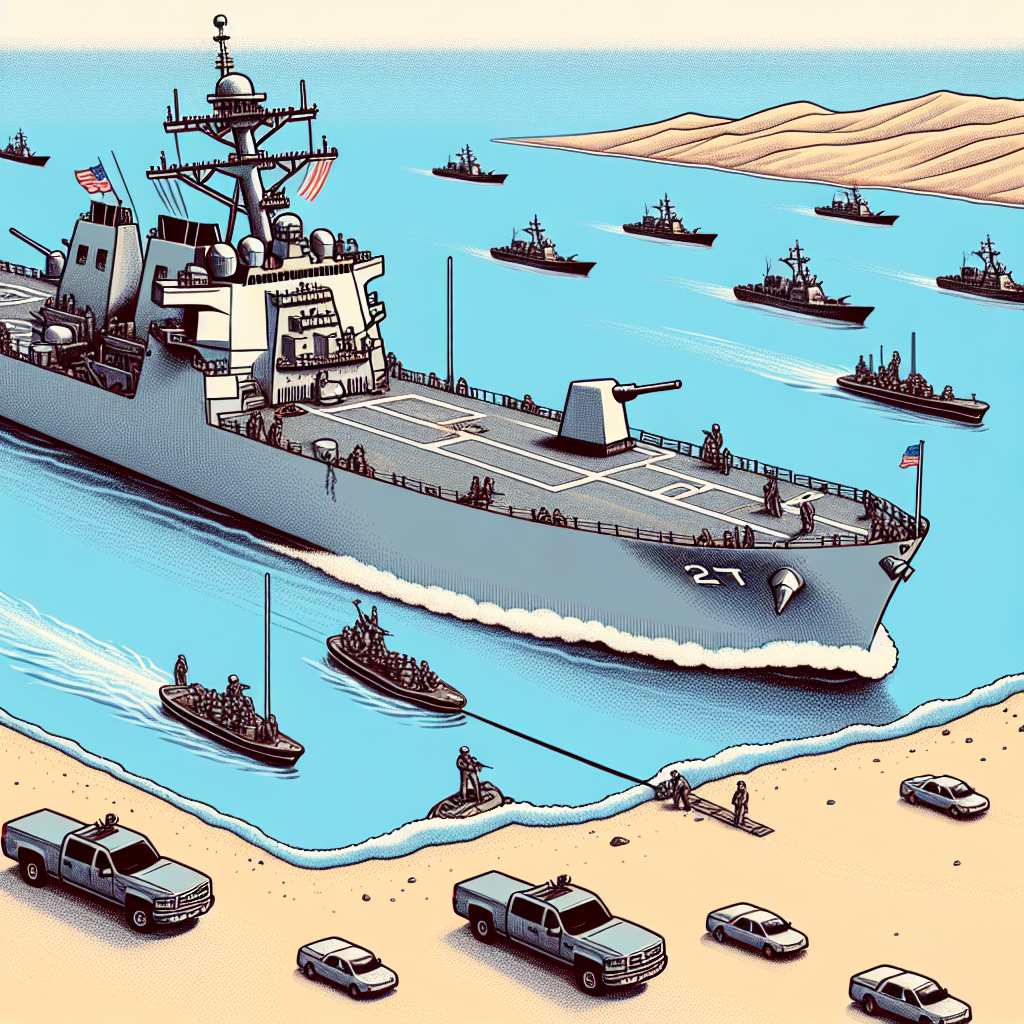
On Monday, April 27, the United States Central Command released images showing a US Navy destroyer intercepting a commercial oil tanker headed for Iran. Secretary of State Mike Pompeo also accused Iran of attempting to profit from controlling the Strait of Hormuz.
This interception marks the latest enforcement action by the United States to block Iranian port access.
The Central Command posted on X platform, stating, “On April 26, after M/T Stream attempted to sail to an Iranian port, the US guided-missile destroyer USS Raphael Peralta (DDG 115) implemented a blockade targeting Iranian ports.”
According to MarineTraffic maritime data, the M/T Stream flying the Iranian flag was last tracked in the Malacca Strait.
Secretary of State Pompeo, when discussing the US military blockade, told Fox News on Monday, “This is not a blockade on shipping.”
“It’s a blockade on Iranian shipping – because they can’t be the sole beneficiary of an illegal, non-compliant, and unreasonable toll and control regime in the Strait of Hormuz,” Pompeo said.
Reuters reported on Monday that ship tracking data showed that in recent days, six Iranian oil tankers loaded with oil were forced to return to Iran due to the US blockade. According to satellite analysis from TankerTrackers.com, the six tankers are estimated to be carrying 10.5 million barrels of oil.
Before the start of the US-Iran war on February 28, usually 125 to 140 ships were entering and exiting the strait daily. However, data from Kepler ship tracking and satellite analysis from SynMax shows that in the past day, only seven ships entered and exited the strait, with none transporting oil to global markets.
The US Central Command stated on Sunday that the US military continues to prevent ships from entering Iranian ports, “The US has directed 38 ships to turn around or return to port.”
With President Trump continuing the maritime blockade of Iranian ports, Iran’s storage space for oil is rapidly running out, potentially causing “irreversible” damage to the regime’s largest industrial and economic lifeline.
According to Bloomberg citing satellite images, a large super tanker was found near Kharg Island, a crucial hub for Iranian oil controlling about 90% of crude exports. However, with the US blockade around the Gulf of Oman, there is nowhere for the crude transport ships to go. Experts suggest that this indicates the Iranian regime is using these vessels as floating storage facilities.
The New York Post reported that Derek Reisfield, co-founder of Marketwatch and former McKinsey consultant, stated, “If Iran is forced to shut down oil and natural gas production due to lack of storage capacity, production capability will suffer permanent damage.”
“The damage will be irreversible,” he added, “Production losses could potentially reach 500,000 barrels per day.”
It is estimated that Iran’s onshore storage facilities may be filled to capacity by April 29.