
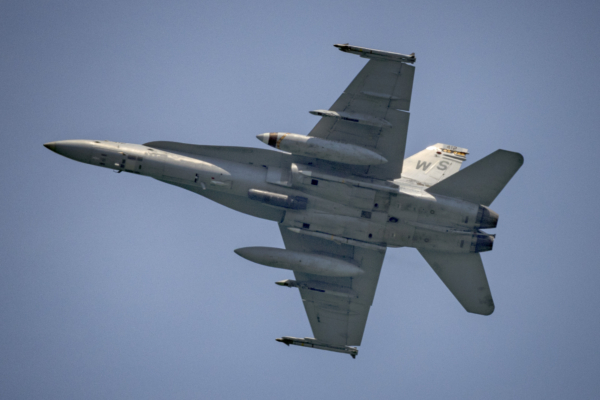
On Monday, April 27th, the Philippines and the U.S. military conducted anti-landing exercises in a strategic area facing the South China Sea. As “enemy” ships and unmanned boats approached the coast of Palawan, participating troops successfully intercepted the threat by precisely hitting designated targets with live ammunition, effectively neutralizing the simulated assault.
The joint military exercise, named “Balikatan,” was launched on April 20th and will continue until May 8th. The core focus of the exercise is practicing coastal defense tactics and testing the collaborative combat capabilities of multinational forces in safeguarding territorial waters.
In terms of participating countries, this year’s exercise is the largest in history – with Canada, France, New Zealand, and Japan joining as formal participants alongside Australia, highlighting the expanding security partnership network of the Philippines.
According to reports from Reuters and other sources, the exercise covers precise strikes and interception drills in the Philippine coastal waters, emphasizing integrated air defense and missile defense, multinational maritime joint operations, and the highly anticipated live-fire anti-landing exercises.
Romeo Brawner, the Chief of Staff of the Armed Forces of the Philippines, emphasized the strategic value of Palawan Island. He pointed out that the island faces the South China Sea and is across from the Kalayaan Island Group, part of the Spratly Islands. Philippine authorities assert that the area falls within their Exclusive Economic Zone (EEZ).
“We are defending our Exclusive Economic Zone, which is vital for our access to resources, food, and energy. Therefore, defending this territory is crucial for the Philippines,” Brawner told reporters.
This year, over 17,000 soldiers are participating. Despite current U.S. involvement in Middle Eastern affairs, approximately 10,000 troops have been deployed to the Philippines, demonstrating America’s commitment to the Indo-Pacific region.
Brawner noted that this year’s exercise differs significantly from previous ones by heavily utilizing unmanned systems such as drones in addition to deploying the High Mobility Artillery Rocket System (HIMARS). The exercise also showcased the recently acquired BrahMos missiles by the Philippines and advanced weaponry from allies, including Japan’s 88 anti-ship missiles to be used in sinking exercises.
Another location for the live-fire anti-landing exercise is Zambales province, facing the South China Sea and approximately 230 kilometers from the fiercely disputed Scarborough Shoal, which is currently controlled by China.
China has repeatedly criticized such joint military exercises, alleging that they escalate regional tensions. In recent years, the Philippines and Beijing have been at odds in the South China Sea. Despite the 2016 ruling by the Permanent Court of Arbitration invalidating China’s Nine-Dash Line claim, Beijing asserts sovereignty over nearly the entire South China Sea.
Of note, U.S. and Philippine forces will also conduct maritime strike exercises for the first time on Itbayat Island, the northernmost part of the Philippines. The island is only about 155 kilometers from Taiwan, bearing significant strategic symbolism amid heightened tensions in the Taiwan Strait.
China consistently claims Taiwan as an “inseparable part” of its territory, but democratic Taiwan vehemently opposes this and insists that the future of Taiwan can only be decided by its people.
Furthermore, since the signing of the Reciprocal Access Agreement (RAA) between Japan and the Philippines in 2024, Japan has significantly enhanced defense cooperation with the Philippines. Japan’s operational forces participated for the first time in the exercise, launching the 88 anti-ship missiles, a move welcomed by the Philippines, as it paves the way for future military equipment cooperation by clearing obstacles related to Japan’s restrictions on weapon exports.