
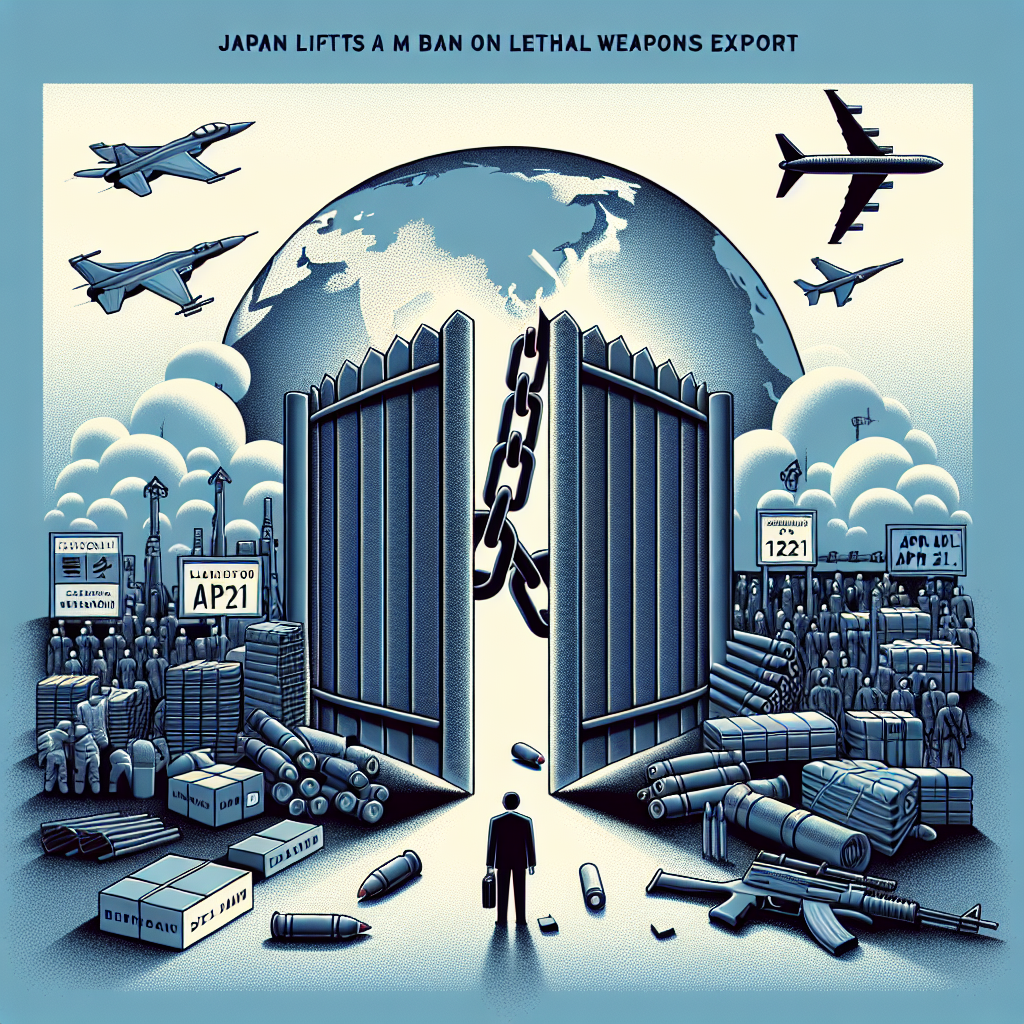
In recent days, Japan announced the abolition of the ban on exporting lethal weapons, a move experts believe signifies a shift in Japan’s defense policy. This decision is expected to impact the overall defense capabilities in the Indo-Pacific region and enhance deterrence against China.
On April 21st, Japan declared the abolition of the ban on exporting lethal weapons, revising the Three Principles on Defense Equipment Transfer which governed export management rules. This revision allows for the export of weapons with killing capacity such as fighter jets, combat drones, missiles, and patrol vessels to countries that have signed defense equipment and technology transfer agreements with Japan, including Australia, India, the Philippines, and 17 other countries. Previously, Japan’s military exports were restricted to non-combat categories like rescue, transport, surveillance, and mine sweeping, deviating from the defense-focused principle maintained since World War II.
Japanese Prime Minister Takaichi Sanae stated that in the increasingly challenging security environment, no country can solely safeguard its peace and security, emphasizing the necessity of having partners that support each other in defense equipment and related fields.
Lin Xiancan, an adjunct professor at National Chengchi University in Taiwan, noted on the New Tang Dynasty TV program “Current Affairs Corner,” that Japan’s shift in defense policy is influenced by both international and domestic factors. Lin specializes in Northeast Asian regional security, China’s foreign and military strategies, Japan’s foreign affairs and defense policies, and Sino-Japanese relations.
Regarding the reasons for Japan’s defense policy transformation, Lin pointed out that externally, China’s strengthening power ambitions to alter the status quo in the Western Pacific region, especially regarding the South China Sea and Taiwan, reflect external factors driving Japan’s stance change.
Moreover, Lin highlighted internal factors within Japan. Since the 1996 redefinition of the security system between the United States and Japan, Japan has progressively increased its burden-sharing within the U.S.-Japan alliance framework. The Abe government committed to doubling defense spending from 1% to 2% of GDP, a goal achieved ahead of schedule by current Prime Minister Takaichi Sanae last year. This commitment, along with the recent weapon export deregulation, indicates Japan’s enhanced alliance partnership with the United States.
Chen Wenjia, vice president of Kainan University in Taiwan and a national security strategy scholar, emphasized that Japan’s loosening of weapon exports signifies a shift from being a participant in defense to a provider of security. This structural change will have significant implications for the security situation in Northeast Asia and the Taiwan Strait.
Chen stated that due to Japan’s past focus on territorial defense, its role being resource and logistics oriented minimized pressure on China and North Korea. However, with the ability to export lethal weapons, Japan’s security role has clearly escalated. This will enhance the division of tasks within the U.S.-Japan alliance, allowing Japan to shoulder more regional defense responsibilities while pressuring China and North Korea indirectly, ultimately strengthening overall deterrence capabilities.
Furthermore, Chen highlighted the strategic impact of this change on the Taiwan Strait. While Japan may not directly sell weapons to Taiwan, supporting countries like the Philippines along the First Island Chain constructs a regional defense network.
He pointed out that this shift from a point-to-point approach will integrate Taiwan’s security into a comprehensive Indo-Pacific defense system, significantly increasing deterrence against China.
In terms of Japan’s policy change, Lin believes it will not only strengthen Japan’s defense resilience and the U.S.-Japan alliance but also enhance cooperation between Japan and friendly nations. The weapon export deregulation will not only benefit Japan’s defense industry but more importantly reinforce Japan’s defense resilience and the self-defense force’s ability to continue fighting.
Lin analyzed that due to restrictions on weapon exports, Japan’s defense industry had the Japanese Self-Defense Force as its sole customer, limiting production capacity. In case of a conflict, the industry’s inability to ramp up production could pose significant risks. Therefore, last year, Japan assessed its ability to sustain combat possibly lasting only one to two months, a precarious situation.
Lin believes Japan’s weapon exports can expand its external influence. The interoperability between Japan and countries like the Philippines, Vietnam, Malaysia, Indonesia, and others around the South China Sea will help solidify Japanese relations with these partners, further ensuring the safety of Japan’s maritime transport routes.
He also pointed out that this change can reinforce the manufacturing capabilities of the U.S. defense industry, strengthening the U.S.-Japan alliance. In fact, the U.S. authorized Japan to manufacture Patriot missiles last year to mitigate the significant weaponization costs incurred in Ukraine.
Simultaneously, on April 20th, the Japanese Self-Defense Forces participated for the first time in joint military exercises with the U.S. and the Philippines. Chen Wenjia stated that this engagement aligns with Takaichi Sanae’s tenure since October 21st, forging closer ties with the Trump administration 2.0. He anticipated that the “shoulder-to-shoulder” exercises from late April to early May would bolster defense along the First Island Chain and enhance deterrence against China.
Chen emphasized that Japan’s relaxation of weapon exports is not merely a policy adjustment but a strategic shift in its positioning. For China, this move will necessitate strengthened military deployment and psychological operations, thereby escalating the risks in an arms race.
Overall, Japan’s decision to loosen weapon exports signifies a major shift in defense policy, potentially reshaping security dynamics in the Indo-Pacific region.