
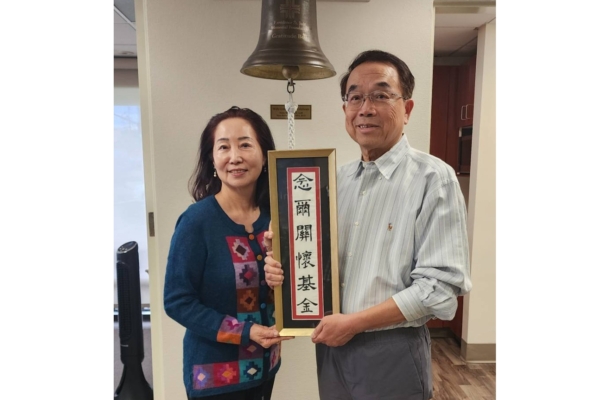
The United States values financial literacy in society, aiming to help ordinary families lead more stable and prosperous lives. April has been designated as “Financial Literacy Month” to remind people to enhance their financial awareness. New Chinese immigrants often lack direction in financial matters, but listening to the experiences of older immigrants can help them grasp relevant knowledge more quickly and avoid being deceived by scammers.
Zhāng ěr yíng came to the United States from Taiwan for studying, working, and living several decades ago. She has experience in various fields including investment, finance, insurance, real estate, and all her children are married and have their own careers. She survived four stock market or real estate market crashes and fortunately seized the opportunity during the lowest point of the housing market in 2008. She used her savings to purchase two 1,800 square feet (around 170 square meters) houses, which led to a significant leap in her family’s wealth.
“If you don’t have any savings, no matter how good the investment opportunity is, you can only watch it slip away,” said Zhāng ěr yíng, reflecting on her American dream from her youth with a sense of gratitude.
She explained that she and her husband lived frugally for many years, allowing them to easily invest in the housing market at critical moments and achieve significant financial growth. “From my observations, many people are not lacking money or the ability to make money, but they lack the ability to manage money,” she believes this is a common issue for many American families.
Acquiring relevant knowledge is a prerequisite for effective family financial management. Zhāng ěr yíng began her journey by learning through practice when she started working, attending weekend seminars when she had free time, and continues to participate in online courses. These courses can help “financial novices” establish basic concepts. For second-generation Chinese immigrants, having casual conversations with their parents can unconsciously teach them many financial skills.
“As immigrants, we are not familiar with the U.S. system. The U.S. credit system, tax planning, retirement system, etc., differ greatly from those in Asia, and are very complex.” Zhāng ěr yíng suggests that Chinese individuals must constantly learn about finances. The saying “If you don’t manage your finances, your finances won’t manage you” and other old adages such as increasing income and reducing expenses are all key principles.
Being vigilant against fraud is also crucial. In recent years, various scams related to wire transfers, investments, etc., have emerged, with instances of Chinese individuals in Southern California being scammed, some even losing their lifelong savings. Zhāng ěr yíng emphasizes that understanding common scams is an essential part of financial education. “There’s no such thing as a free lunch. Be extra cautious with any investment promising over a 10% annual return.”
Zhāng ěr yíng has a strong savings mentality, starting to save money when she first started working. However, she believes that work is not just about earning money; it also helps you understand your living environment, make new friends, and acquire broader knowledge.
She advises that upon receiving income, individuals should not rush to spend money and should remain calm before purchasing luxury items. “The price of luxury items is often high at the time of purchase but very low when reselling.” She believes owning one or two luxury items for daily use that express your personal style is sufficient, and urges individuals to restrain from comparison and greed.
Her savings method involves allocating a portion of monthly income for emergency expenses and putting a portion into a retirement account. “Let your money work for you; that’s the essence of financial management.” For retirement account funds, if one doesn’t have time to manage them or doesn’t want to worry about the stock market’s ups and downs, investing in S&P 500 ETF index funds during market downturns is recommended. If one prefers to manage their investments themselves, it is essential to stay focused and observe more deeply.
Finally, Zhāng ěr yíng reminds that a significant proportion of homeless individuals in the United States were once middle class but ended up on the streets due to an accident or major illness that led to a financial downfall. Therefore, purchasing appropriate insurance that suits one’s needs is an indispensable strategy for family financial planning.