
In the first quarter of 2026, 56 senior officials at the provincial and ministerial levels of the Chinese Communist Party were disciplined, four times the number of those disciplined during the same period in 2025. A total of 30 provincial and ministerial-level cadres were placed under investigation in the first quarter of 2026, exceeding the combined total for the same period in 2025 and 2024 by 29 individuals.
On April 23, 2026, the Central Commission for Discipline Inspection and National Supervisory Commission of the Chinese Communist Party announced that during the first quarter of 2026, anti-corruption and supervisory agencies nationwide received a total of 968,000 reports and complaints, including 264,000 reports of accusations. They handled 570,000 clues to problems, initiated 245,000 cases, among which 30 cases involved provincial and ministerial-level cadres and 1,267 involved department-level cadres. A total of 183,000 individuals were disciplined, including 56 provincial and ministerial-level officials, 1,125 department-level officials, 8,439 county-level officials, 25,000 township-level officials, 25,000 ordinary officials, and 124,000 individuals from rural, corporate, and other sectors. Additionally, 9,066 individuals involved in bribery were investigated, and 983 were transferred to the procuratorial organs.
On January 17, 2026, the Central Commission for Discipline Inspection and National Supervisory Commission of the Chinese Communist Party reported that in the entire year of 2025, 115 provincial and ministerial-level or higher officials were investigated, with 69 officials being disciplined. According to previous reports from the Commission, in the first quarter of 2025, 13 provincial and ministerial-level cadres were placed under investigation, while 14 were disciplined. In the first quarter of 2024, 16 provincial and ministerial-level cadres were placed under investigation, and 12 were disciplined.
The discipline of 56 provincial and ministerial-level cadres in the first quarter of 2026 accounted for 81.2% of the total 69 officials disciplined throughout 2025, four times the 14 officials disciplined in the first quarter of 2025, and 3.5 times the 16 officials disciplined in the first quarter of 2024.
Eighteen mid-level officials were publicly announced to be under investigation by the Central Commission for Discipline Inspection and National Supervisory Commission in the first quarter of 2026.
This indicates that at least 12 senior officials at the provincial and ministerial levels have been placed under investigation but have not yet been publicly announced.
In recent years, power struggles within the top ranks of the Chinese Communist Party have intensified, leading to escalated purges within the officialdom. In 2025, the Commission publicly announced the investigation of 65 senior officials, setting a historical record, not counting the numerous senior military officers who were also implicated.
By the end of December 2025, multiple insiders in Beijing’s political circles revealed to Dajiyuan that the central authorities were preparing to launch a new large-scale anti-corruption campaign, targeting the upper echelons of provincial and ministerial officials. This campaign is expected to commence gradually from early 2026 and continue for at least two years.
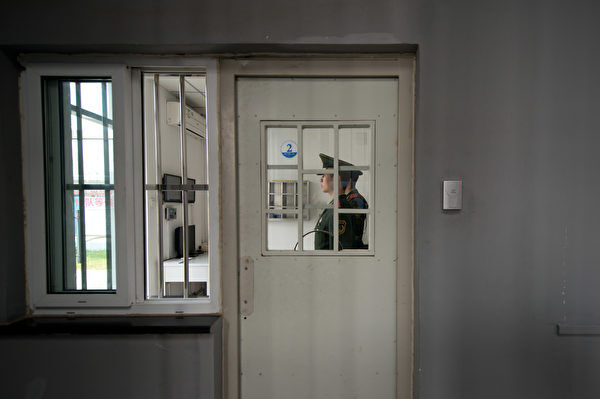
In late March 2026, insiders from various regions disclosed to Dajiyuan that the number of incarcerated individuals, particularly officials involved in corruption and bribery, has noticeably increased in certain parts of mainland China.
Analysts suggest that the ongoing anti-corruption campaign in China is no longer confined to disciplinary actions but has evolved into a comprehensive effort intertwined with financial, power, and political security matters. Chinese scholar Geng Yan, speaking on condition of anonymity, previously stated in an interview, “There are two main reasons behind this wave of anti-corruption: the party leaders believe that some officials demonstrate political disloyalty, necessitating a reevaluation and purification process. Second, with the emergence of significant fiscal discrepancies within the financial system, authorities perceive a large amount of resources being controlled by officials. Therefore, by means of anti-corruption measures, they aimed to confiscate their assets.”