
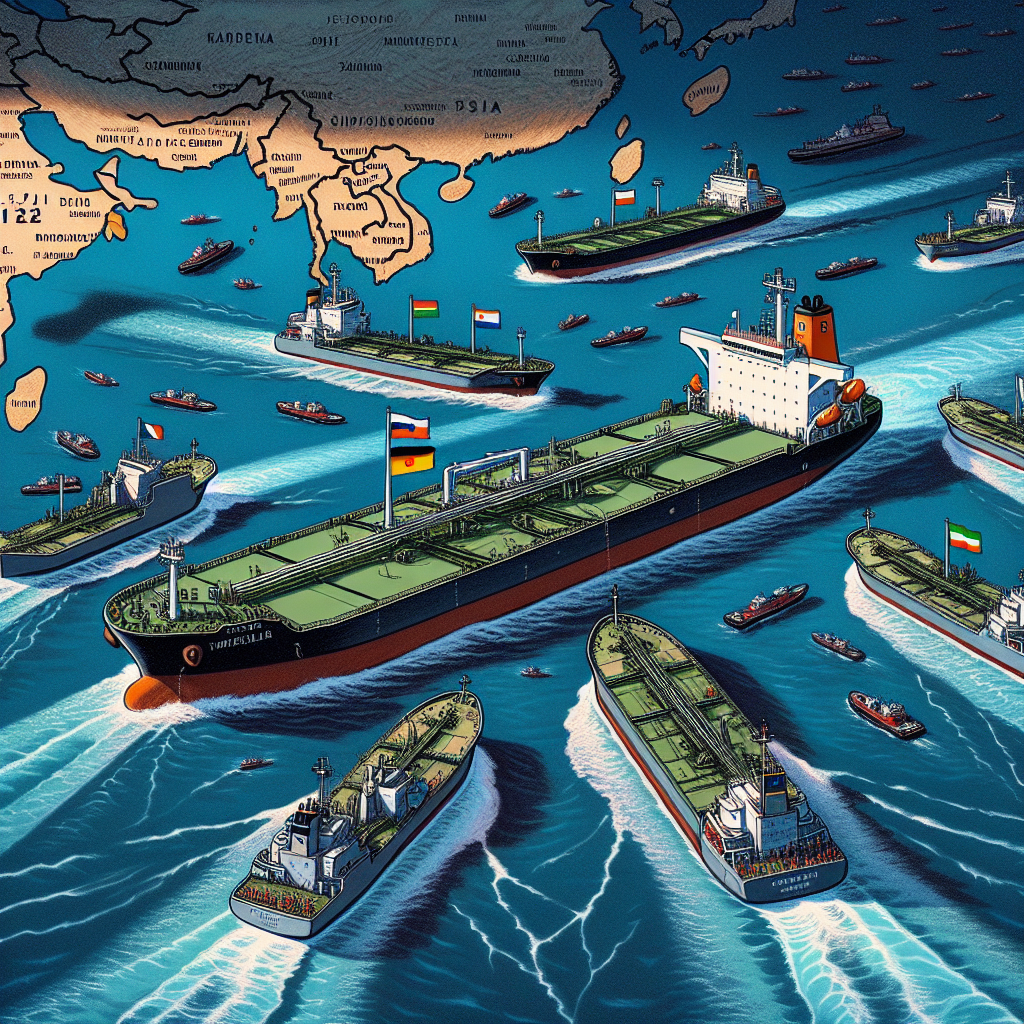
The United States military intercepted at least three oil tankers flying the Iranian flag near the waters of India, Malaysia, and Sri Lanka on Wednesday (April 22), forcing them to change course. This is part of the U.S. military’s blockade operation against Iran aimed at cutting off its maritime energy exports.
Meanwhile, the U.S. Central Command confirmed that since the blockade operation began, a total of 31 ships have been instructed to either turn back or return to Iranian ports.
According to reports from Reuters, the intercepted Iranian vessels in this operation included the supertanker “Dorena”, carrying 2 million barrels of crude oil, which was seized off the southern coast of India.
The U.S. Central Command mentioned on the social platform X: “Following an attempt to violate the blockade, the Dorena is currently being escorted in the Indian Ocean by a U.S. Navy destroyer.”
Sources and data from the MarineTraffic platform indicated another intercepted vessel was the supertanker “Deep Sea” flying the Iranian flag, which was partially loaded with crude oil, with its last public trace appearing off the coast of Malaysia a week ago.
The data also showed a smaller Iranian oil tanker named “Sevin” as the third intercepted vessel, with a maximum carrying capacity of 1 million barrels, currently loaded at about 65%. The tanker was last seen off the coast of Malaysia a month ago.
Sources told Reuters that the U.S. intentionally chose to intercept the vessels in open seas far from the Strait of Hormuz to avoid potential mines in the narrow waterway.
Prior to this, on Tuesday, the U.S. military also boarded the oil tanker “Tifani” operating between Sri Lanka and Indonesia in the Indian Ocean, a frequent route for oil shipments between China and Iran. Since late 2022, this tanker has made at least 10 voyages to Chinese ports.
The Pentagon has officially announced an expansion of maritime law enforcement, globally tracking vessels related to Iran and emphasizing that “international waters are not a safe haven for sanctioned vessels.”
China is the top customer of Iranian oil, and the Tifani operates solely between China and Iran, making it part of an “oil smuggling fleet.” Continued U.S. actions against this maritime supply chain may disrupt a key financial source for the Iranian regime.
President Trump announced on Tuesday the “indefinite extension” of the ceasefire agreement with Iran, originally scheduled to expire the next day. However, a new round of peace talks expected to take place in Pakistan is currently at a standstill.
When asked about when the war might end, Trump stated that the U.S. has no set timetable and that he is not in a rush to end the war.
“Some people say I want to end the war because of the midterm elections; that’s not true,” Trump said.
He expressed that his administration aims to “achieve a good deal for the American people.”
“Blockades are more intimidating to them (referring to the Iranian regime) than bombings. They’ve been bombed for years, but they hate blockades,” Trump added, “Once those oil wells are shut off, sometimes it can never be recovered.”