
In the eyes of young people in mainland China, the city of Shenzhen is seen as a place with “many job opportunities and high salaries”. However, some young people only realize after actually looking for work that the situation is very different from what they saw online, with many positions looking good on the surface but the actual salary being far less than expected.
Over the past few years, under the propaganda of the Chinese Communist Party’s official media, Shenzhen has been regarded as a forefront city in China’s economic development. However, after three years of pandemic lockdowns, the real estate and consumer markets have significantly weakened, leading to a decline in local employment. Nevertheless, the authorities continue to claim that Shenzhen is the “city of opportunities.”
A recent online video by a blogger revealed, “The salaries you see on platforms all look good, but when you actually go for an interview, you realize that the base salary is very low, and the rest depends entirely on performance, whether you can make it depends entirely on luck.”
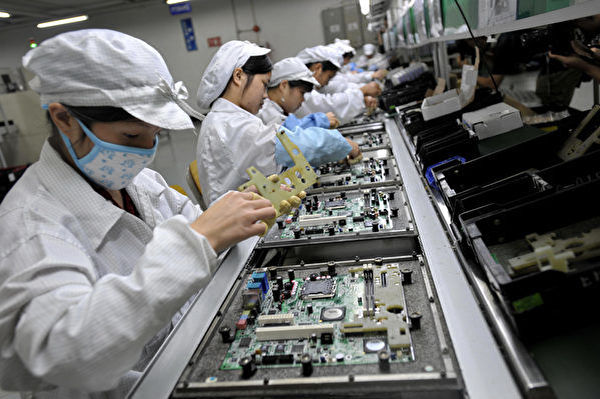
The blogger also mentioned that some factories that have long advertised “daily wages of 300 yuan” are constantly hiring not because of high demand but due to high turnover. Many positions require long hours, night shifts, crowded dormitories, causing many people to leave after only a few days.
A netizen named Song Jia (pseudonym) from Longgang, Shenzhen, stated in an interview with Dajiyuan that finding a job is difficult now, with some intermediaries targeting these young people. She said, “Many people are unable to find jobs, so there are people specifically targeting these young people. Those so-called intermediary companies claim they can arrange jobs for you, but in reality, they just take your money. I have a friend who was supposed to be placed in an accounting position at an electronics factory for 1,000 yuan, but later was told the position was filled, and she was switched to sales, falling into this trap.”
Mr. Zhang, a retired resident of Shenzhen, told Dajiyuan that many job postings on local platforms have problematic information. He mentioned, “Many positions advertised as starting from a monthly salary of 8,000 yuan, including meals and accommodation, seem good, but during interviews, it’s revealed that the base salary is only a little over 3,000 yuan, with the rest dependent on performance, leaving you overworked with uncertain income.”
Foreign laborers working in Shenzhen complained online about the vast difference between working there and what they imagined. Shifts on the assembly line often exceed 12 hours, night shifts are common, dormitories are crowded, leading many to quit after a few days, with positions frequently changing hands.
The cost of living in Shenzhen is also high, with rent and commuting expenses consuming a large portion of income. Competition for basic positions is fierce, and white-collar jobs are even harder to come by, often attracting hundreds of applicants for one position.
A company executive, Liu Xiaojia, in Shenzhen expressed that many foreign trade enterprises have ceased operations or closed down, and even university graduates don’t have many job options in Shenzhen. She said, “Many people come with hope and leave in disappointment after two months; this is a very realistic situation.”
Liu also mentioned that some companies claim to be able to do any type of business externally but cannot explain the specifics of their operations. During the recruitment process, there are many instances of charging fees under the names of “training” or “project cooperation”. Apart from a few areas like Nanshan and Bantian with tangible industrial support, there is a noticeable increase in the number of intermediary and service companies in many places.
A college graduate from Hunan posted a video online, stating that after spending a few days in Guangzhou, she found limited responses from regular companies when applying through multiple job search apps, mostly approached by intermediaries or service industry positions. She then moved to Shenzhen in search of a job.
She said, “I initially wanted a white-collar job, but there were hardly any opportunities. I tried working in a clothing store as a salesperson for three days, sold a few items, but ended up being laid off.”
This recent graduate also recounted her experience of attending a model recruitment interview where she was asked to pay for training during the contract signing. She said, “They asked me to pay nearly 3,000 yuan for training; I hadn’t even earned money yet, how could I pay upfront? So I left immediately. Now I have rented a room for 850 yuan, paid a 1,700 yuan deposit, and borrowed 4,000 yuan to search for work. Even if I found sorting work later, earning only 4,000 yuan a month without meals and accommodation, I can hardly save any money; I really don’t know how long I can hold on.”
Official Chinese data shows that the unemployment rate among Chinese urban youths aged 16 to 24 is 16.9%, remaining high. Meanwhile, the number of college graduates in 2026 is expected to reach 12.7 million, hitting a new record high.
Some scholars have told Dajiyuan that official data does not fully reflect the actual situation and that if the flexible or unstable employment is considered, the actual proportion could be much higher than the stated figure, possibly approaching 40%.
Despite the Chinese Communist Party’s continued emphasis on “stable employment,” finding jobs is still challenging. Analysts have noted that as young people’s expectations for high salaries and career advancement are not being met, there will be an increasing number of individuals opting for a more laid-back approach.