
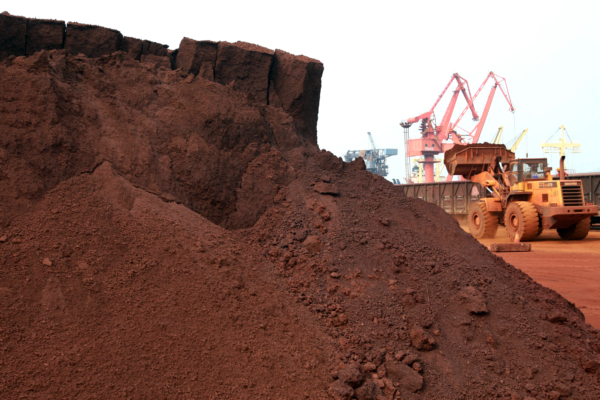
In the face of escalating geopolitical tensions, Japanese companies that rely on supply chains in China are gradually implementing “de-Chinafication.” A renowned international relations think tank believes that the Japanese government has recently advanced several key initiatives in Australia and Brazil, indicating that the strategy of “de-Chinafication” of rare earth supply systems has entered a new stage.
The Lowy Institute in Sydney released an article titled “Japan Seeks to Build ‘De-Chinafied’ Rare Earth Supply System – Australia and Brazil Involved” on March 19th. The article states: “Through the Japan Organization for Metals and Energy Security, the Japanese government has recently advanced several key initiatives in Australia and Brazil, indicating that its strategy to create a stable, ‘de-Chinafied’ rare earth supply system has entered a new phase.”
On March 10th, major Australian rare earth producer Lynas Rare Earths announced a new partnership with Japan. Lynas Rare Earths will extend its supply contract with Japan Australia Rare Earths B.V. (JARE) until 2038. JARE is a joint venture company established by Sojitz and the Japan Organization for Metals and Energy Security.
Under the agreement, JARE will purchase 5,000 tons of neodymium-praseodymium (NdPr) annually from Lynas Rare Earths at a minimum price of 110 Australian dollars per kilogram. JARE will also buy 50% of Lynas Rare Earths’ heavy rare earth products, such as dysprosium (Dy) and terbium (Tb) used in permanent magnets and advanced electronic products. This means Japan has secured approximately 75% of Lynas Rare Earths’ heavy rare earth production. In May last year, Lynas Rare Earths became the first company outside of China to produce separated heavy rare earth oxide, becoming a core non-Chinese source of heavy rare earth supply.
The article states: “For Japan, which heavily relies on such critical minerals, this is not just a continuation of a business contract but also a ‘insurance mechanism’ for the industry supply chain in the coming decades.” “For Japan, these elements have a more direct impact on the resilience of high-end industrial and defense supply chains.”
“Japan is no longer passively seeking alternative sources outside of China but is actively shaping a rare earth supply system capable of withstanding geopolitical shocks. This means that Japan is not just aiming for source diversification but also establishing a stable framework led by policies, surpassing market mechanisms to reduce China’s ability to manipulate the market through price interventions.”
Japanese Prime Minister Sanae Takamichi made relevant remarks last November regarding Japan’s possible involvement in conflicts involving Taiwan, prompting the Chinese Communist Party to threaten to restrict rare earth exports to Japan.
In addition to significant progress in Australia, JOGMEC also signed a memorandum of cooperation with the state of Goiás in Brazil in March. The article indicates that this signifies “expanding Japan’s rare earth strategy from existing supplier countries to promising new mining areas.”
The article further states: “Brazil has approximately 21 million metric tons of rare earth reserves, ranking second globally only to China and more than ten times the reserves of the United States. Despite a large mine in Goiás state commencing operations in 2024, Japan is actively getting involved early to strengthen cooperation in rare earth mining and supply, aiming to reduce reliance on a single supply chain.
“Overall, Japan’s synchronous layout in Australia and Brazil reflects its increasingly mature economic security strategy. This demonstrates that Japan is no longer passively seeking alternatives to China but is actively shaping a rare earth supply system that is more resilient to geopolitical shocks and less likely to be dominated by a single country.”
The Lowy Institute is one of Australia’s most important international relations think tanks, with research themes including U.S.-China relations, Indo-Pacific strategy, trade and supply chains (including rare earths), security, and military matters.