
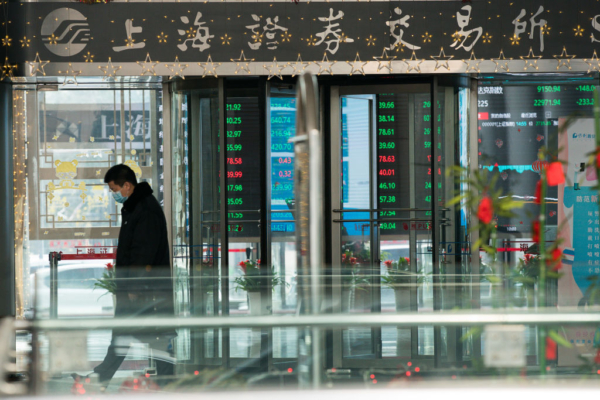
On March 19, Asia-Pacific stock markets experienced a downturn. The A-share market saw a market capitalization evaporate by over 2 trillion yuan in a single day, with more than 5000 stocks closing lower. The three major indices collectively plummeted, and the Shanghai Composite Index barely held on above 4000 points. The Hong Kong stock market also plunged, with the Hang Seng Index dropping by over 500 points and the Hang Seng Tech Index falling by over 2%, breaking below the 5000-point threshold.
March 19 saw the A-share market’s three major indices open low and continue on a downward trend. The Shanghai Composite Index intraday fell below the 4000-point mark for the first time since January 5, with the lowest point reaching 3994 points before slightly rebounding above 4000 points by the end of the trading session.
At the close of trading, the Shanghai Composite Index fell by 1.39% to 4006.55 points, the Shenzhen Component Index dropped by 2.02% to 13901.57 points, and the ChiNext Index declined by 1.11% to 3309.1 points. Additionally, the CSI 300 Index fell by 1.61%, the SSE 50 Index dropped by 3.33%, and the Star 50 Index decreased by 2.44%.
Total turnover in the A-share market reached 2.13 trillion yuan, significantly higher than the previous trading day by 662.55 billion yuan. Out of 5022 listed stocks, 511 stocks saw gains while the remaining 5022 experienced declines. According to “Wind Data,” the total market value of A-shares evaporated by approximately 2.02 trillion yuan in just one day.
According to “Daily Economic News,” the fluctuations in the A-share market are the result of external risk transmission, internal sector adjustments, and market participants’ risk-averse behavior.
Analysts from Caixin Securities noted that with the market’s downward trend and all three major indices falling by over 1%, the Shanghai Composite Index momentarily fell below the critical 4000-point mark. From a technical perspective, as the Shanghai Composite Index continued to decline, the lower boundary of the previous trading range was effectively breached, and various short- and medium-term moving averages began to diverge downwards. If the short-term trend fails to see a strong recovery, the medium-term trend is likely to turn bearish, leading to further extension of consolidation cycles and space.
Caixin Securities believes that in the short term, the market remains within a consolidation structure, with uncertainties stemming from overseas energy supply crises and the upcoming period of intensive financial report disclosures within the A-share market. This backdrop suggests limited room for a significant increase in market risk appetite, with expectations of continued wide fluctuations in the market and rapid rotation among thematic sectors.
Turning to the Hong Kong stock market on March 19, all three major indices experienced collective declines. At the close of trading, the Hang Seng Index dropped by 2.02%, the Hang Seng China Enterprises Index declined by 1.58%, and the Hang Seng Tech Index fell by 2.19%.andWhere’s the was the end.