
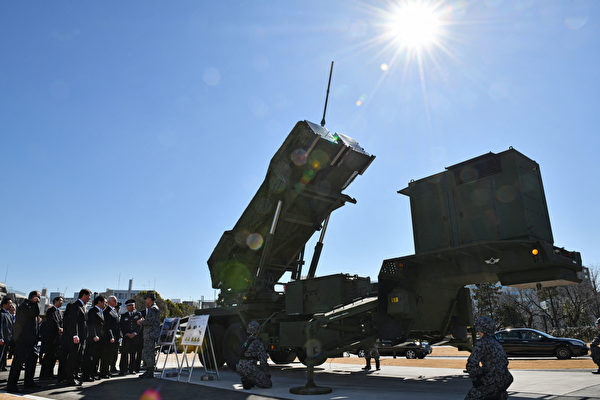
On Monday, the first batch of launchers carrying domestically produced long-range missiles has entered the Japanese Ground Self-Defense Force’s camp. This move is aimed at addressing the increasingly severe challenges to Japan’s security posed by the Chinese Communist Party.
Due to the escalating military pressure from the CCP in Taiwan’s vicinity, countries and regions including Japan, Taiwan, and the Philippines view the actions of the CCP as a serious security threat. As a result, they have started actively strengthening their military forces to counter these threats. Currently, Japan is accelerating the construction of its defense capabilities, including establishing missile bases and mass-producing missiles to deter threats from the CCP.
Japanese Chief Cabinet Secretary Minoru Kihara stated that an upgraded version of the Type-12 land-based anti-ship missile will be deployed at Camp Kengun in Kumamoto Prefecture by the end of March, but he did not disclose further details.
Later this year, the same type of missile will also be stationed at Camp Fuji in Shizuoka Prefecture, west of Tokyo.
Developed and manufactured by Mitsubishi Heavy Industries, the upgraded Type-12 missile has significantly increased range from the original 200 kilometers (125 miles) to about 1,000 kilometers (620 miles). When launched from Kyushu, its range can cover coastal areas of China, including several key targets such as Shanghai, one of China’s most important economic centers.
On March 7, launchers and other equipment were transported from Camp Fuji in Shizuoka Prefecture, the location of the research and development testing unit, and unloaded at Shimonoseki Port in Kitakyushu City on March 8, before being transported to Camp Kengun in Kumamoto.
Currently, Japan has deployed Patriot Advanced Capability-3 (PAC-3) air defense missiles and medium-range surface-to-air missiles on multiple islands including Okinawa, Ishigaki, and Miyako.
Japanese Defense Minister Shinjiro Koizumi announced in February that by March 2031, medium-range surface-to-air missiles would be deployed on Yonaguni Island, Japan’s westernmost island located close to eastern Taiwan.
Prime Minister Sanae Takaichi, since taking office, has emphasized that any military action by the CCP against Taiwan would affect Japan’s security and economy, necessitating a military response. This stance is seen as continuing the strategic policy of former Japanese Prime Minister Shinzo Abe, known as “A problem in Taiwan is a problem for Japan.”
Takaichi has pledged to revise Japan’s national security and defense policies by the end of 2026 and seek to strengthen its military capabilities through unmanned aircraft and long-range missiles.
In addition, the ruling Liberal Democratic Party and its coalition partners have recently proposed legislation to lift restrictions on the export of “lethal weapons” within the next few weeks. This is aimed at promoting the development of Japan’s defense industry and deepening security cooperation with friendly nations.