
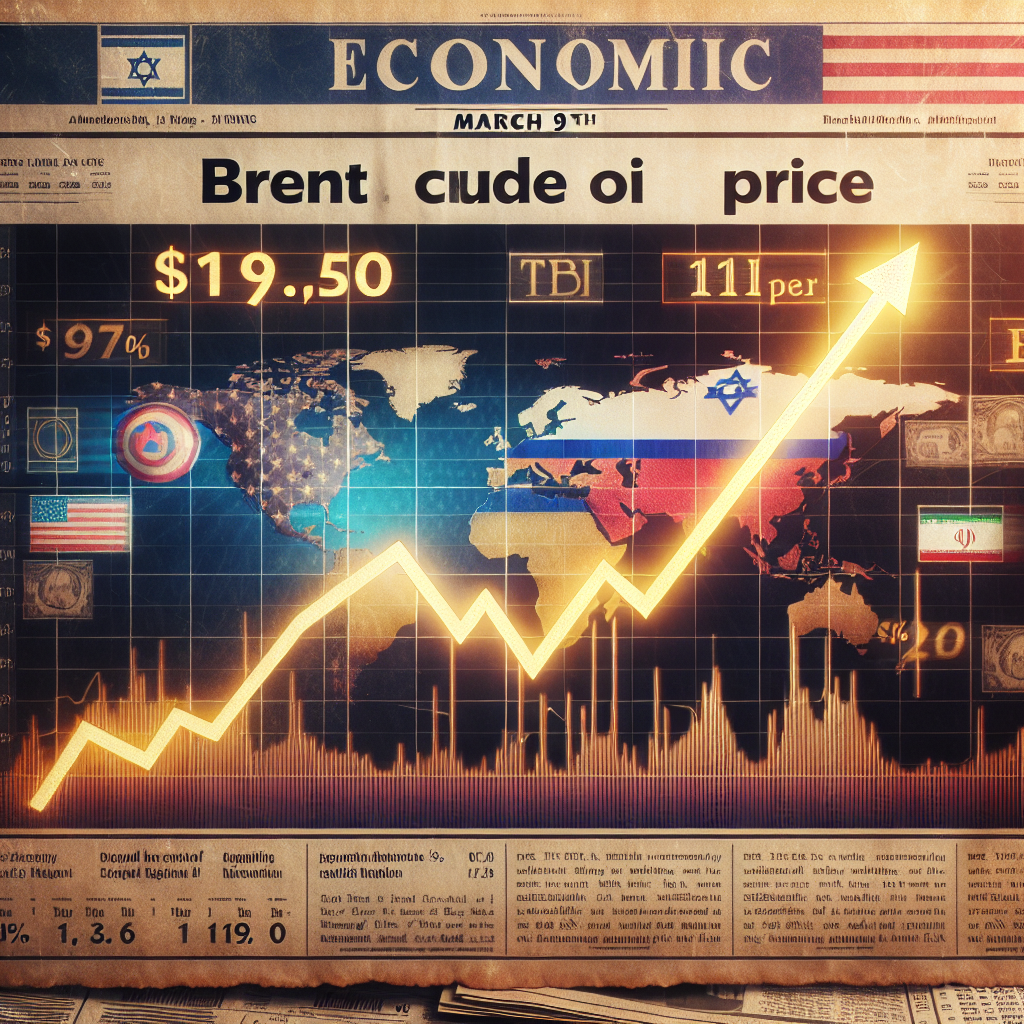
On Monday, March 9th, the global energy market experienced a severe impact due to escalating conflicts involving the United States, Israel, and Iran. The price of Brent crude oil surged by approximately 25% in a single day, reaching a peak of $119.50 per barrel, while West Texas Intermediate (WTI) crude also hit $119.48, marking the largest single-day increase on record. However, the price surge began to stabilize after news of Saudi Arabia’s announcement of crude oil exports via land routes.
The closure of the Hormuz Strait, coupled with production cuts from countries like Iraq, Kuwait, and the UAE due to storage limitations, led to rapid spread of market fears of supply disruptions.
IG market analyst Tony Sycamore noted in a report, “The market reaction has been so severe because there is no visible sign of de-escalation in this Middle East conflict. It has evolved into a high-risk stalemate where both sides are unwilling to concede ground.”
He added that the risk of long-term damage to the economy is increasing day by day.
Analysts from Dutch international group ING also issued a warning, stating that the situation appears to be deteriorating further.
The Asia-Pacific stock markets were hit hardest by the energy crisis. South Korea’s Kospi index plummeted by over 8% on Monday, triggering a circuit breaker mechanism for the second time in just four trading days, halting trading for 20 minutes. Samsung Electronics saw a sharp decline of over 8%, while SK Hynix fell by 10.5%.
Japan’s Nikkei 225 index also tumbled by 5%, dropping below the 53,000-point threshold. SoftBank Group was one of the biggest decliners in the index, falling by over 10%. Chip-related companies Advantest and Lasertec also experienced declines of over 10% and 9%, respectively.
Taiwan’s stock market also opened lower on Monday, with an initial sharp drop of 2,070 points, but the losses moderated throughout the day, ending with a decline of 1,489.12 points, representing a 4.43% decrease and the fourth-largest closing point drop in history.
Furthermore, the chain reaction spread to commodities, with Malaysian palm oil soaring by 9% due to the rising trend of crude oil, while aluminum prices hit a four-year high following the announcement of supply disruptions by Middle Eastern smelters. However, gold unexpectedly dropped by over 2% due to the strengthening US dollar.
In terms of political developments, the Iranian government appointed Mojtaba Khamenei, the son of the former Supreme Leader, to succeed as the new leader. This move is seen as an indication that Tehran’s regime will maintain a hardline position during the conflict.
In response, US President Trump stated on social media, “Once the Iran nuclear threat is eliminated, short-term oil prices will quickly fall, which is a negligible cost for the US, the world, and for security and peace.”
According to the latest reports, following news that Saudi Arabia plans to release around 4.6 million barrels of crude oil to the market through the Red Sea pipeline, oil price increases have slightly tapered off, with Brent crude falling to around $107 per barrel, and the downward trend in the Asia-Pacific stock markets also showing some signs of relief.
Prior to this, a major fire broke out at the Shahran oil depot in Tehran, Iran, following an attack, resulting in significant damage to fuel transport vehicles.