
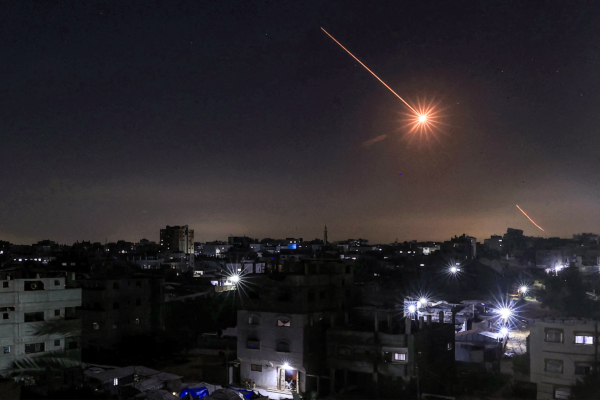
Recently, tensions in the Middle East continue to escalate, with the conflict spreading to Abu Dhabi and Dubai in the United Arab Emirates. Prior to the outbreak of military conflict, the real estate market in the Middle East, represented by Abu Dhabi in the UAE, was one of the fastest-growing property markets among emerging economies globally. However, the ongoing warfare has suddenly cooled off the real estate market in the Middle East.
Over the past two years, attracted by long-term visas and high rental returns, Chinese clients have become important buyers in the real estate markets of Dubai and Abu Dhabi. According to Chinese individuals working in real estate in Dubai, many people from Guangzhou and Shenzhen have come to invest in properties. Additionally, there is significant interest from investors in Hong Kong, but worries stemming from the US-Iran war have made them hesitant to view properties.
Reported by “First Financial Daily,” Shen Anran (pseudonym), who bought a house in Abu Dhabi, the capital of the UAE last August, is now stranded in Beijing due to flight cancellations caused by the war.
She mentioned that over two years ago, her husband secured a job opportunity in Abu Dhabi, believing the UAE to be a neutral country where war was unlikely. Thus, they decided to move to the Middle East. Shen Anran said they relocated at the end of June last year and purchased a house in August.
During the Chinese New Year holidays, Shen Anran returned to China with her children for vacation. Unexpectedly, while waiting for a connecting flight in Beijing, the US-Iran war broke out leading to flight cancellations. Now, she is stuck in Beijing, hoping for flights to resume soon so she can go back home to Abu Dhabi.
Originally from Fujian and having moved to Dubai in 2001, Wang Yani delved into the real estate industry in Dubai in 2017. Wang mentioned that among all foreign buyers in the Dubai property market, Chinese clients rank in the top three, while in Abu Dhabi, they hold the second position.
Wang stated that from 2018 to 2019, the market conditions were favorable. Her clientele mainly originated from southern cities in China, such as Guangzhou and Shenzhen, engaged in industries like trade and finance, predominantly comprised of female clients aged between 30 to 40. She observed a 100% increase in Chinese inspection clients compared to the previous year in 2025, with the number doubling.
In 2025, Dubai’s total real estate transaction volume rose by 31% year-on-year. Up until January this year, Dubai’s property market remained very active.
Considering the US-Iran conflict, there will indeed be panic in the short term.
In addition to attracting mainland Chinese investors, many people from Hong Kong are also closely monitoring the real estate markets in Dubai and Abu Dhabi.
Teresa Chan, Director of International Real Estate Business Development at Sotheby’s International Realty Hong Kong, expressed that the recent US-Iran conflict has put a pause on Dubai’s property market. Developers from the Middle East are unable to fly over, leading them to postpone the offline property project briefings initially scheduled for mid this month.
After the outbreak of the US-Iran conflict, veteran investors from Hong Kong have deferred their plans to visit Dubai for property viewings, emphasizing the importance of safety above all else.