
On March 2, the U.S. Supreme Court ruled 6-3 to temporarily halt the implementation of a lower court’s redistricting order for New York’s 11th Congressional District, maintaining the current map for the House of Representatives unchanged. This decision ensures that the only congressional district in New York City currently held by Republicans will remain in their control until the midterm elections in 2026.
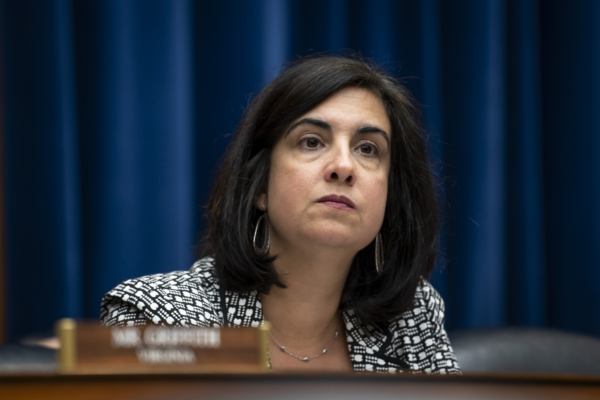
The 11th Congressional District of New York includes Staten Island and parts of southern Brooklyn, currently represented by Republican Congresswoman Nicole Malliotakis. It is the only seat held by Republicans in the New York City congressional delegation.
In January of this year, a state trial judge in New York ruled that the division of the 11th district weakened the voting power of African American and Hispanic voters, particularly in the northern parts of Staten Island, deeming it disadvantageous to minority voters. The judge ordered the state’s independent redistricting commission to redraw the district boundaries.
Supporters of the redistricting argued that the current district makes it difficult for candidates preferred by African American and Hispanic communities to win, thus violating the spirit of fair elections enshrined in the state constitution. Legal organizations proposed removing a small part of southern Brooklyn from the 11th district and incorporating it into certain areas of downtown Manhattan. Many believe that if adjusted in this direction, the once solid Republican district could turn into a fiercely contested swing district.
Malliotakis and the New York Republican Party argued that the lower court’s order was based on racial considerations in redistricting, violating the U.S. Constitution. After unsuccessful appeals to the state’s appellate courts, the Republicans turned to the U.S. Supreme Court for emergency relief.
The Supreme Court, composed of a majority of six conservative justices, approved the temporary stay by a 6-3 vote, preserving the current district lines until the 2026 midterm elections. The Court did not provide a full explanation for its decision, which is not uncommon in emergency appeal cases.
However, Justice Samuel Alito separately expressed that the lower court’s ruling constituted “blatant racial discrimination,” violating the federal constitution. He emphasized the need for timely intervention to prevent unconstitutional racial factors from dominating the redistricting process.
Three liberal justices dissented. Justice Sonia Sotomayor criticized the majority opinion for contradicting the federal courts’ longstanding principle of avoiding intervention in state election procedures nearing elections. She stated that the New York state courts had not yet made a substantive ruling on the case, and the Supreme Court’s intervention at this point violated principles of federalism and judicial restraint. Justices Elena Kagan and Ketanji Brown Jackson supported her dissenting opinion.
The controversy in New York unfolds amidst the nationwide tug-of-war over redistricting. In recent years, both parties have sought to gain an advantage in House seats in several states through redrawing district lines. Previously, the Supreme Court allowed the use of new district maps in lawsuits in Texas and California to continue during litigation.
New York is also constrained by its state constitution, which generally prohibits mid-decade changes to districts in a decade-long census cycle unless ordered by a court.
The ruling is considered a victory for the Republicans. New York State Republican Chairman Ed Cox criticized the original case as having “clear political motives,” and claimed that the lower court’s ruling violated both state and federal constitutions. Malliotakis also issued a statement affirming the Supreme Court’s intervention, stating that the decision prevented districts from being redesigned based on racial factors.
The supporters of redistricting have yet to publicly respond to the decision. Since candidate registration processes are already underway, the Supreme Court’s decision effectively confirms that the current map will apply to the 2026 elections. With the narrow gap in House seats between the two parties, this case is seen as one of the factors that could potentially impact the future majority status in Congress.