
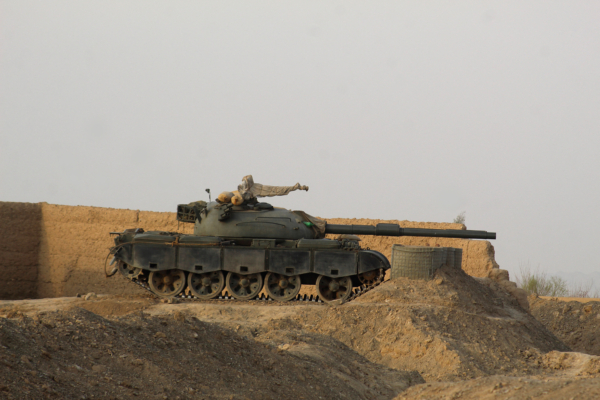
On Friday, the US State Department officially stated its support for Pakistan to exercise its right to self-defense amid serious conflicts with the Afghan Taliban regime. Pakistan’s Defense Minister Khawaja Muhammad Asif had earlier declared that the two sides had entered into an “open war.”
The Deputy Assistant Secretary of State for Political Affairs, Allison Hooker, expressed the US stance on the recent conflicts in a conversation with Pakistan’s Foreign Secretary, Amna Baloch. Hooker conveyed condolences for the casualties in the recent Pakistan-Taliban clashes and affirmed support for Pakistan’s defense against Taliban attacks.
The State Department spokesperson later emailed Reuters, reiterating US support for Pakistan in countering attacks from the designated global terrorist organization – the Taliban. The US voiced sadness over the loss of lives and criticized the Taliban for failing to fulfill their anti-terrorism commitments, allowing Afghanistan to become a springboard for terrorist attacks.
As an important “major non-NATO ally” to the US, Pakistan holds superior military capabilities compared to Afghanistan, but the Taliban’s guerrilla warfare tactics have made them formidable adversaries over the years. After the chaotic US military withdrawal in 2021, the Taliban gained control of Afghanistan.
According to Pakistani statistics, over 1,200 people, including military personnel and civilians, died in armed attacks across the country in 2025. US Embassy in Pakistan has issued safety alerts for its citizens, advising heightened vigilance in major cities like Islamabad, caution around potential targets such as large commercial centers, law enforcement facilities, and military bases.
Pakistan’s Defense Minister Asif cited long-standing refuge provided by the Afghan Taliban to armed groups like the Pakistani Taliban (TTP) as the catalyst for Pakistan’s decisive response to what they perceive as Afghanistan’s aggression. The current military confrontations have escalated to direct strikes on each other’s capitals and key cities.
Pakistan conducted airstrikes on Kabul, Kandahar – a Taliban stronghold, and Paktia province in southeastern Afghanistan, claiming to have killed 133 Taliban members and injuring over 200. In retaliation, Afghanistan targeted military objectives in Islamabad and Abbottabad, allegedly seizing two bases and 19 Pakistani outposts, resulting in the death of 55 Pakistani soldiers.
Both sides dispute the casualty figures provided by the other, and independent verification of these numbers by Epoch Times could not be obtained. The Taliban government spokesperson, Zabihullah Mujahid, expressed readiness for negotiations with Pakistan to end the violence, highlighting Afghanistan’s history of seeking dialogue for conflict resolution.
Mujahid warned that if Pakistan chose war, Afghanistan would opt for destruction, asserting the capability to deliver decisive blows that Pakistan could not recover from. Apart from conventional airstrikes, Pakistan accused Afghanistan of deploying suicide drones to target its cities, leading to a nationwide ban on civilian and commercial drone flights.
The 1,600-mile border between the two countries has been under blockade since October 2025, marking the longest continuous closure in recent years. UN Special Rapporteur Richard Bennett expressed regret over the violent turn of events and urged both parties to abide by international law, respect civilian rights, and immediately de-escalate the situation.