
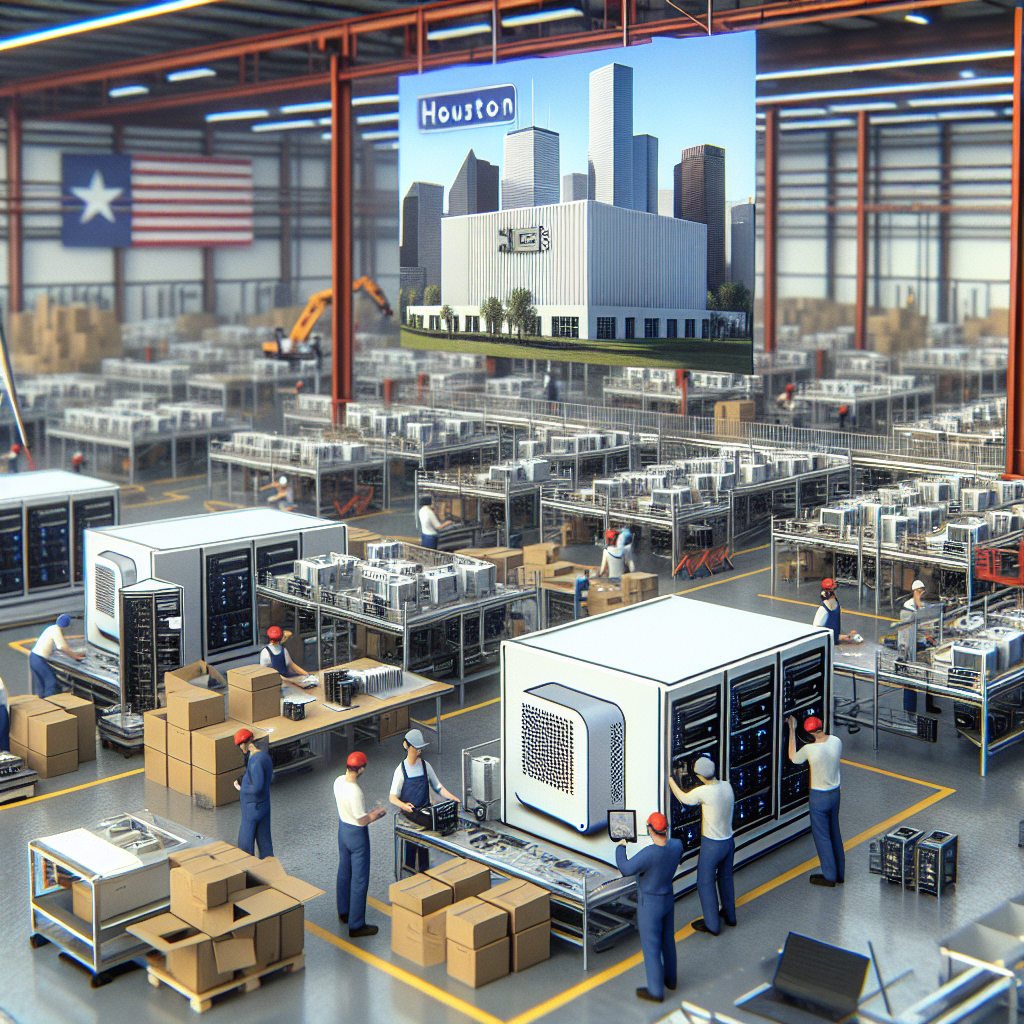
Apple announced on Tuesday that it will be shifting some of its Mac Mini desktop computer production from Asia to the United States, with plans to launch a new manufacturing project later this year at a facility in Houston.
The company is also expanding its facility in Houston to include a new advanced manufacturing training center, stating that its Houston operations will create thousands of job opportunities. This initiative marks Apple’s latest investment in the United States. Previously, in August last year, Apple pledged to invest $600 billion in the country over the next four years.
In May of this year, U.S. President Donald Trump warned of imposing a 25% tariff on Apple products manufactured overseas. Apple needs to reduce cost risks through the “Local for Local” approach.
According to details revealed by Apple’s Chief Operating Officer Sabih Khan to The Wall Street Journal, this new manufacturing plan will launch at a facility owned by Foxconn in North Houston, Texas in late 2026. The site, originally a large warehouse, is currently being transformed into an approximately 220,000 square feet advanced manufacturing complex.
Apple’s CEO Tim Cook stated in an official declaration on Tuesday, “Apple is deeply committed to the future of American manufacturing.”
Since 2025, this facility has been assembling server clusters for artificial intelligence (AI) data centers. In the future, Mac Mini will share production resources with these high-performance servers to collectively support Apple’s hardware requirements for “Apple Intelligence.”
With the continued economic downturn in China and increasing geopolitical tensions, Apple has been gradually shifting some of its production to Vietnam, Thailand, and India in recent years. Apple’s strategy is not to completely withdraw from China but to adopt a “local supply” model: the Houston plant will mainly cater to the domestic U.S. market, while existing production lines in China, Vietnam, Thailand, and Malaysia will continue to supply other global markets.
Apart from Apple, more and more U.S. companies such as Corning, Texas Instruments, and Broadcom are expanding their production capacities in the U.S. encouraged by federal incentives. Data indicates that in 2025, despite fluctuations due to policy changes, investments in “smart factories” and “automated production lines” in the U.S. manufacturing industry have significantly increased.
(This article referenced reporting from Reuters)