
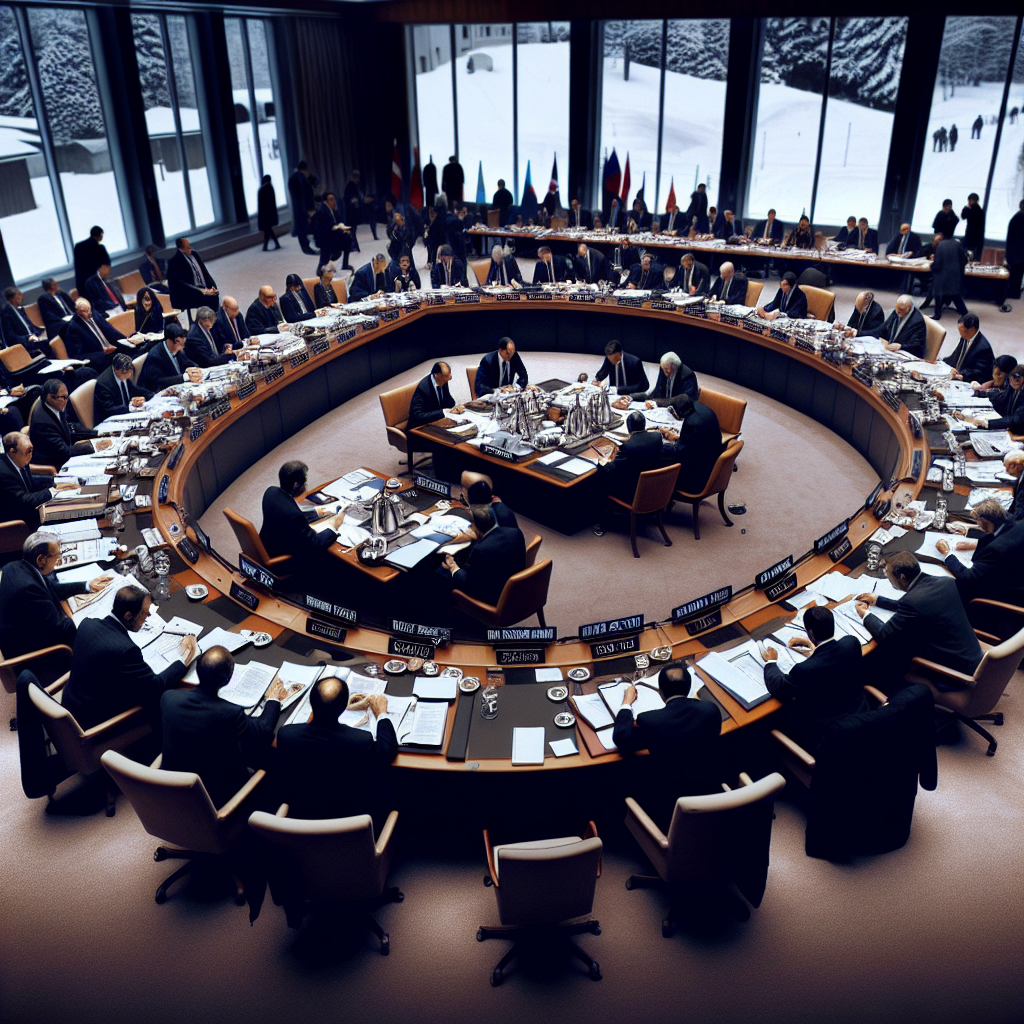
On Tuesday, February 17, the United States and Iran held the second round of negotiations in Geneva, Switzerland, aimed at resolving the long-standing dispute over Iran’s nuclear program. The talks were conducted indirectly with the mediation of Oman’s Minister of Foreign Affairs, Badr Albusaidi.
The American delegation was led by US special envoy Steve Witkoff and President Trump’s son-in-law Jared Kushner. President Trump stated that he would indirectly participate in the negotiations. The Iranian negotiating team was led by Foreign Minister Abbas Araghchi.
According to Iranian state media reports, the US-Iran Geneva talks lasted for over four hours. The focus of the negotiations was on the terms of Iran restricting its nuclear program under the supervision of the United Nations nuclear watchdog agency.
Prior to the meeting, Iranian Foreign Minister Araghchi met with International Atomic Energy Agency Director General Rafael Grossi on Monday, February 16. The US team also met with Grossi on Tuesday, underscoring that nuclear inspections were a core issue of the talks.
An Iranian official told CNN that the Iranian delegation participating in the talks with the US in Geneva would return to Iran that evening.
On the day of the US-Iran negotiations, Iran closed off parts of the Strait of Hormuz for security reasons to conduct naval exercises by the Islamic Revolutionary Guard Corps. The Strait of Hormuz, located between the Persian Gulf and the Gulf of Oman, is the sole passage for Persian Gulf oil to other parts of the world with Iran controlling the northern shore.
Meanwhile, the US has been intensifying its military presence near Iran. In addition to the USS Abraham Lincoln Carrier Strike Group, President Trump has deployed a second aircraft carrier to the Middle East. Open-source flight radar data indicated that another batch of 18 F-35 fighter jets and several tanker planes arrived in the Middle East on Monday.
President Trump recently stated that if the US-Iran negotiations fail, these aircraft carriers could be put into action, hinting at potential military action against Iran.
The Geneva talks mark the second round of negotiations since the restart of the nuclear talks between the US and Iran earlier this month. The initial round of talks took place in Oman on February 6.
Coinciding with the US-Iran negotiations, Iranians around the world have been mobilizing protests against the current Iranian regime. On Tuesday, people gathered outside the United Nations building in Geneva for a protest, demanding a regime change in Iran. A few days ago, President Trump mentioned that regime change in Iran could be the best outcome.
(Newline)
(Newline)
(Newline)
(Newline)