
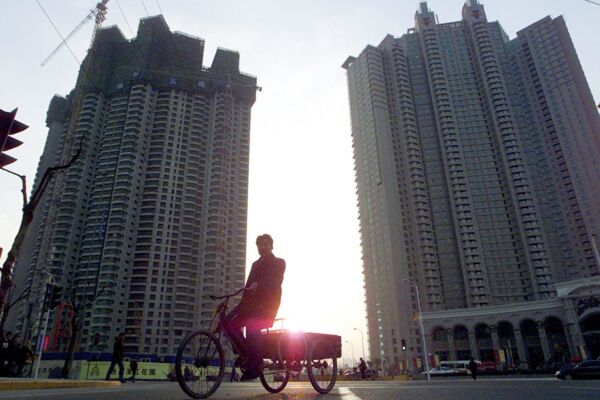
Global credit rating agency S&P has downgraded its expectations for China’s real estate sales in 2026, believing the situation will be worse than previously anticipated. This S&P analysis report was released just over a month into 2026.
According to CNBC, on Sunday (February 8), S&P stated that new home sales in China in 2026 may decrease by 10% to 14%, further deteriorating from the forecast in October 2025 of a 5% to 8% decline.
The Chinese real estate market once accounted for about a quarter of the total economy but has halved in sales within just four years, with consumer demand for housing still not showing signs of recovery.
Economists have long warned of overbuilding in the Chinese real estate market. Despite sluggish sales, Chinese developers continue construction, leading to a situation forecasted by S&P to see a sixth consecutive year of completed but unsold properties.
S&P analysts stated in the report, “An oversupply of new homes in China is hindering the real estate market’s recovery.” They predict that due to the oversupply, after a decrease in property prices in 2025, prices may further drop by 2% to 4% in 2026.
“A decline in property prices will weaken the confidence of homebuyers. It’s a vicious cycle that’s hard to break,” warned the analysts.
S&P mentioned that the price decline in major Chinese cities in the fourth quarter of 2025 has intensified, causing particular concern.
The report highlighted that property prices in Beijing, Guangzhou, and Shenzhen fell by at least 3% on average in 2025. Shanghai was the only major city where prices rose, with a 5.7% year-on-year increase.
This worsening situation has heightened the pressure on Chinese real estate developers. Analysts stated that if new home sales ultimately drop by 10 percentage points more than the base expectation, four out of ten Chinese property developers could face rating downgrades.
These four potentially downgraded property developers do not include Vanke. Vanke was once one of China’s largest property developers, having applied for a partial debt repayment extension at the end of 2025.
The Chinese government has yet to introduce a large-scale new real estate support policy, instead favoring investments in sectors like “new infrastructure.”
In January, the US-based research firm Rhodium Group stated that Beijing’s insufficient investment in high-tech industries cannot offset the gloom of the real estate market, making China more reliant on export growth and vulnerable to trade frictions.