
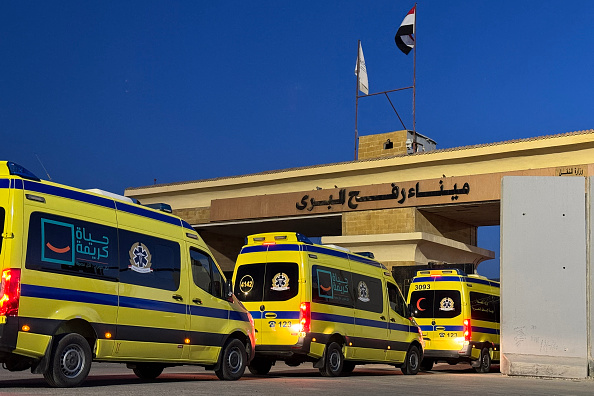
Israel reopened the Rafah Border Crossing between Gaza and Egypt on February 2, allowing a limited number of pedestrians to pass through. This move permits a few Palestinians to leave Gaza and allows some individuals who fled the conflict to return.
The Rafah Border Crossing is located on the border between Gaza and Egypt, serving as the only land pedestrian entry and exit point for over two million residents of Gaza. During most of the conflict, this passage has been predominantly closed.
The reopening of Rafah marks one of the final important steps in the initial stages of the ceasefire agreement brokered by the United States, which was reached in October last year.
A Palestinian official mentioned that on the first day, it was expected that 50 Palestinians would enter Gaza, facing strict security checks by Israel. Additionally, a similar number of people would be allowed to leave.
According to multiple media reports, priority for leaving Gaza includes a group of severely injured individuals and patients.
On the previous day, February 1, the Coordination of Government Activities in the Territories (COGAT) of the Israeli Defense Ministry’s Civil Administration for humanitarian affairs stated that a trial run to open the Rafah Border Crossing had been carried out for testing and evaluation purposes.
Three Egyptian sources informed Reuters that after the reopening, Palestinians seeking transit through the Rafah Border Crossing would require approval from Israel.
Sources mentioned that the transit area has been reinforced with concrete walls topped with barbed wire. People entering and leaving Gaza must walk 2.5 kilometers along the Philadelphi corridor, an area controlled by Israel.
At the crossing point, individuals must pass through three independent gates, with one managed by the internationally recognized Palestinian Authority supervised by the European Union observer mission but remotely controlled by Israel.
In the first nine months of the Israeli-Hamas conflict, approximately one hundred thousand Palestinians fled to Egypt through the Rafah Border Crossing.
Following the entry of the Israeli military into the region, this passage was closed. It was briefly opened during the early part of 2025 ceasefire to evacuate medical patients.
The closure of the crossing made it challenging for injured and sick Palestinians to seek medical aid outside Gaza. Over the past year, only a few thousand individuals were allowed to travel to third countries for treatment through other Israeli channels.
The reopening of the Rafah Border Crossing holds significance in the context of the American-brokered ceasefire agreement. The first phase of the ceasefire involved cessation of major hostilities, release of kidnapped Israeli hostages, liberation of thousands of Palestinian prisoners, and commitment to increase humanitarian aid.
The subsequent phase of the ceasefire agreement demands Hamas to disarm and transfer control to an internationally supported governing body, which will oversee Gaza’s reconstruction.
In October 2023, Hamas militants launched a surprise attack on Israel, resulting in 1,200 fatalities and over 250 individuals being kidnapped to Gaza. In a bid to eliminate Hamas military capabilities and rescue hostages, Israel initiated military actions against Gaza.
(This article references reports from Reuters)