
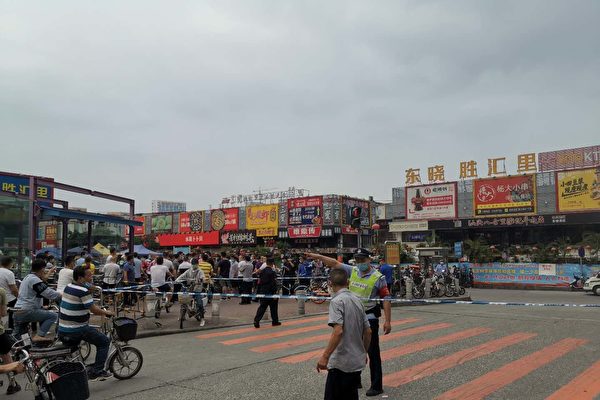
Due to the continued downward impact of the Chinese economy, the number of migrants in Guangzhou has significantly decreased. The white-collar group that once supported the rental housing market in urban villages has experienced a large outflow, leading to a continuous increase in vacancy rates. Many landlords have lost their sources of income and can only rely on savings to sustain their livelihoods.
Urban villages in Guangzhou are a unique form of community within the city, originally belonging to rural collectives. As the city expanded, these villages were incorporated into the urban area, but the land and management system retained their rural nature, gradually forming densely built-up residential areas with a high concentration of population. Over the years, urban villages have attracted a large number of migrant workers and white-collar workers due to relatively low rents.
Zheng Hua (pseudonym), a resident of the Tianhe urban village, told Epoch Times that his family has lived there for generations, relying on the land for their livelihood. With the development of the city, a large number of working-class people moved into the urban villages to rent housing. Zheng built a small building on his residential land and rented it out to white-collar workers, ensuring a stable income.
He explained that the village where he lives consists of lands passed down by ancestors that cannot be sold. Each family has built small buildings on their residential land. Previously, the main tenants were bosses and white-collar workers from offices, resulting in higher rents. Now, most of the tenants are cleaners, forcing rent prices to decrease, otherwise it would be difficult to find renters. “Before, most of the tenants were white-collar workers, and the rent was high. Those were good times.”
He mentioned that since the outbreak of COVID-19 in 2019, the rental market has sharply declined, exacerbated by the economic downturn and increased business closures, leading to a soaring unemployment rate. This has resulted in a continuous decrease in the number of renters, causing a sharp decline in landlords’ income.
“From 2019 up until now, things have been tough. The rental rate is very poor, dropping by 40%, and we are still struggling to make ends meet,” he said helplessly. “The economy is bad, and no one is renting houses. Many office buildings owned by collective property companies cannot be rented out. How can we survive? We are living off our savings.”
In the grim economic environment in China, some middle-class individuals are choosing to move overseas. Zheng expressed his desire to develop abroad as well, but due to stricter controls on outbound travel and his advancing age, he no longer has the energy to pursue it. “If you asked me to go to the United States right now, I would run there barefoot. Who would stay here waiting to die?”
Not only has the population decreased in urban villages, but changes in Guangzhou’s urban area are also apparent. Many residents have noted the significant emptiness in previously crowded commercial streets. “There are not many people on the streets now. It used to be crowded with people,” remarked a citizen. “The malls are empty, and the restaurants have no customers.”