
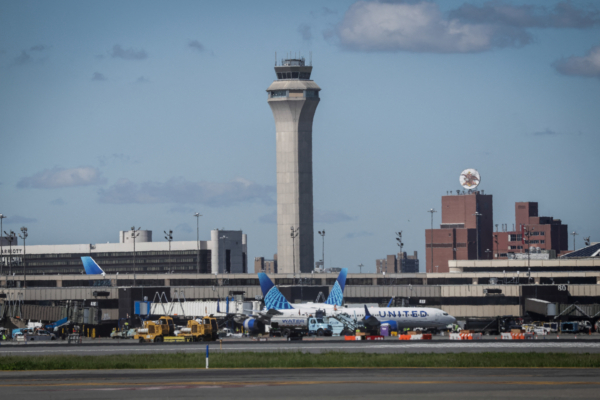
Recently, a technical failure in the air traffic control system occurred at Denver International Airport, following two communication failures at Newark International Airport in the past two weeks.
According to local media station KMGH affiliated with ABC in Denver, on Monday, May 12th, about 20 pilots flying to Denver International Airport experienced a terrifying 6-minute communication interruption when they were unable to contact air traffic controllers.
The Federal Aviation Administration (FAA) confirmed the airport communication interruption incident, stating that the communication outage lasted only 90 seconds and was due to two transmitter failures.
Multiple sources revealed to KMGH that the failure around 2 p.m. that day resulted in “15 to 20 aircraft unable to communicate with air traffic control at a critical moment.” At that time, the Denver Air Route Traffic Control Center had switched to a backup frequency for communication as the four primary frequencies were not functional.
Air traffic control centers typically have multiple radio frequencies for aircraft communication. However, in this instance, the four main frequencies were unavailable due to technical issues, possibly due to equipment aging or malfunctions. As a result, controllers had to rely on a backup frequency for communicating with pilots. Unfortunately, even this backup frequency experienced a malfunction, leading to a brief communication disruption.
Eventually, a controller managed to establish contact with an aircraft using an “emergency line” typically reserved for distressed pilots. Sources mentioned that the pilot then contacted other nearby aircraft to inform them to switch radio frequencies.
The report quoted retired air traffic controller David Riley, expressing concern, “The most frightening aspect is that this situation is not isolated. These types of power outages occur frequently across the country.”
Riley, a former local air traffic union leader, said, “Losing contact with one aircraft is one thing, but losing contact with all communicating aircraft? As far as I understand, they still had radar coverage in this situation, but it’s like watching a car crash happen and being powerless to prevent it. This is unacceptable, and the biggest issue is the FAA’s lack of stable funding to replace and maintain this equipment.”
Transportation Secretary Sean Duffy announced a plan on May 8th to reform the criticized air traffic control system, which is expected to cost billions of dollars. He pledged that the Department of Transportation will complete a “brand-new air traffic control system” by 2028.
Currently, the FAA is replacing copper communication lines with new fiber-optic lines. However, the understaffed FAA is currently short of approximately 3,000 air traffic controllers.