
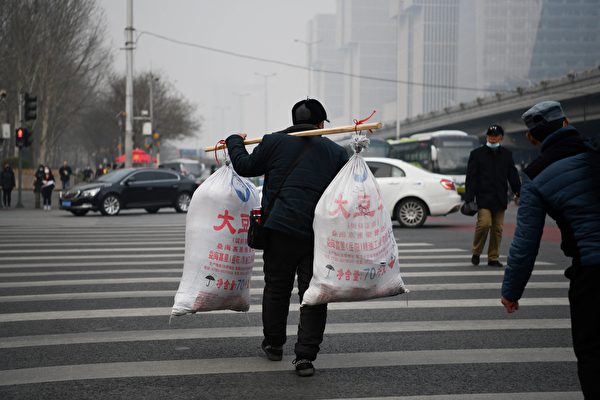
The latest China Economic Briefing by the World Bank in December highlighted that half of Chinese people lack economic security, with health issues still being the root cause affecting Chinese household finances.
The report predicts that recent policy easing measures introduced by Beijing will provide moderate support for growth, but insufficient resident and business confidence, as well as headwinds from the real estate industry, will continue to weigh down economic growth in 2025.
Structural factors constraining economic growth, as outlined in the report, include low consumption, high debts of real estate enterprises and local governments, and an aging population.
China’s economy faces risks both domestically and externally. The report notes that domestically, a prolonged slump in the real estate industry could further weaken investment and local government revenue. Additionally, declining corporate profits and reduced hiring may lead to a softer labor market, thereby dampening consumer demand. Globally, increased trade uncertainty also poses risks to China’s exports.
According to the World Bank’s estimation, over half of China’s population (55%) still lacks economic security, with 17% categorized as low-income individuals and 38.2% belonging to the vulnerable middle class. The latter group earns more than $6.85 per day but faces economic instability and the risk of falling below that standard in the future.
The report emphasizes that in China, higher education serves as a ticket to upward social mobility but is not the only one.
“The labor force with limited formal education not only becomes higher productivity farmers but can also find jobs in assembly lines, factory floors, and construction sites due to China’s export-led growth creating a significant number of such low-skilled job positions,” the report states.
The report calls for a comprehensive relaxation of the household registration system to allow the billions of people still in low-income or vulnerable middle-class categories to realize their aspirations for upward mobility.
Elitza Mileva, the World Bank’s Chief Economist for China, stated, “Equal opportunities and greater social mobility help enhance human capital, making economically secure families more entrepreneurial, willing to take more risks, thereby promoting economic growth.”
The report also highlights that health impacts are the root cause of vulnerability in Chinese household finances and could be a significant barrier to upward social mobility.
In the China Family Panel Studies (CFPS), 12.8% of respondents reported poor physical health conditions. Within the same statistical population, 26.5% stated their health had declined compared to the previous year, more than double the rate of those reporting poor health. Approximately 8.4% of respondents reported experiencing some physical discomfort or illness in the past two weeks. Furthermore, poor health conditions were more prevalent in rural areas compared to urban areas.
“For white-collar workers engaged in formal employment, sick leave provisions may be included in labor contracts, whereas for those not in such jobs, health impacts may directly result in income loss. Even if not endangering the family’s overall livelihood, bearing medical expenses out-of-pocket, the health impacts experienced by family members may also mean a significant blow to the family budget,” the report notes.
Additionally, the report mentions that the high savings rate behavior in Chinese households underscores that the current social security system may not provide adequate protection against impacts.