
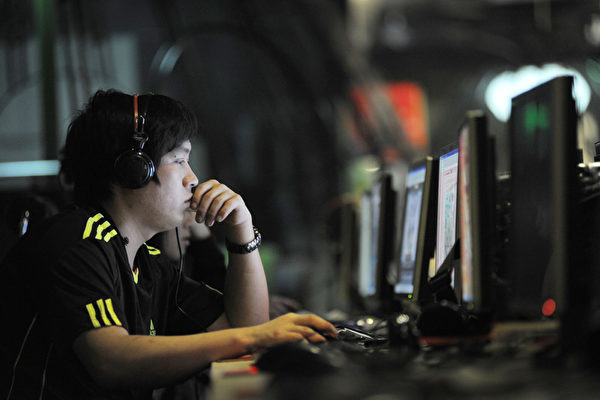
Since April this year, the Chinese Communist Party has been escalating its crackdown on people bypassing the Great Firewall. Several individuals engaged in the circumvention industry have told Dajiyuan that the official crackdown on bypassing the Great Firewall is severe at the moment, but the industry always finds ways to adapt since official actions often end up ineffective within six months. Experts believe that the authorities’ suppression may lead to the rapid expansion of underground technical services and gray markets that aid circumvention, intensifying political discontent among the public and resulting in a reverse effect of “stability maintenance becoming more unstable”.
The term “bypassing the Great Firewall” refers to netizens using technical means such as VPN (Virtual Private Network) tools to access overseas websites.
Recent official documents leaked from within China show that the authorities are cracking down on cross-border data connections, requiring IDC (data center) service providers to cooperate and mandatorily block end users from accessing overseas websites. Public security and telecom companies are joining forces to crack down on students bypassing the Great Firewall in universities, resulting in students being summoned or dealt with.
Mr. Jin from Suzhou told Dajiyuan on the 20th that it is still possible to bypass the firewall, but the stability has been affected.
“I recently bought a new Samsung phone. I found out that current Samsung phones cannot install circumvention software as easily as before. (Whether it’s) Google Browser or Samsung Browser… after the circumvention software is activated, neither of the browsers can access foreign websites anymore, and software that used to work fine is now malfunctioning,” he said. “There are more people bypassing the firewall in Shanghai compared to Suzhou. Many companies in Shanghai require bypassing the firewall for their operations, so the impact may be greater there.”
Insiders revealed that in China’s circumvention channels: one is an authorized channel within the system, used by universities, research institutions, and large and medium-sized enterprises (including foreign-invested ones), which requires application to telecom companies and public security filing and is fast; the second is VPNs used by cross-border e-commerce and technical personnel, many of whom are insiders of regulatory departments or related parties, renting official lines for data transmission monitored by the authorities; the third type involves setting up servers outside the system to sell proxy services, which is currently under special scrutiny.
Gan Wenwei, who now resides in the Netherlands and is a former mainland software vendor, told Dajiyuan on the 22nd that the restrictions have indeed been particularly strict in recent days. The service servers of the 30 peers in his group within mainland China have all been disconnected. However, directly connecting overseas remains unaffected; what’s affected is the method of bypassing through domestic servers for acceleration.
Gan Wenwei explained that in recent years, there has been a shift in how Chinese individuals bypass the Great Firewall. Previously, one simply needed to buy a foreign server, set up a VPN or other circumvention tools to access some overseas websites. However, as the firewall has become more sophisticated, it can block you, and even connecting to foreign websites is very slow. Hence, commercial VPN services have emerged, all of which rent server spaces from mobile and telecom companies, redirecting traffic from official servers to achieve accelerated speeds. Now, the CCP authorities are prohibiting traffic from leaving official servers and only allow access through public networks, which severely impacts the user experience.
He said that currently, the officials are not using technical means for blocking as before but are assigning personnel to directly shut down your servers from the data centers. “I estimate that there are outsourcing companies (working for the CCP to block circumvention) that come in waves during peak work hours in China time, followed by another wave during off-peak hours, repeating this work continuously seven days a week; this is definitely done manually.”
An industry insider who preferred to remain anonymous, Dong Ping, told Dajiyuan on the 20th that the official crackdown on bypassing the firewall is very severe at the moment.
Dong Ping stated that previously, ordinary netizens who accessed overseas websites used the most basic circumvention, paying a monthly fee, because pure traffic without conversation is too obvious and easily targeted. The best routes are those within domestic telecom data centers usually wholesale bought by e-commerce giants for further retail distribution. However, this method has now been shut down by the authorities.
“Previously, telecom data center traffic was wholesaled to VPN manufacturers or sold to airports, but now with the inability to redirect VPN traffic, it has turned into an IP and address competition. Since VPNs are no longer functional, one must set up their own proxies, but even proxy sharing and building networks for node access within China are no longer feasible.”
He mentioned that because shared nodes for proxy networks in China are all on domestic traffic servers, no one can guarantee continuous access. With people sharing nodes within China, if one person gets caught, authorities can easily trace back through the ID, resulting in that IP being blocked.
Dong Ping said some individuals have the means to buy dedicated lines, but only slightly larger foreign trade companies opt for this as it comes with additional responsibilities. “The net has shrunk too small now; they catch big and small fish, shrimp alike; retail is not feasible anymore, and the wholesale threshold is getting higher, with more security requirements.”
Additionally, the CCP authorities are investigating all online accesses of the parties involved in cases and even checking for tax evasion.
The official CCP media outlet, Global Times, recently published the intimidating message “Bypassing the Firewall is illegal, you have violated the law”, but the Chinese Ministry of Defense officially launched an overseas social media platform X account, leading to ridicule about “officials setting fires are allowed, but commoners are not allowed to light lamps.”
Dong Ping said earlier, the hacking incident of the Chinese National Supercomputing Center (NSCC) in Tianjin, where massive confidential data was exposed, may have alarmed the high-ups, resulting in the issue escalating to a national defense level. “If this points toward a military angle, it can be elevated to state security, potentially framing you with espionage charges.”
However, he believes that many of Xi Jinping’s initiatives often end up faltering. “Typically, they fail within six months. This strategy (to block circumvention) will hit the economy and make life difficult for the people.”
Dong Ping stated that there will always be people who find a way. For example, those involved in foreign trade use Hong Kong cards, Laos cards, Vietnamese cards, or buy dedicated lines from Japan. “Everyone pretends to be a foreigner, which requires high thresholds and technical capabilities. Bypassing the firewall is a privilege that tests one’s technical skills, overseas connections, and ability to evaluate risks.”
Gan Wenwei said the recent focus of the CCP authorities has shifted from drones to VPNs, leading some to speculate that it is a stress test for future scenarios of internet shutdown in warfare preparations. However, such actions may accelerate the withdrawal of foreign investments and significantly impact the foreign trade industry.
A policy analyst from the Network Security and Decision Analysis Research Institute at the Taiwan Institute for National Defense and Security, Zen Minzheng, recently wrote an analysis saying that the CCP’s current action is different from the past, targeting not only individual acts of circumvention but also VPN tools, having evolved into a “nationwide network blockade operation” led by the central government with full involvement of the telecommunications system.
Zen Minzheng believes that the CCP’s actions may be related to, externally, the recruitment initiative by the CIA in January to recruit Chinese individuals and the release of the “Secure Circumvention” and anonymous contact tutorial, followed by the launch of the “Freedom.gov” platform in February by the US State Department, focusing on privacy protection and anonymity without the need for traditional VPN circumvention to access blocked Western websites. Internally, the internet crackdown reflects the high level of insecurity toward “information leakage” among the CCP high-level officials, especially given the economic downturn and frequent social conflicts; this extensive block aims to sever the flow of information domestically and externally before potential societal unrest occurs, creating an environment of “information deprivation”.
However, Zen Minzheng believes that while the comprehensive blockade may significantly impact circumvention in the short term, its long-term effectiveness will face constraints due to market demands and technological developments. When tens of millions rely on international networks for livelihood, it’s hard to completely halt the demand solely through administrative pressures; instead, it may boost the rapid expansion of underground technical services and gray markets, leading to a structural counterproductive relationship.
He mentioned that given the highly decentralized and self-repairing nature of the internet, complete control is inherently limited. When policies directly impact a wide range of professional and middle-class individuals and affect their economic sources, it may alter their perception of risk and the political environment. Compared to the past dissatisfaction driven by a desire for improved living conditions, any future group events may have a more direct and high-intensity challenge to the regime, creating a reverse effect of “stability maintenance becoming more unstable”.