
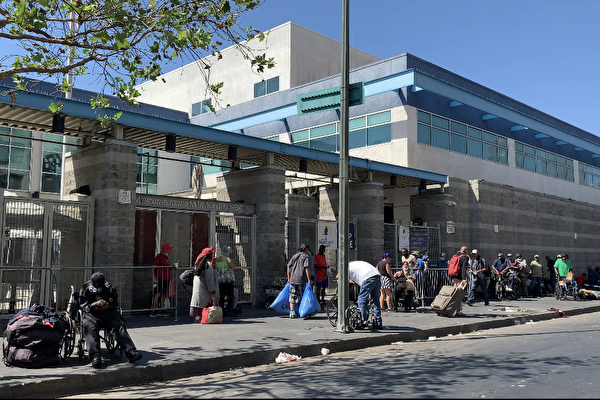
Los Angeles Homeless Services Authority (LAHSA) announced on Monday (20th) that they will be issuing layoff notices to 284 employees on the 30th, including 216 union members and 68 non-union members. The layoffs stem from issues identified in an audit conducted in 2024, leading the Los Angeles County Board of Supervisors to decide on an organizational restructuring.
Established in 1993, LAHSA is an organization jointly set up by the city of Los Angeles and Los Angeles County government. A November 2024 audit report revealed numerous problems within the agency with an annual budget of up to $875 million. The report not only uncovered malpractices but also raised questions about how LAHSA manages significant public funds.
According to the Worker Adjustment and Retraining Notification (WARN) Act, LAHSA has informed the layoffs officially to the Service Employees International Union Local 721, the Los Angeles County Board of Supervisors, the Mayor of Los Angeles, and the California government, with the expected final working day to be June 30.
The institutional restructuring will see a total reduction of 414 positions, with 130 of them already vacant. There is a possibility that some employees may be retained after June 30, but specific details have not been provided yet.
In past three years, the number of people experiencing homelessness on the streets of Los Angeles County decreased by 14% and by 18% in the city of Los Angeles. Interim CEO of LAHSA, Gita O’Neill, expressed gratitude to the hard-working employees, stating, “In the past two years, we have witnessed a historic decline in the number of people experiencing homelessness on the streets, assisting 80,000 individuals to find housing within three years, which is an undeniable fact.”
Los Angeles County is one of the areas with the highest number of homeless individuals in California, with a record of 75,312 people last year, including 45,252 in the city proper, which decreased to approximately 72,308 this year, with around 43,669 in the city. In a three-day count in January this year, over five thousand volunteers took to the streets, marking the fourth consecutive year of collecting data through a mobile app.
At the beginning of 2024, Supervisor Lindsey Horvath proposed an audit of over 1,200 contracts related to LAHSA, leading to a report by the Los Angeles County Auditor-Controller in November, listing 16 alarming issues. These issues have been identified in reports from 2018 and 2020, with promises for corrective actions from the agency’s leadership, but without substantial progress.
The second audit revealed the lack of oversight by LAHSA over the advances made to service providers. Issues in the third, eighth, ninth, and tenth categories include contract mismanagement, such as signing contracts after purchasing goods, contracts with unaccounted status, and verification failures of service delivery by providers.
Audit item number five exposed service providers diverting earmarked funds, indicating misuse. From the sixth to eleventh items, internal processes within the agency were found to be overly complex, leading to inefficiencies and potential financial misconduct. The agency was suspected of borrowing from other accounts and delaying payment from the twelve to sixteen audit items, highlighting financial management and audit shortcomings with no internal audit and oversight department at LAHSA.
Following a lawsuit filed by the Los Angeles Alliance for Human Rights in 2020, Federal District Judge David O. Carter ordered an audit. A report from March last year revealed that between June 2020 and June 2024, the $2.3 billion distributed by LAHSA had almost zero financial oversight or accountability mechanisms.
On April 1 last year, the Los Angeles County Board of Supervisors voted 4:0 to withdraw support from LAHSA and create a new entity, the Homeless Services and Housing Authority (HSH), which was established in January this year. Subsequently, Los Angeles City Council members proposed to separate from the authority, with the city directly serving the homeless population.
Los Angeles mirrors the challenges facing California, where substantial funds have been allocated but mismanagement is evident. Homeless individuals in California account for approximately 28% of the national total, significantly higher than other states.