
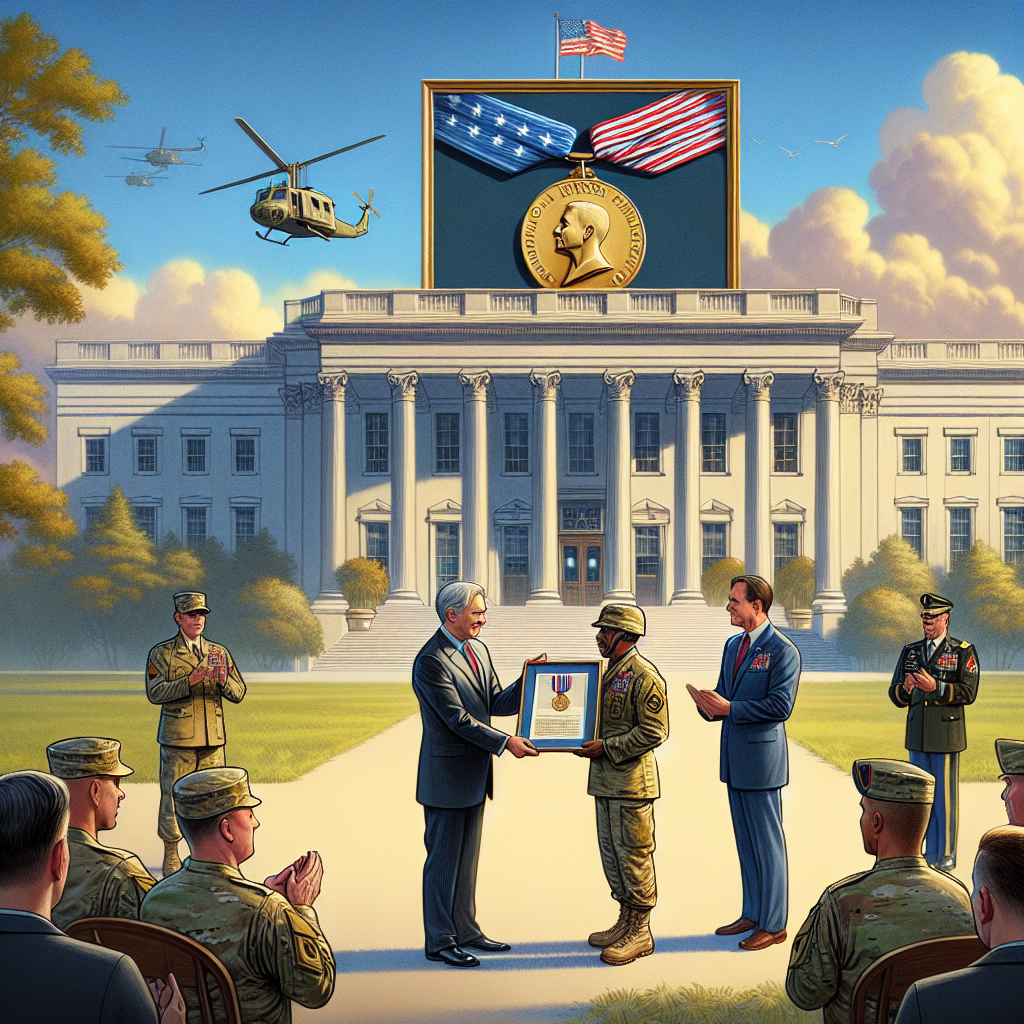
The White House announced on February 26 that President Trump will award the United States’ highest military honor, the Medal of Honor, on March 2, to three Army veterans who have shown extraordinary courage, self-sacrifice, and gone beyond the call of duty.
The honorees include two posthumous awardees, World War II former prisoner of war Army Sergeant Roderick Edmonds and Afghanistan War veteran Army Sergeant Michael Ollis. Retired Command Sergeant Major Terry P. Richardson, who served in the Vietnam War, will also receive this prestigious honor.
The announcement of the honors was made on February 26 by the White House. Previously, on February 24, during his State of the Union address, President Trump awarded the Medal of Honor to Army Staff Sergeant Eric Slover and retired Navy fighter pilot Royce Williams.
Moreover, on December 1 last year, Trump signed a bill to increase the retirement benefits of Medal of Honor recipients to nearly four times the previous amount, raising it from $16,880.76 annually to about $67,000.
Sergeant Edmonds was imprisoned in a German prisoner of war camp from December 19, 1944, to March 30, 1945. On January 27, 1945, when he was transferred to a second camp, Nazi officials ordered that only Jewish American prisoners would be counted the next morning, threatening to execute anyone who disobeyed.
Believing that Jewish prisoners would be killed, Edmonds defied the order and instructed around 1,200 American prisoners to stand together. When the Nazi camp commander saw all the Americans gathered, he angrily demanded that the Jewish soldiers identify themselves.
Edmonds invoked the protection clause of the Geneva Convention, but the commander threatened him with a gun, saying the Jewish prisoners would be shot if they didn’t reveal themselves.
Edmonds firmly replied, “We are all Jews here.” He sternly warned the officer that such actions would constitute a war crime postwar, causing the commander to backtrack on his initial plan.
In March 1945, as the Allied forces advanced, the German guards prepared to evacuate the prisoner camp. Edmonds once again used his wit to thwart the German withdrawal plan. He directed the American prisoners to line up in front of the barracks, dispersing them back to their quarters once the transport vehicles arrived.
His defiance and leadership thwarted the German evacuation plan, forcing them to abandon the camp and leave the American POWs in place, ultimately saving the lives of all the American prisoners.
Ollis had served at the Forward Operating Base Ghazni in Afghanistan. On August 28, 2013, the base was subjected to a fierce coordinated attack by enemy forces using car bombs, suicide bombers, indirect fire, and small arms fire.
Initially directing soldiers to take cover, Ollis, without personal protective equipment and armed only with a rifle, advanced with another coalition officer towards the attacking enemy to organize a counterattack and drive out insurgents from the airport and nearby buildings.
Amidst a hail of gunfire, an armed insurgent suddenly emerged and opened fire, injuring the coalition officer. Ollis bravely stepped in between the attacker and the wounded officer. Although he successfully killed the insurgent, the attacker detonated a suicide bomb vest upon falling, leading to the courageous sacrifice of Ollis.
On September 14, 1968, Richardson, while leading a reconnaissance platoon on a mission in Vietnam, encountered a heavy ambush by a North Vietnamese army battalion. After rescuing three severely wounded soldiers at great risk, he found his unit surrounded.
Under intense fire, Richardson advanced to the key terrain feature “Hill 222” to coordinate tactical airstrikes, discovering it was a battalion-sized enemy camp. Despite being wounded by enemy snipers, he held his ground, guiding airstrikes for 7 hours in close proximity to himself and his unit.
After the enemy retreated, he refused evacuation for medical treatment, choosing to stay at the front lines with his comrades. His courageous decisions ultimately saved 85 lives.