
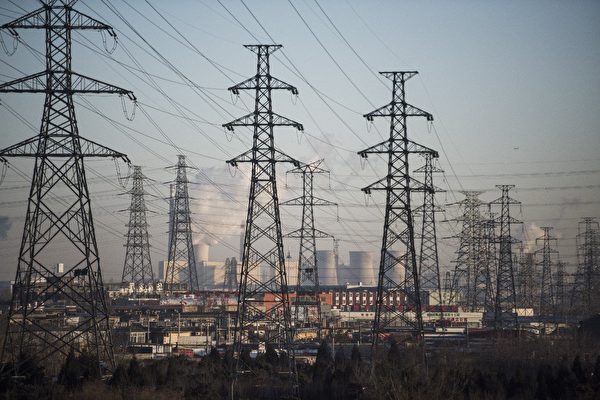
Amid rising electricity prices, Russia has cut off power supply to China. Analysts believe that this issue is not only related to economic factors but also reflects the complex relationship in energy cooperation between the two countries, leading to uncertainties in China’s energy landscape.
On January 16th, the Russian newspaper “Businessman” reported that Russia has halted electricity supply to China and is seeking to renegotiate prices with China as a long-standing electricity exporter to the country. Currently, Russian electricity prices are higher than those in China.
The Russian Ministry of Energy responded by stating that they are currently prioritizing meeting the electricity demand in the Russian Far East region. However, if mutually beneficial terms can be reached, the electricity supply to China can be restored.
Russian international power company, Inter RAO, mentioned that their long-term contract with China remains valid, and both sides are actively exploring opportunities for power trading without any plans to terminate the contract. The company signed a 25-year electricity supply agreement with China in 2012, planning to supply a total of 100 billion kilowatt hours. Inter RAO is the sole electricity importer and exporter in Russia.
According to Reuters, there has been no immediate response from Chinese officials regarding this issue.
Industry data shows that in January 2026, the “single electricity price” in the Russian Far East reached 4,300 rubles per megawatt-hour, a more than 42% increase compared to the previous year, while the domestic electricity price in China is around 3,900 rubles per megawatt-hour. This price disparity has rendered Russian electricity economically unfeasible, leading China to temporarily suspend the minimum purchase guarantee of 120 megawatts specified in the contract.
Russia’s electricity exports to China have been continuously declining in recent years. From reaching 4.6 billion kilowatt-hours in the final year of the COVID-19 epidemic in China in 2022, the electricity exports dropped to 3.1 billion kilowatt-hours in 2023 and further declined to 0.9 billion kilowatt-hours in 2024. In the first 11 months of 2025, Russia’s electricity exports to China decreased by over 63% compared to the previous year.
Researcher Shen Mingshi from Taiwan’s Institute for National Defense and Security Studies mentioned in an interview with Dajiyuan that Russia’s action to cut off electricity supply to China is “quite strange” and could be due to various reasons, including the breakdown of energy price negotiations, Russia’s financial pressure tactics on China, or even more complex international political considerations.
He analyzed that Russia may be trying to exert “punitive” pressure on China due to energy or financial reasons, or there might be significant differences between the two sides regarding electricity prices. He also noted that China’s long-term maintenance of lower electricity prices may not be solely an economic issue but could also be related to tight central and local finances.
Shen Mingshi believes that Russia’s direct interruption of electricity supply demonstrates its strong-handed approach and highlights its initiative in energy supply. “Especially in the current international context, energy is not just a commodity but also a geopolitical tool,” he said.
Professor Sun Guoxiang from the Department of International Affairs and Business at South China University pointed out that the key aspect of this issue lies in its sensitivity to timing.
“With ongoing Western sanctions against Russia and the volatile situations in Venezuela and Iran, the global energy supply and geopolitical landscape are undergoing systematic restructuring,” Sun Guoxiang said, “Against this backdrop, any signs of friction in the ‘unlimited’ partnership between China and Russia will be interpreted as important signals of the strategic interaction between the two sides.”
The electricity cooperation between China and Russia began in 1992 with the formal commissioning of the 110 kV Blagoveshchensk line, the first cross-border transmission line jointly built by the two countries. In April 2012, the 500 kV Amur line started commercial operations, with the three transmission lines having an annual transmission capacity of 7 billion kilowatt-hours.
In 2012, China and Russia signed a 25-year power purchase agreement planning to supply 100 billion kilowatt-hours until 2037. In the following years, Russian electricity exports to China continued to grow. In 2021, to address the power shortage in Northeast China, Russia increased its electricity exports to 3.97 billion kilowatt-hours, which further rose to 4.7 billion kilowatt-hours in 2022.
However, starting from the second half of 2023, this trend reversed. The electricity demand in Russia’s Far East region has been growing at a rate of over 4% annually, leading to a shortage in power supply due to lagging new capacity additions and constraints on several hydroelectric stations resulting from delayed infrastructure development.
In October 2023, Inter RAO began limiting electricity supply to China due to new export tariffs coming into effect, demanding a 7% price increase. The company stated at that time that in case customers refuse to accept the price hike, they would restrict or cut off supply.
Regarding the energy structure, Shen Mingshi analyzed that China’s main energy sources still primarily rely on Russia and domestic production, with Venezuela accounting for about 5% and Iran for 10% to 20%.
He pointed out, “The current tense situation in Iran requires its oil transport to pass through the Malacca Strait, which is a distant and high-risk route. Any disruption in supply would have a tangible impact on China’s energy security. With China’s insufficient strategic reserves, the reliance on Russian energy is bound to increase further.”
From a structural perspective, Sun Guoxiang analyzed that China has long maintained relatively low regulated electricity prices, reflecting its industrial policy orientation. However, in the face of weak domestic demand and excess production capacity in some industries, a significant increase in electricity prices lacks sufficient economic and social legitimacy, intensifying the pressure to maintain lower prices.
Sun Guoxiang pointed out that the recent political and security turmoil in Venezuela and Iran not only increases the volatility of China’s energy import mix but also weakens its short-term flexibility for dispatch and source switching.
“This will prompt Beijing to rely more on Russian oil, natural gas, and electricity, especially through fixed infrastructure such as dedicated pipelines that are difficult to divert,” he said.
He believes that this cooperation model based on fixed pipelines and heavy assets reinforces path dependency. “However, Russia is increasingly reliant on China’s demand, funds, and financial support, making this asymmetric interdependence not unidirectional dominance but rather bidirectional constraint.”
Shen Mingshi stated that Russia is not a stable and reliable energy partner. “Moscow has always been good at ‘reading the winds,’ and in the event of possible loosening in US-Russia relations, Russia may adopt more calculated strategies towards Beijing to alleviate US pressure on key issues,” he said.