
A new study has found that pregnant women taking certain commonly used generic drugs (medicines produced by other manufacturers after the original drug patent has expired) may increase the risk of their baby developing autism.
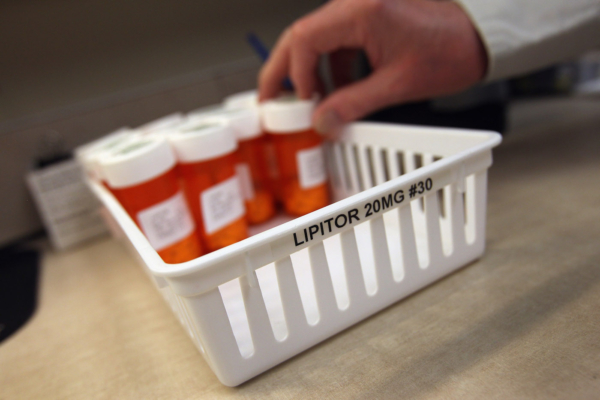
According to a paper published on April 16 in the journal “Molecular Psychiatry,” women who received prescriptions for certain drugs, including a statin drug called Lipitor, saw a 47% increased risk of their children being diagnosed with Autism Spectrum Disorder (ASD).
Researchers aimed to investigate whether the use of “sterol biosynthesis inhibitors” during pregnancy would increase the risk of autism in infants. Autism is a condition characterized by communication difficulties and resistance to changes.
The researchers from the University of Nebraska who authored the paper pointed out the critical importance of cholesterol synthesis in fetal development, and children with insufficient cholesterol production may face conditions like Smith-Lemli-Opitz syndrome. About three-quarters of patients with this syndrome are also diagnosed with autism, and its prevalence in the U.S. has significantly risen in recent years.
Previous studies indicated that some patients developed the syndrome due to specific genetic variations. However, another study found patients without such genetic variations but who had used one of two sterol biosynthesis inhibitors, the antipsychotic drug aripiprazole, or the antidepressant trazodone.
Further research revealed that these drugs, along with other common medications, block a crucial step in cholesterol biosynthesis.
The researchers utilized data from the Epic Cosmos database, which included records from over 1,880 hospitals and 42,400 clinics. The study included data on children born between 2014 and 2023 who had medical records documented from at least 18 months after birth.
After excluding cases like mothers taking drugs known to cause fetal abnormalities, the analysis included data from 6.1 million children out of 8.5 million initially considered.
Among the mothers of these children, nearly 700,000 (11%) had received prescriptions for sterol biosynthesis inhibitors during pregnancy. The paper noted that their children were more likely to develop autism, with the highest probability seen in children whose mothers used multiple drugs of this kind.
The researchers wrote, “We believe that the use of sterol biosynthesis inhibitors during pregnancy may increase the risk of ASD in offspring through a multi-step biochemical cascade.”
The funding for this study came from the University of Nebraska Medical Center and the Dorothy B. Davis foundation. The authors declared no conflicts of interest.
Limitations of the study include the inability to fully exclude all possible influencing factors such as environmental exposures like pesticides. The authors emphasized that the study results are only applicable to children.
Dr. Karoly Mirnics, Director of the Munroe-Meyer Research Institute at the University of Nebraska Medical Center, stated in a declaration that, “Our findings do not imply that these drugs are unsafe for adults but do raise important questions regarding their use during pregnancy, as even minor biochemical disturbances could have magnified effects on fetal brain development.”
The list of relevant drugs includes aripiprazole (Abilify), atorvastatin (Lipitor), bupropion (Wellbutrin), buspirone (BuSpar), fluoxetine (Prozac), haloperidol (Haldol), metoprolol (Lopressor), nebivolol (Bystolic), pravastatin (Pravachol), propranolol (Inderal), rosuvastatin (Crestor), sertraline (Zoloft), simvastatin (Zocor), and trazodone (Desyrel).
Scientists suggest that, based on the research findings, physicians should avoid prescribing multiple sterol biosynthesis inhibitors to pregnant women simultaneously, seek alternative medications, and identify women carrying genes associated with reduced cholesterol production. ◇