
The Japanese government officially approved on Tuesday (April 21) a new regulation to expand its export capabilities for advanced defense equipment. With a significant increase in defense spending and a commitment to revitalizing the military industry, this move marks a major shift in Japan’s defense policy post-World War II.
The defense export rules approved on Tuesday in Japan underwent significant revisions, ending long-standing restrictions on the overseas sale of lethal weapons, paving the way for the export of combat aircraft, missiles, and warships. Previously, Japan’s weapon exports were strictly limited to five non-combat categories: rescue, transport, surveillance, reconnaissance, and minesweeping.
The new guidelines abolish the category restrictions mentioned above, allowing all defense equipment to be approved for export subject to government review and controls on third-party transfers. This is seen as a milestone for Japan in easing military restrictions since the comprehensive export ban was imposed in 1976.
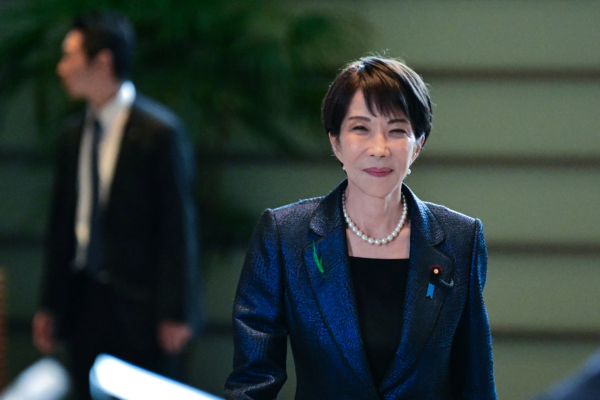
Japanese Prime Minister Sanae Takaichi wrote on X on Tuesday, “In an increasingly severe security environment, no country can protect its peace and security alone.” She emphasized that while Japan remains committed to the basic principle of being a peaceful country, under the new system, there will be a “strategic promotion of equipment transfer.”
Since taking office in October 2025, Sanae Takaichi has considered this as the core of her political agenda. She argues that boosting the domestic military industry will not only strengthen national security but also become a key engine for Japan’s economic growth.
In the face of continuous provocations from China and regional security challenges posed by North Korea, this move aims to enhance Japan’s ties with its partners in defense, diplomacy, and the economy.
Although Japan still prohibits selling weapons to countries involved in conflicts, this ban does not apply to countries with defense agreements with Japan. The Tokyo authorities stated that exceptions are allowed in “special circumstances.”
According to Japanese officials and diplomatic sources speaking to Reuters, countries currently interested in purchasing Japanese weapons include Poland, the Philippines, and others. Insiders indicate that the first orders are likely to involve the export of second-hand warships to the Philippines.
As the rules were announced, the Japanese Self-Defense Forces are participating in the annual “Shoulder-to-Shoulder” exercises with the US and the Philippines, with Japanese personnel joining as “combatants” for the first time instead of observers.
Chinese Foreign Ministry spokesperson Guo Jiakun responded on Tuesday, stating that China will remain highly vigilant and resolutely oppose the move. Due to the exercises taking place near Taiwan and in waters where Beijing asserts sovereignty, tensions between the two countries have escalated once again.
Sanae Takaichi had previously publicly stated that “an issue in Taiwan is an issue for Japan,” causing strong dissatisfaction from Beijing.
The South Korean Ministry of Foreign Affairs stated that Japan’s defense policy should contribute to regional stability while upholding the spirit of the “peace constitution.”
Sanae Takaichi has been a supporter of constitutional amendments. Since Japan’s defense policy was written into the constitution in 1947, “pacifism” has become part of its identity. However, from Shinzo Abe’s simplification of weapon development restrictions in 2014, to Fumio Kishida allowing the export of finished lethal weapons in 2023, to the current Takaichi government increasing defense spending to 2% of GDP and fully relaxing exports, Japan is rapidly adapting to the new reality where the “old rules no longer apply.”
(This article referenced reporting from the BBC)